


 English


Introduction to PETG Blow Molding
What is PETG?
PETG (Polyethylene Terephthalate Glycol) is a type of thermoplastic polyester, known for its excellent clarity, ...
Extrusion blow molding is a widely used manufacturing process for creating hollow plastic parts. The blow molding machine common for producing containers like bottles, jerry cans, drums, and automotive components like fuel tanks and ductwork.
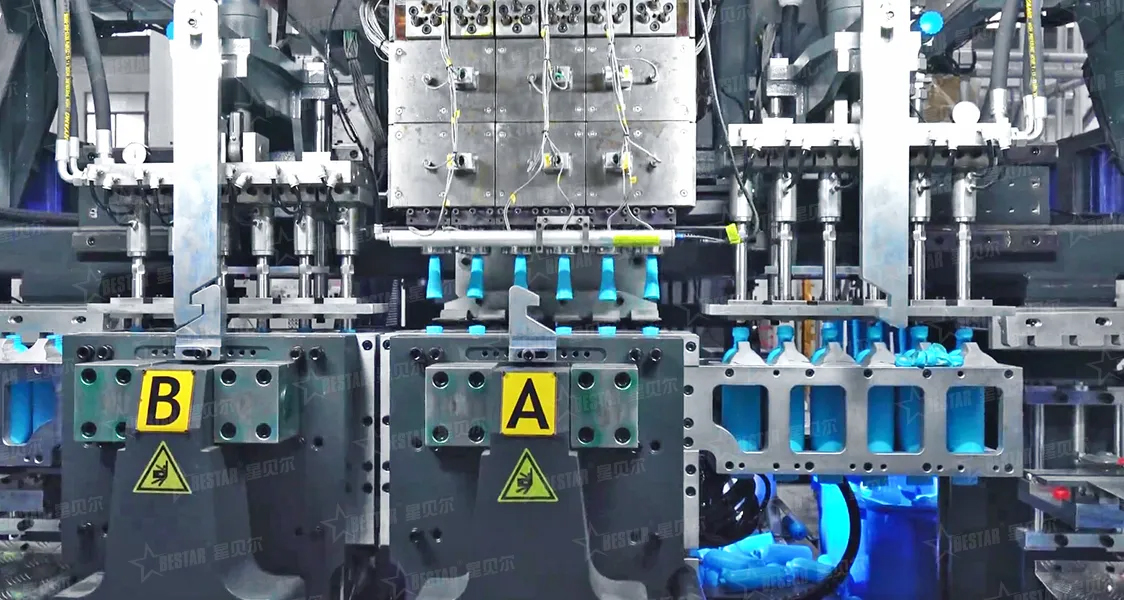
Plastication and Extrusion of the Parison:
1. Raw Material: Plastic resin (typically in pellet or granule form) is fed from a hopper into an extruder.
2. Extruder: The extruder consists of a heated barrel with a rotating screw inside. As the screw rotates, it conveys the plastic forward, melts it through shear and external heating, and homogenizes the molten plastic (melt).
3. Die Head: The molten plastic is then forced through a die head, which forms it into a hollow tube called a parison. The die head can be designed to control the thickness of the parison wall (parison programming) to ensure more uniform wall thickness in the final product, especially for complex shapes.
Parison Clamping:
1. The parison is extruded downwards, hanging vertically (in most common setups).
2. A two-part mold (with a cavity shaped like the desired product) closes around the parison, pinching off one end (usually the bottom) and sealing it. The top of the parison remains open and connected to the die head or is held by the mold.
Blowing and Inflation:
1. A blow pin (or needle) is inserted into the open end of the parison (often through the die head or a separate opening in the mold).
2. Compressed air is injected through the blow pin, inflating the soft, molten parison.
3. The air pressure forces the plastic to expand and take the shape of the mold cavity.
Cooling:
1. The plastic, now pressed against the relatively cool mold walls, begins to cool and solidify.
2. Molds are typically equipped with cooling channels through which a coolant (like water) circulates to accelerate this process.
3. Sufficient cooling time is crucial to ensure the part maintains its shape when ejected.
Mold Opening and Ejection:
1. Once the part has cooled sufficiently and solidified, the mold opens.
2. The finished hollow part is ejected from the mold, often with the help of ejector pins or air blasts.
Trimming (Deflashing):
1. The process typically leaves excess material, known as flash, where the mold halves pinched the parison (top and bottom, and sometimes around handles).
2. This flash needs to be trimmed off. Trimming can be done manually, semi-automatically, or fully automatically as part of the production line. The trimmed flash is often reground and recycled back into the process.
