


 English


Introduction to PETG Blow Molding
What is PETG?
PETG (Polyethylene Terephthalate Glycol) is a type of thermoplastic polyester, known for its excellent clarity, ...
1. What is a PP Blow Molder?
Polypropylene (PP) is one of the most versatile thermoplastics used across industries, and its processing into containers, bottles, and specialized packaging relies heavily on blow molding technology. A PP Blow Molder refers to a machine designed specifically for shaping molten polypropylene into hollow products through the blow molding process. To fully understand the importance of PP blow molding, it is essential to begin with a clear definition and an understanding of how these machines differ from other types of blow molding systems.
At its core, a PP Blow Molder takes polypropylene resin pellets, melts them into a semi-molten form, and then shapes them into hollow structures by inflating the heated polymer inside a mold cavity using compressed air. The mold determines the final geometry of the product, while process parameters such as temperature, pressure, and cooling rate determine its strength and surface quality.
There are several blow molding technologies, but the PP Blow Molder typically employs one of three approaches: extrusion blow molding (EBM), injection blow molding (IBM), or injection stretch blow molding (ISBM). Each technique has its own advantages depending on the intended product. Extrusion blow molding is commonly used for larger containers and simple hollow products. Injection blow molding excels in producing precision bottles with consistent neck finishes. Injection stretch blow molding allows for enhanced mechanical properties and clarity, although it is less common for PP compared to PET.
A PP Blow Molder also differs significantly from machines designed for PET (polyethylene terephthalate) or HDPE (high-density polyethylene). While PET is favored for transparent bottles and carbonated beverage packaging, PP provides unique benefits such as higher temperature resistance, better chemical resistance, and superior stress-crack performance. This makes PP containers suitable for hot-fill applications, microwavable products, and chemical storage where PET or HDPE might fall short.
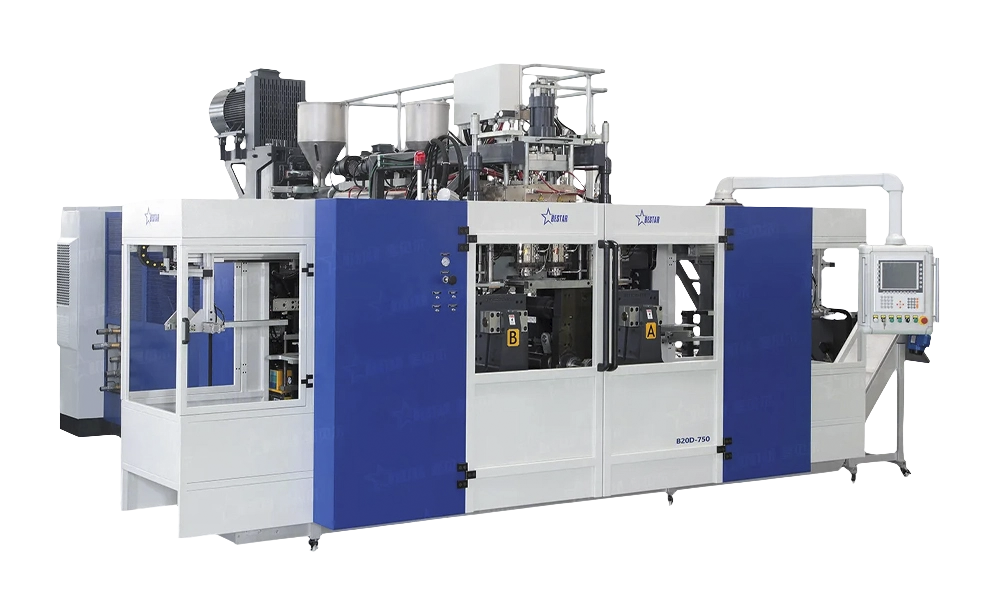
The typical components of a PP Blow Molder include:
Extruder or injection unit: where polypropylene pellets are melted and plasticized.
Parison or preform system: where molten PP is shaped into a tubular or preform structure before blowing.
Blow station with molds: where compressed air inflates the preform against the mold walls.
Cooling and ejection systems: which stabilize the molded product and prepare it for removal.
Automation and control systems: modern machines include PLC controls, touchscreens, and sensors for precision.
In summary, a PP Blow Molder is not just a piece of manufacturing equipment—it is the enabling technology behind a wide range of modern packaging and product designs. By mastering the use of this machine, manufacturers can create high-quality, lightweight, and durable polypropylene containers for multiple industries.
2. How Does a PP Blow Molder Work?
The working principle of a PP Blow Molder revolves around transforming small resin pellets into functional hollow products through a carefully controlled heating and blowing process. While the exact steps vary depending on the type of blow molding technique employed, the overall cycle can be divided into several stages.
Step 1: Feeding and Melting
The process begins when polypropylene resin pellets are fed into the hopper of the machine. A screw extruder or injection unit then conveys the material through heated zones, gradually melting it into a homogeneous molten state. The temperature must be carefully regulated because PP has a narrower processing window compared to other polymers; overheating may lead to degradation, while underheating results in poor flow and incomplete molding.
Step 2: Parison or Preform Formation
In extrusion blow molding, the molten PP is extruded downward as a hollow tube called a parison. In injection blow molding, the resin is injected into a preform mold to create a solid-necked preform. For stretch blow molding, the preform is later reheated and stretched before blowing. This intermediate stage determines the weight distribution of the final product, making parison programming or preform design critical for consistent wall thickness.
Step 3: Molding and Inflation
Once the parison or preform is in place, the blow mold closes around it. Compressed air is then injected, inflating the material until it conforms to the shape of the mold cavity. The mold’s surface imparts the desired geometry, texture, and any logos or text to the final product. Factors such as air pressure, mold temperature, and blowing time must be optimized for precision.
Step 4: Cooling and Solidification
The inflated polypropylene must then cool down to solidify into its permanent shape. Mold cooling channels circulate water or other coolants to extract heat efficiently. Since PP has relatively low thermal conductivity, cooling time can influence cycle speed significantly. Proper cooling ensures dimensional stability and prevents warpage or shrinkage.
Step 5: Ejection and Finishing
After cooling, the mold opens and the finished product is ejected. Secondary operations may include trimming excess flash, leak testing, surface printing, or sterilization (especially for pharmaceutical containers). Modern PP Blow Molders integrate robotic arms for automated take-out, enhancing speed and reducing labor costs.
Critical Process Parameters
Several factors determine the quality of blow molded PP products:
Melt temperature: must balance flowability with resistance to degradation.
Air pressure: ensures uniform inflation without rupturing thin walls.
Mold design: influences wall thickness distribution, surface finish, and cooling rate.
Cycle time: optimizing heating, blowing, and cooling minimizes cost per part.
Distinct Features of PP in Blow Molding
Polypropylene offers specific benefits and challenges in blow molding. Its high melting point (~160–170°C) enables hot-fill applications, but also requires higher energy consumption. Its good resistance to chemicals makes it suitable for detergents and chemicals, while its lower density compared to PET or HDPE allows for lightweighting.
In essence, the PP Blow Molder operates as a highly controlled system that orchestrates thermal, mechanical, and pneumatic forces to turn raw polymer into functional, market-ready packaging and containers.
3. Applications of PP Blow Molders
The versatility of PP Blow Molders is best appreciated by examining the wide range of applications they support. Polypropylene’s balance of mechanical, thermal, and chemical properties makes it suitable for diverse industries.
Food and Beverage Packaging
One of the largest application sectors for PP blow molded products is food packaging. PP bottles are widely used for sauces, edible oils, syrups, and dairy products. Thanks to its ability to withstand hot filling, PP containers are suitable for ketchup, ready-to-drink teas, and soups. Unlike PET, PP offers microwavability, making it convenient for reheatable food packaging.
Medical and Pharmaceutical Packaging
In the healthcare industry, PP blow molding plays a critical role in producing bottles for syrups, tablets, IV solution containers, and inhaler components. PP’s high purity, resistance to chemical leaching, and ability to withstand sterilization processes such as autoclaving make it ideal for sensitive applications. Single-use medical devices like specimen containers and irrigation bottles also rely on blow molded PP.
Household and Personal Care Products
Detergent bottles, shampoo containers, cleaning solution jugs, and cosmetic packaging often use PP blow molded containers. Its chemical resistance ensures that aggressive cleaning agents do not degrade the container, while its lightweight nature improves portability. Additionally, PP provides flexibility in producing ergonomically shaped packaging for consumer convenience.
Industrial and Chemical Containers
For industrial packaging, PP Blow Molders produce larger jerrycans, drums, and technical parts. PP’s superior resistance to many acids and bases ensures safe storage of chemicals. Containers with UN certification for hazardous goods are often made from blow molded PP.
Automotive Components
Beyond packaging, blow molding of PP is applied in the automotive industry. Air ducts, reservoirs, and interior trim parts can be made using this technology. Blow molded PP is advantageous in automotive applications due to its light weight, durability, and recyclability.
Sustainable Packaging Solutions
As sustainability becomes a priority, PP blow molding supports recyclable and lightweight packaging. Recycled PP (rPP) can be reintroduced into blow molding processes, creating eco-friendly packaging solutions without sacrificing performance. Companies are increasingly adopting PP containers as part of their shift toward circular economy practices.
In summary, PP Blow Molders are not limited to a single market but are instead multipurpose machines that support industries ranging from food to pharmaceuticals to automotive. This adaptability reinforces their importance in modern manufacturing.
4. Advantages of PP Blow Molding
PP Blow Molders provide several distinct advantages over competing technologies and materials. These benefits extend across cost, performance, and sustainability dimensions.
Cost Efficiency
Polypropylene is generally less expensive than PET and many engineering plastics. Combined with efficient blow molding cycles, this allows for competitive production costs. Lightweight containers reduce raw material consumption, further lowering overall expenses.
Lightweight with High Strength
PP has one of the lowest densities among commodity plastics (~0.90 g/cm³), meaning products are lighter compared to PET or HDPE equivalents. Despite this, PP maintains adequate stiffness and impact resistance. This weight reduction is especially beneficial in logistics, lowering transportation costs and carbon emissions.
Heat and Chemical Resistance
One of the standout properties of PP is its high melting point and resistance to thermal distortion. Containers can be hot-filled up to 100°C or microwaved without losing shape. Additionally, PP resists a wide range of chemicals including acids, bases, and organic solvents, making it suitable for detergents, pharmaceuticals, and industrial uses.
Design Flexibility
Blow molding allows manufacturers to create customized shapes, ergonomic designs, and branding features directly on the container. PP’s flowability and moldability make it suitable for bottles, jars, jerrycans, and technical parts of varied geometries.
Environmental Value
PP is 100% recyclable and increasingly accepted in municipal recycling streams. Unlike multilayer materials that complicate recycling, mono-material PP containers offer easier recovery. The use of recycled PP (rPP) is growing, aligning with sustainability goals and corporate social responsibility initiatives.
Safety and Regulatory Approval
PP is FDA-approved for food contact applications, making it a safe material for packaging. Its inertness reduces the risk of leaching or contamination, a key advantage in pharmaceutical and medical packaging.
Together, these advantages establish PP blow molding as a preferred manufacturing method in industries where cost, safety, performance, and sustainability converge.
5. Challenges and Limitations
Despite its numerous advantages, PP Blow Molders also face challenges that manufacturers must address.
Processing Challenges
PP has a relatively narrow processing window, meaning precise temperature and pressure control is essential. Overheating can lead to degradation and discoloration, while insufficient heating can result in poor material distribution.
Wall Thickness Uniformity
Achieving consistent wall thickness is often a challenge in blow molding. Variations can lead to weak spots, reduced durability, and increased scrap rates. Advanced parison programming and mold design are required to address this.
Energy Consumption
Blow molding is an energy-intensive process, especially given PP’s higher processing temperature compared to HDPE. Heating and cooling cycles contribute significantly to operational costs and environmental impact.
Recycling Limitations
While PP is recyclable, infrastructure for PP recycling is less developed compared to PET. Contamination and inconsistent quality of recycled PP pose additional hurdles for large-scale adoption.
Product Limitations
PP lacks the glass-like transparency of PET, which makes it less suitable for premium clear packaging such as water bottles. Its stiffness is lower than some engineering plastics, limiting its use in high-performance structural applications.
By understanding and mitigating these challenges, manufacturers can maximize the benefits of PP Blow Molders while preparing for future improvements.
6. Innovations and Future Trends
The blow molding industry is rapidly evolving, and PP Blow Molders are at the forefront of this transformation.
Automation and Smart Manufacturing
Next-generation machines incorporate advanced PLCs, IoT connectivity, and machine learning algorithms. These features enable real-time monitoring, predictive maintenance, and adaptive process control, leading to higher efficiency and reduced downtime.
Energy-Efficient Technologies
Manufacturers are developing energy-efficient heating systems, optimized mold cooling designs, and all-electric blow molding machines. These innovations reduce operational costs and environmental footprints.
Recycled and Bio-Based PP
The integration of recycled polypropylene (rPP) and bio-based alternatives is becoming mainstream. Blow molders are being redesigned to handle higher recycled content while maintaining product performance. This supports circular economy initiatives and regulatory compliance.
Lightweighting and Material Optimization
Advanced parison programming allows for thinner walls without compromising strength. This lightweighting trend reduces material consumption, transportation emissions, and overall costs.
Hybrid and Multi-Layer Technologies
Some PP blow molding systems are evolving to handle multi-layer structures for enhanced barrier properties, extending shelf life of packaged products. While this adds complexity, it opens opportunities in high-value packaging markets.
Market Expansion
As sustainability and performance demands grow, PP Blow Molders are expected to penetrate new markets such as electric vehicle components, smart packaging, and reusable containers.
The convergence of digitalization, sustainability, and advanced materials signals a bright future for PP Blow Molders.
7. How to Choose the Right PP Blow Molder
Selecting the right PP Blow Molder requires careful consideration of both technical and economic factors.
Define Product Requirements
Start by analyzing the intended product: volume, shape, wall thickness, and regulatory compliance. A pharmaceutical container requires different precision compared to a household detergent bottle.
Evaluate Machine Type
Extrusion Blow Molding (EBM): best for larger containers and industrial packaging.
Injection Blow Molding (IBM): ideal for small, high-precision bottles.
Injection Stretch Blow Molding (ISBM): suitable for products requiring improved mechanical properties.
Consider Production Capacity
Choose a machine that matches your production scale. Over-investing in high-capacity systems may inflate costs, while under-capacity leads to bottlenecks.
Assess Energy Efficiency
Machines with optimized heating systems, servo motors, and efficient cooling can significantly reduce long-term costs.
Look for Automation and Flexibility
Modern PP Blow Molders with automated control systems, quick mold changeovers, and robotic handling improve flexibility and competitiveness.
Vendor and Service Support
Reliable after-sales service, spare parts availability, and technical training are crucial for minimizing downtime and ensuring smooth operation.
Cost-Benefit Analysis
Beyond initial capital investment, evaluate long-term operational costs, maintenance, and potential savings from energy efficiency and lightweighting.
By carefully balancing these factors, manufacturers can invest in a PP Blow Molder that delivers both short-term productivity and long-term sustainability.
Conclusion
The PP Blow Molder is more than just a manufacturing tool; it is a critical enabler of modern packaging and product innovation. By converting polypropylene resin into lightweight, durable, and recyclable containers, these machines serve industries ranging from food to pharmaceuticals, chemicals, and automotive.
While challenges such as processing complexity and recycling limitations exist, ongoing innovations in automation, sustainability, and material science are steadily overcoming these barriers. As global demand for efficient, safe, and eco-friendly packaging rises, the PP Blow Molder stands as a key technology for the future of manufacturing.
