


 English


Introduction to PETG Blow Molding
What is PETG?
PETG (Polyethylene Terephthalate Glycol) is a type of thermoplastic polyester, known for its excellent clarity, ...
Introduction to PETG Blow Molding
What is PETG?
PETG (Polyethylene Terephthalate Glycol) is a type of thermoplastic polyester, known for its excellent clarity, toughness, and versatility in various manufacturing processes. It’s a glycol-modified version of PET, which offers superior properties that make it ideal for blow molding applications. PETG is commonly used for products that require clarity, durability, and resistance to impact and environmental factors. Unlike traditional PET, PETG is easier to thermoform, making it a popular choice for creating molded plastic items.
Properties and Advantages of PETG for Blow Molding
PETG offers a unique set of properties that provide significant advantages in blow molding processes. These characteristics make it an appealing material choice for manufacturers across various industries.
Clarity
PETG is highly transparent, making it a preferred material for products where visibility and visual appeal are critical. Whether used for packaging or consumer goods, the clarity of PETG enhances the aesthetic quality and provides better product visibility.
Toughness
PETG is known for its toughness and impact resistance, making it highly durable even under demanding conditions. Its ability to withstand mechanical stress without cracking or breaking makes it ideal for products that need to endure rough handling or exposure to harsh environments.
Recyclability
As an environmentally conscious material, PETG is 100% recyclable. Its recyclability contributes to reducing waste and supports sustainability efforts, particularly in industries focusing on eco-friendly production practices.
Chemical Resistance
PETG exhibits excellent resistance to a variety of chemicals, including acids, oils, and solvents. This makes it an attractive choice for applications in industries such as food packaging, medical devices, and consumer goods, where chemical exposure is common.
Why Use PETG in Blow Molding?
PETG's unique properties make it an ideal choice for blow molding, offering several key advantages over other materials. Here’s why manufacturers choose PETG for blow molding:
Versatility: PETG can be molded into a wide variety of shapes and sizes, making it suitable for a broad range of applications, including bottles, containers, and consumer products.
Superior Quality: The material’s clarity and smooth surface finish give molded products a high-quality appearance that is often preferred in retail and consumer-facing applications.
Ease of Processing: PETG is easier to process compared to other polymers like PET or polycarbonate. It can be easily thermoformed and has a low melting point, allowing for faster production cycles.
Cost-Effective: While it offers premium qualities, PETG is relatively affordable, making it a cost-effective option for high-quality molded products.
Understanding Blow Molding
An Overview of Blow Molding
Blow molding is a manufacturing process used to produce hollow plastic parts, commonly for items like bottles, containers, and other products that require a hollow shape. The process involves inflating a molten tube of plastic (also called a parison) inside a mold cavity to form the desired shape. Blow molding is widely used in industries such as packaging, automotive, medical devices, and consumer products due to its ability to produce high volumes of lightweight, durable products with precise and complex shapes.
There are several types of blow molding processes, each suited to different applications, materials, and product designs. PETG, with its favorable properties, is a popular material in the blow molding industry, offering benefits like clarity, toughness, and recyclability.
Different Types of Blow Molding
Blow molding can be categorized into three primary types based on the method of forming the plastic and the type of machine used. These include:
Extrusion Blow Molding
In extrusion blow molding, a plastic tube (the parison) is extruded vertically through a mold, where it is inflated to take the shape of the mold cavity. This method is primarily used for creating bottles, containers, and other hollow objects with a consistent wall thickness. The process is well-suited for high-volume production, and it can accommodate a wide range of material types, including PETG.
Injection Blow Molding
Injection blow molding combines injection molding and blow molding in one integrated process. First, the plastic is injected into a mold to form a preform (usually in the shape of a test tube or other small form). The preform is then transferred to a blow mold, where it is inflated into its final shape. This process allows for greater precision in the production of small parts, and it’s typically used for making smaller containers, bottles, and other products requiring tight tolerances.
Stretch Blow Molding
Stretch blow molding is a specialized form of blow molding, particularly popular for making bottles from PET, PETG, and similar materials. In this process, the preform is both heated and stretched before being inflated, which aligns the polymer molecules and improves the material’s strength and clarity. This process is often used in the production of high-strength, lightweight bottles for beverages and other consumer products.
The Blow Molding Process: A Step-by-Step Explanation
The blow molding process involves several key stages:
Material Preparation: The raw material (e.g., PETG resin) is first melted to a molten state. For some types of blow molding, the material may need to be preheated before processing.
Parison Formation: The molten plastic is extruded (in extrusion blow molding) or injected (in injection blow molding) to form the parison, which is a tube of molten plastic.
Mold Clamping: The parison is placed in the mold, and the mold halves are closed tightly.
Blowing: Air is injected into the parison, causing it to inflate and conform to the shape of the mold cavity.
Cooling: The molded part is cooled and solidified to maintain its shape.
Ejection: Once the plastic has cooled and hardened, the molded part is ejected from the mold.
Finishing: Additional processes like trimming, labeling, or surface finishing may be performed to finalize the product.
PETG Blow Molding Machines
Types of PETG Blow Molding Machines
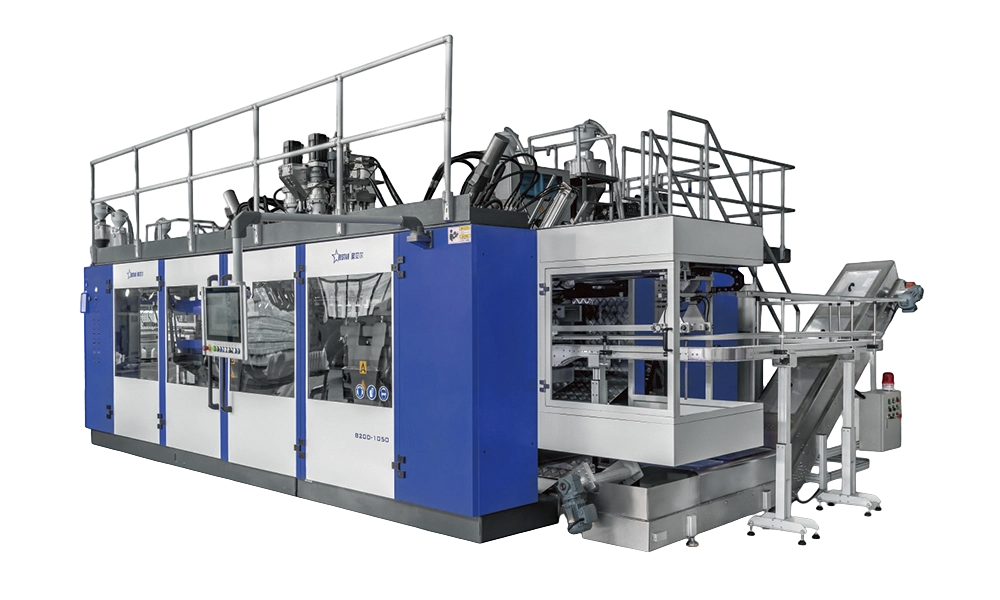
The selection of the right blow molding machine is crucial to achieving the desired product quality and efficiency. There are different types of blow molding machines tailored to specific needs, and each type has its strengths and suitability for different production volumes and product designs. For PETG, the following machines are commonly used:
Extrusion Blow Molding
Extrusion blow molding machines are widely used for producing hollow plastic items with a uniform wall thickness, such as bottles and containers. The process begins with the extrusion of the parison, followed by inflation inside a mold. These machines can handle PETG efficiently, producing both large and small items at high production speeds. Extrusion blow molding is ideal for large, thin-walled containers or products requiring high-volume output.
Injection Blow Molding
Injection blow molding machines are ideal for creating small, precise hollow parts, especially when high tolerances and detailed surface finishes are required. In this process, the plastic material is first injected into a mold to form a preform, which is then transferred to the blow mold for inflation. This machine is suitable for producing products like small bottles, medical containers, or other items requiring fine details and uniformity. PETG is an excellent material for injection blow molding due to its clarity and durability.
Injection Stretch Blow Molding
Injection stretch blow molding machines are used primarily for producing high-strength, lightweight bottles, particularly for beverages and consumer goods. This method involves stretching the preform in both the vertical and horizontal directions before inflating it in the blow mold. This technique enhances the strength and clarity of the final product, making it perfect for PETG, which retains excellent clarity and impact resistance. The stretch-blow molding process also provides superior wall distribution, which is critical in applications such as beverage bottles.
Key Components of a PETG Blow Molding Machine
PETG blow molding machines consist of several key components that work together to ensure smooth and efficient production:
Extruder or Injection Unit: This is where the PETG material is melted and shaped into the parison or preform.
Blow Molding Mold: A key part of the machine, the mold defines the shape and size of the final product. It can be a single or multi-cavity mold, depending on the number of items being produced simultaneously.
Blow Station: This component injects air into the parison to inflate it and conform it to the mold's shape.
Cooling System: Once the product is inflated and shaped, it must be cooled rapidly to solidify the material and maintain its shape. The cooling system plays a crucial role in ensuring uniform thickness and strength.
Ejection System: After cooling, the molded part is ejected from the mold, and additional processes like trimming or finishing can be carried out.
Control System: Modern blow molding machines are equipped with sophisticated control systems that regulate temperature, pressure, timing, and other process parameters to ensure consistency and high-quality production.
Selecting the Right Machine for Your Application
Choosing the right PETG blow molding machine depends on various factors, including:
Product Size and Design: Consider whether you need to produce small, precise parts or large containers. Injection blow molding is suited for high-precision, small products, while extrusion blow molding is ideal for larger items.
Production Volume: If you need to produce large quantities, extrusion blow molding or injection stretch blow molding is more suitable due to their faster production rates.
Material Compatibility: Ensure that the machine is optimized for PETG processing. Some machines may need specific adjustments to handle the material’s processing characteristics, such as temperature or pressure settings.
Customization and Flexibility: Look for machines that offer flexibility in terms of mold changes, product sizes, and output rates. Some machines are designed to accommodate different product types with minimal downtime.
Understanding these factors will help you select the right machine that ensures efficient, cost-effective, and high-quality production.
The PETG Blow Molding Process
Material Preparation and Handling
Before beginning the blow molding process, the PETG material needs to be prepared and handled carefully to ensure optimal results. PETG typically comes in the form of small pellets or resin beads that must first be dried to remove moisture. Excess moisture can lead to defects in the final product, such as bubbles or surface imperfections.
Drying: PETG should be dried in a hopper dryer at temperatures ranging from 160°F to 180°F (70°C to 82°C) for 3-4 hours, depending on the resin's moisture content. This ensures that the material is completely dry and free from any moisture before processing.
Pelletizing: PETG is often processed in pellet form. The pellets must be carefully fed into the hopper of the blow molding machine, where they will be melted and formed into the parison or preform.
Material Handling: Proper handling of PETG involves minimizing contamination and ensuring that the material is stored in a dry, clean environment. This reduces the likelihood of defects during processing and improves the overall quality of the molded products.
Machine Setup and Adjustments
Once the material is prepared, the blow molding machine must be set up and adjusted to the specific requirements of the PETG material and the desired product.
Mold Installation: The appropriate mold for the product is installed on the machine. The mold must be clean and free of debris to ensure a smooth finish on the molded part. For PETG, the mold temperature should be carefully controlled, typically ranging from 60°F to 80°F (15°C to 27°C), to ensure proper cooling and minimal warping.
Temperature Settings: The extruder or injection unit of the machine must be set to the proper temperature to ensure efficient melting and flow of the PETG material. PETG typically melts at around 430°F to 470°F (220°C to 240°C), but this may vary depending on the specific formulation of the resin.
Pressure and Air Settings: During the blowing stage, air pressure is crucial for forming the parison or preform. The pressure settings must be adjusted based on the material's flow characteristics to avoid defects like weak points or uneven wall thickness.
Cycle Time and Speed: The speed of the machine cycle, including the time for extrusion or injection and the blowing phase, should be set according to the product’s requirements. For PETG, fast cycle times are possible due to its favorable processing characteristics, but care must be taken not to rush the cooling process, as this could lead to quality issues.
Process Parameters and Optimization
The PETG blow molding process involves several key parameters that must be optimized to achieve high-quality results:
Temperature
Temperature is one of the most critical factors in the blow molding process. Properly managing the temperature of the material, the mold, and the extruder ensures that PETG flows smoothly and evenly. Overheating can cause the material to degrade, while insufficient heating can lead to improper molding. Regular temperature checks are vital to maintain consistency throughout the production run.
Extruder Temperature: 430°F to 470°F (220°C to 240°C)
Mold Temperature: 60°F to 80°F (15°C to 27°C)
Pressure
The pressure during the blow molding process plays a major role in achieving the desired product shape and wall thickness. Insufficient pressure can result in incomplete inflation or uneven wall thickness, while excessive pressure can cause defects such as material rupture or excessive thinning. Pressure settings need to be fine-tuned for PETG to optimize the inflation process.
Blow Pressure: Typically ranges from 40 to 100 bar (580 to 1450 psi), depending on the product design and material thickness.
Timing
The timing of various stages in the process—such as extrusion, injection, inflation, and cooling—affects the final product's quality. PETG has a relatively quick cooling rate, so cycle times should be adjusted accordingly. Under-extrusion or over-extrusion can lead to issues like inconsistent wall thickness, so optimizing the extrusion time is critical.
Cooling Time: The cooling time for PETG parts is typically between 10 to 30 seconds, depending on the part size and mold design.
Troubleshooting Common Issues in PETG Blow Molding
While PETG is a relatively easy material to process, several issues can arise during blow molding. Here are some common problems and how to troubleshoot them:
Bubbles in the Molded Part: Bubbles can occur if moisture remains in the PETG material or if the melt temperature is too high. Ensuring proper drying of the resin and controlling the temperature settings can help eliminate this issue.
Uneven Wall Thickness: Variations in wall thickness can result from improper air pressure, insufficient melt temperature, or incorrect mold alignment. Check the air pressure settings and ensure the mold halves are properly aligned.
Distortion or Warping: If the molded part warps after ejection, it could be due to uneven cooling or excessive mold temperature. Adjusting the cooling time and mold temperature can help reduce this issue.
Surface Imperfections: Surface defects like streaks, splay, or bubbles can occur if the material is contaminated or if the extrusion temperature is too high. Clean the extrusion components regularly and monitor the temperature settings to avoid these imperfections.
By carefully monitoring and adjusting these parameters, manufacturers can optimize the blow molding process for PETG and achieve high-quality products with minimal defects.
Applications of PETG Blow Molding
PETG is an extremely versatile material that is widely used in various industries for blow molding applications. Thanks to its clarity, durability, and ease of processing, PETG is well-suited for producing a broad range of products. Below are some of the key applications of PETG blow molding:
Packaging
One of the most common uses of PETG blow molding is in packaging, particularly for products that require high visibility, durability, and environmental resistance. PETG’s excellent clarity makes it ideal for producing containers that showcase the product inside, while its toughness ensures that the packaging can withstand handling and transportation.
Bottles
PETG is commonly used to produce beverage bottles, personal care product containers, and household cleaning bottles. Its clarity makes it perfect for displaying the contents clearly, and its resistance to impact ensures that the bottle maintains its integrity even under rough handling. PETG bottles are also highly resistant to chemicals, making them ideal for packaging products like cleaning agents and cosmetics.
Containers
PETG blow molding is used to create a wide variety of containers, ranging from food packaging to industrial storage containers. The material’s resistance to moisture, chemicals, and UV radiation ensures that the contents remain safe and fresh over time. Additionally, PETG’s recyclability makes it a sustainable choice for packaging.
Consumer Products
PETG is also used extensively in the production of consumer goods, especially those requiring clear, strong, and lightweight designs.
Cosmetic Packaging
The cosmetic industry frequently uses PETG for packaging skincare and cosmetic products. Its ability to retain clarity and formability makes it a popular choice for producing jars, bottles, and other containers. PETG packaging enhances the visual appeal of the product while ensuring that the packaging is both durable and aesthetically pleasing.
Toys
PETG’s toughness and safety profile make it a popular material for toy manufacturing. Blow-molded PETG toys are lightweight, durable, and often include intricate designs that can be made with precision. Since PETG is free from harmful chemicals like BPA, it is a safe choice for children’s toys.
Medical Devices
PETG is widely used in the medical industry for blow molding applications, particularly where clarity, chemical resistance, and sterilizability are essential. The material’s ability to withstand harsh cleaning agents and sterilization processes makes it an ideal choice for medical device components.
Medical Containers: PETG is used to create medical containers, including IV bottles, medical trays, and packaging for pharmaceutical products. Its clarity helps healthcare professionals easily identify contents.
Medical Devices: PETG is used for manufacturing various medical devices such as surgical instrument components, diagnostic equipment housings, and specialized trays for medical applications. Its durability and impact resistance ensure that these devices can endure the rigors of medical environments.
Automotive Parts
Blow-molded PETG parts are used in automotive applications where lightweight, durable components are needed. PETG’s ability to resist impact, chemicals, and high temperatures makes it a great material for automotive interior and exterior parts.
Interior Components: PETG is used to create components such as dashboard parts, cup holders, and trim elements. Its transparency and ability to take on different colors make it suitable for a wide variety of automotive designs.
Exterior Components: For exterior parts, PETG’s resistance to UV rays and environmental factors allows it to be used in parts like headlight covers, protective housings, and more. Its impact resistance also ensures that it can withstand the rough conditions faced by automotive parts.
Other Industries Utilizing PETG Blow Molding
In addition to the major industries mentioned above, PETG is also utilized in a variety of other sectors, including:
Electronics: PETG is used to produce protective casings and enclosures for electronic devices, offering impact resistance and clarity for parts like protective covers and housings.
Point-of-Purchase (POP) Displays: The material’s clarity and ease of molding make it ideal for producing retail displays that showcase products in a visually appealing manner.
Industrial Applications: PETG is used in producing tanks, pipes, and other components that require both durability and resistance to chemicals and impact.
Design Considerations for PETG Blow Molding
Designing products for PETG blow molding requires careful consideration of several factors that affect both the manufacturing process and the final product's performance. Below are key design considerations to keep in mind when creating PETG blow-molded parts.
Wall Thickness
One of the most critical design factors in blow molding is determining the correct wall thickness. For PETG, achieving uniform wall thickness is essential for ensuring that the product is structurally sound, aesthetically appealing, and resistant to impact and environmental stresses.
Uniformity: The walls of the molded part should be uniform to avoid weak points or inconsistencies that could result in defects. Variations in wall thickness can cause issues such as stress concentrations, reduced strength, and warping.
Thickness Variation: While uniformity is key, slight variations in wall thickness may be necessary for different parts of the product to achieve the desired strength and performance characteristics. For instance, thicker areas may be needed where greater durability is required, such as at the base or around threaded sections.
PETG has good flow characteristics, which helps in achieving even wall thicknesses. However, designers should account for the material’s flow rate and pressure distribution to optimize the molding process and avoid issues like excessive thinning or thickening in certain areas.
Ribs and Support Structures
Ribs and support structures are commonly used in blow-molded products to increase the part's strength and stability without adding significant weight. These features can also enhance the appearance of the product.
Designing Ribs: Ribs should be designed with careful consideration to prevent deformation or stress concentration. Too large or improperly placed ribs can cause warping or affect the clarity of PETG. It is recommended to design ribs with filleted edges to reduce stress.
Support Structures: Support structures help improve the rigidity and strength of the part without the need for excessive material. These should be designed to be as lightweight as possible while still providing the necessary structural support. PETG’s flexibility allows for a variety of structural designs, but proper placement is key to maintaining the integrity of the part.
Thread Design
Threaded designs are essential in blow-molded parts used for closures or containers. The design of threads must ensure a tight, secure fit while minimizing stress and material distortion. PETG, due to its strength and clarity, is well-suited for threaded applications.
Thread Profile: The thread design should consider factors such as the angle of the thread, the depth, and the spacing. A shallow angle is generally preferred for easier molding and to reduce stress concentrations at the base of the threads.
Tolerances: Tight tolerances are essential for ensuring that PETG parts with threads fit correctly with caps or other mating parts. Since PETG is relatively easy to process, achieving high precision is usually feasible, but careful control of the molding parameters is necessary.
Surface Finish
The surface finish of a blow-molded PETG product is critical for both aesthetic appeal and functional performance. PETG offers excellent clarity, making it ideal for products where transparency is important, such as packaging or display items.
Smooth Finish: PETG naturally offers a smooth, glossy surface that is ideal for products like bottles and containers. However, the surface can be modified with various techniques to achieve different finishes, such as matte, frosted, or textured surfaces.
Surface Defects: To ensure a smooth finish, avoid surface defects such as streaks, marks, or bubbles. Controlling the extrusion and cooling rates, as well as maintaining the cleanliness of the molds, can help prevent such issues.
Texturing: Textured finishes can be applied to PETG to enhance the tactile feel or provide additional aesthetic appeal. Textured designs are often used in consumer products like toys, cosmetics packaging, and even automotive parts.
When designing for PETG blow molding, it’s important to consider the intended end-use of the product, as well as the manufacturing constraints. By focusing on uniform wall thickness, optimizing rib and support structure placement, ensuring precise thread designs, and controlling surface finishes, manufacturers can achieve high-quality PETG products with superior durability and aesthetics.
Advantages and Disadvantages of PETG Blow Molding
PETG is a popular material for blow molding due to its exceptional properties, but like any material, it has its advantages and disadvantages. Understanding these will help manufacturers decide when to use PETG for specific applications and how to optimize the blow molding process.
Advantages
PETG offers several notable advantages, making it a highly desirable material for blow molding applications. These include:
Clarity
One of the standout features of PETG is its excellent clarity, which is particularly valuable for products that require high visibility, such as bottles, containers, and cosmetic packaging. PETG maintains its transparency throughout the molding process, ensuring a high-quality finish that is both visually appealing and functional.
Toughness
PETG is known for its impact resistance and toughness, which makes it suitable for applications that require durability. The material can withstand significant stress and mechanical impact without cracking or breaking, which is crucial for products like beverage bottles, medical devices, and automotive parts.
Chemical Resistance
PETG exhibits excellent resistance to a wide range of chemicals, including acids, oils, and solvents. This makes it particularly useful in industries such as packaging for cleaning agents, pharmaceuticals, and cosmetics, where exposure to various chemicals is common. PETG's chemical resistance also makes it a suitable material for medical device applications, where sterilization and exposure to chemicals are frequent.
Recyclability
PETG is 100% recyclable, which is an important advantage in industries focused on sustainability. As consumer demand for eco-friendly products increases, PETG's recyclability ensures that manufacturers can reduce waste and contribute to a circular economy. PETG is easier to recycle compared to many other plastics, making it an environmentally responsible choice.
Design Flexibility
PETG's ease of processing and excellent formability offer significant design flexibility. Manufacturers can create complex shapes and intricate designs with precision, and the material can be molded into thin walls or more substantial structures, depending on the product requirements. This versatility is crucial for various industries, from packaging to consumer products and medical devices.
Disadvantages
While PETG offers many benefits, it also has a few drawbacks that should be considered when choosing it for blow molding.
Cost
PETG tends to be more expensive than some other thermoplastic materials, such as polyethylene (PE) or polypropylene (PP). The higher cost is mainly due to the superior performance properties of PETG, such as its clarity, toughness, and chemical resistance. For some applications, especially those that do not require the advanced features of PETG, a more affordable material may be preferred.
Processing Temperature
PETG requires a relatively high processing temperature compared to some other plastics. The material needs to be heated to temperatures between 430°F to 470°F (220°C to 240°C), which can increase energy consumption during production. Additionally, managing the cooling rate and molding conditions is critical to prevent defects such as warping or uneven wall thickness.
Limited High-Temperature Resistance
Although PETG performs well in a variety of environments, it has limitations when exposed to high temperatures. PETG’s softening temperature is around 185°F to 210°F (85°C to 100°C), which makes it unsuitable for applications that require long-term exposure to high temperatures, such as automotive engine parts or cookware.
Scratch Sensitivity
PETG’s smooth, glossy surface is one of its advantages, but it can also be a disadvantage in certain applications. The material is more prone to scratching and surface damage compared to other materials like polycarbonate. This can be a concern for products that will be handled frequently or exposed to abrasive environments.
