


 English


Introduction to PETG Blow Molding
What is PETG?
PETG (Polyethylene Terephthalate Glycol) is a type of thermoplastic polyester, known for its excellent clarity, ...
Content
- 1 Understanding Blow Molding Technology and Operating Principles
- 2 Machine Configurations and Technical Specifications
- 3 Material Selection and Chemical Compatibility Considerations
- 4 Production Optimization and Quality Assurance
- 5 Maintenance, Troubleshooting, and Operational Efficiency
- 6 Equipment Selection and Emerging Innovations
Chemical barrel and bottle blow molding machines represent sophisticated industrial equipment that has revolutionized the production of plastic containers for chemical storage, transportation, and industrial applications. These specialized manufacturing systems transform plastic resins into precisely engineered containers capable of safely storing aggressive chemicals, corrosive substances, and hazardous materials while maintaining structural integrity and leak-proof performance throughout their operational lifespan. Understanding the technical capabilities, operational parameters, design considerations, and optimization strategies for chemical barrel blow molding machines enables manufacturers to maximize production efficiency, consistently deliver superior product quality, and remain competitive in demanding markets where container performance directly impacts customer satisfaction and safety compliance. This comprehensive guide explores every dimension of chemical barrel bottle blow molding machines, from fundamental operating principles through sophisticated design configurations, performance optimization strategies, quality assurance methodologies, and emerging innovations that continue advancing this essential manufacturing technology.
Understanding Blow Molding Technology and Operating Principles
Blow molding represents a manufacturing process that combines heating, shaping, and pressurized inflation to transform plastic resins into hollow containers with precisely controlled wall thickness, structural properties, and dimensional accuracy. The process begins with creation of a preform or parison, a preliminary plastic shape created through injection molding or extrusion that serves as the foundation for the final container. This intermediate component possesses predetermined dimensions, wall thickness distribution, and internal structure optimized for subsequent blow molding stages that inflate and shape the material into finished containers.
The blow molding cycle involves heating the preform to specific temperatures enabling plastic flow and deformation, positioning the softened material within precision molds defining the final container geometry, and introducing compressed air that inflates the plastic material against the mold surfaces. This pressurized inflation process occurs extremely rapidly, typically within 1-5 seconds depending on container size and complexity, creating finished containers with consistent wall thickness, precise dimensional tolerance, and excellent surface finish quality. The cooled containers are then ejected from molds, trimmed of excess material, and undergo quality inspection before packaging and shipment to customers.
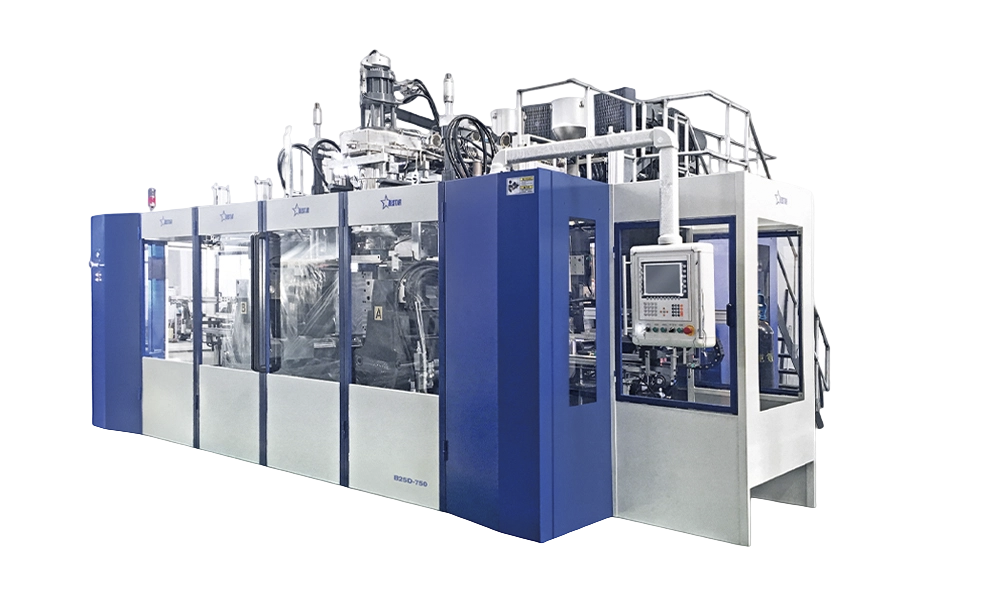
Chemical barrel blow molding machines represent specialized variants optimized for producing large-volume containers ranging from 5-1000+ liters specifically engineered for chemical storage and industrial applications. These systems incorporate robust designs, advanced heating and cooling systems, high-pressure pneumatic infrastructure, and sophisticated control systems ensuring production of containers meeting stringent chemical compatibility, structural strength, and leak-proof performance requirements. The machines must accommodate diverse plastic materials including high-density polyethylene (HDPE), polypropylene (PP), and specialized formulations providing superior chemical resistance, UV protection, and long-term durability in demanding storage conditions.
Machine Configurations and Technical Specifications
Chemical barrel blow molding machines employ various configurations optimized for different production volumes, container sizes, and performance requirements. Extrusion blow molding machines continuously extrude plastic tubular parison that is trapped between mold halves and inflated, enabling production of seamless containers with optimized material distribution and minimal waste. This approach proves particularly valuable for large-volume barrel production where continuous processing enables high throughput and consistent quality. The molten plastic flows continuously from the extruder, with intermittent pinching and blowing cycles creating successive containers in rapid sequence.
Injection blow molding machines produce containers through a sequential process involving injection molding of preforms, transfer to blow molding stations, and pressurized inflation creating final container geometry. This approach enables exceptional dimensional accuracy, superior wall thickness control, and production of complex geometries including integrated handles, spouts, and structural ribs with precision impossible through simpler techniques. The modular design enables production of multiple container types through rapid tooling changeovers, providing flexibility valuable for manufacturers producing diverse products or responding to changing market demands.
Stretch blow molding machines incorporate biaxial stretching of plastic material during the blow molding process, creating finished containers with superior strength-to-weight ratios, improved clarity, and enhanced barrier properties protecting contents from oxygen and moisture permeation. This advanced technique proves particularly valuable for chemical containers requiring extended shelf life, protection against photodegradation, or superior chemical compatibility. The stretching process imparts molecular alignment improving mechanical properties while reducing material consumption compared to conventional blow molding achieving equivalent performance.
Production capacity specifications typically range from 200-2000+ containers per hour depending on machine configuration, container volume, wall thickness requirements, and cycle time parameters. Larger containers generally require longer cooling times and handling, reducing production rates compared to smaller formats. Advanced machines incorporate rapid cooling systems including water channels within molds or cryogenic cooling enabling faster cycle times and increased throughput. Heating systems must deliver precise temperature control throughout the mold cavity, with sophisticated controllers monitoring multiple temperature zones ensuring consistent material properties enabling predictable container performance.
| Machine Type | Typical Capacity | Strengths | Best Applications |
| Extrusion Blow Molding | 500-1500/hour | High volume, efficiency | Large barrels, drums |
| Injection Blow Molding | 300-800/hour | Precision, complex shapes | Bottles with handles |
| Stretch Blow Molding | 200-600/hour | Strength, barrier properties | Premium chemical storage |
| Hybrid Systems | 600-1200/hour | Flexibility, optimization | Multi-product facilities |
Material Selection and Chemical Compatibility Considerations
High-density polyethylene (HDPE) represents the dominant material for chemical barrel production, offering exceptional chemical resistance, superior toughness at low temperatures, and cost-effectiveness enabling competitive pricing in commodity markets. HDPE demonstrates excellent compatibility with the vast majority of industrial chemicals, petroleum products, caustics, and acids, making it suitable for the broadest range of applications. The material's natural rigidity enables production of large containers maintaining shape and structural integrity without requiring extremely thick walls, minimizing material consumption while achieving required strength and performance characteristics.
Polypropylene (PP) offers superior resistance to specific chemical families including strong acids and oxidizing agents where HDPE demonstrates limitations, alongside improved temperature resistance enabling storage of heated chemicals or operation in high-temperature environments. The material's transparency enables visual monitoring of contents and fill levels, particularly valuable for applications where monitoring chemical quantity or detecting contamination proves important. Polypropylene's reduced stiffness compared to HDPE requires thicker walls or strategic ribbing to achieve equivalent structural rigidity, increasing material consumption and production costs compared to HDPE alternatives.
Specialized additives and formulations enhance basic plastic properties enabling superior performance in demanding applications. Carbon black incorporation provides UV protection extending outdoor storage life, stabilizers prevent degradation from thermal or light exposure, and impact modifiers maintain toughness in cold environments or during handling. Manufacturers must carefully select material formulations ensuring chemical compatibility with intended contents, as improper material selection can result in unacceptable permeation rates, absorption of chemical constituents, or degradation of container structural integrity.
Production Optimization and Quality Assurance
Optimizing blow molding production requires systematic control of multiple interrelated parameters including material temperature, mold temperature, inflation pressure, cooling time, and demolding cycles that collectively determine container quality and production efficiency. Temperature optimization ensures that plastic material reaches optimal flow characteristics enabling complete mold filling and proper material distribution without excessive cooling that would slow cycle times or incomplete inflation creating weak container walls. Infrared temperature monitoring and closed-loop feedback systems enable precise temperature control across entire mold cavities, identifying and correcting temperature variations that degrade quality consistency.
Pressure monitoring during the blow molding process reveals material behavior, cavity filling characteristics, and potential defect formation enabling real-time process adjustment preventing defective container production. Excessively high pressures indicate incomplete cavity filling or excessive material stiffness requiring temperature adjustment, while insufficient pressure suggests incomplete inflation or mold design issues requiring investigation. Advanced data acquisition systems record pressure profiles throughout each cycle, enabling analysis identifying optimization opportunities and detecting degradation indicating maintenance requirements.
Quality assurance methodologies include dimensional verification confirming containers meet specified tolerances, wall thickness measurement identifying material distribution anomalies, leak testing verifying integrity of seals and structural continuity, and weight monitoring detecting material shortages or excesses indicating process drift. Automated inspection systems employing machine vision and non-destructive testing techniques enable consistent quality screening without manual inspection limitations or human error. Statistical process control methodologies establish control limits detecting process degradation before significant quality problems develop, enabling preventive intervention minimizing scrap and rework requirements.
Critical Production Parameters for Chemical Barrels
- Resin temperature control from 180-250°C depending on material type and mold design
- Mold temperature optimization (20-80°C) affecting cooling rates and cycle times
- Blow air pressure (3-8 bar) ensuring complete cavity filling and proper wall formation
- Cooling duration optimization balancing quality with production rate requirements
- Parison wall thickness distribution enabling optimal material utilization
- Cycle time minimization while maintaining consistent container quality
Maintenance, Troubleshooting, and Operational Efficiency
Regular preventive maintenance schedules ensure that blow molding machines maintain optimal performance, minimize unplanned downtime, and extend equipment service life. Mold cleaning removes plastic residue preventing buildup that interferes with proper demolding and reduces mold cavity cleanliness, critical for maintaining surface finish quality. Heating and cooling system maintenance including filter changes, coolant replenishment, and temperature probe calibration prevents performance degradation reducing production efficiency. Pneumatic system maintenance including air compressor servicing, filter element replacement, and regulator verification ensures adequate air quality and pressure delivery essential for reliable blow molding operation.
Common defects including short fills, excessive wall thickness variation, warping, and brittleness indicate specific problems requiring diagnostic investigation and corrective action. Short fills typically result from inadequate material temperature, insufficient blow pressure, or mold cavity obstruction, each requiring different corrective measures. Wall thickness variation suggests parison distribution problems, mold cooling non-uniformity, or material flow irregularities requiring systematic investigation. Warping often indicates inadequate cooling time, excessive mold temperature, or improper mold release characteristics requiring temperature reduction or mold maintenance.
Energy efficiency optimization reduces operational costs through systematic approaches including cycle time reduction, temperature optimization minimizing heating losses, and cooling system efficiency improvements enabling faster temperature reduction. Modern machines incorporate energy recovery systems capturing waste heat for material preheating or other facility uses. Equipment upgrades including variable-speed motor drives, precision temperature control systems, and advanced cooling technologies deliver substantial energy savings while improving production efficiency and product quality.
Equipment Selection and Emerging Innovations
Selecting appropriate chemical barrel blow molding machines requires careful evaluation of production volume requirements, container specifications, material compatibility needs, and facility infrastructure. Used or refurbished equipment enables cost-effective capacity additions for manufacturers with limited capital budgets, though thorough inspection and testing prove essential confirming acceptable condition and performance capability. New equipment offers latest technology, comprehensive warranties, and manufacturer technical support justifying premium pricing for manufacturers requiring state-of-the-art capabilities or operating in demanding application environments.
Industry innovations including Industry 4.0 connectivity enabling remote monitoring and predictive maintenance, artificial intelligence optimizing production parameters based on quality data, and advanced materials expanding chemical compatibility improve competitiveness and operational efficiency. Multi-cavity molds producing multiple containers per cycle reduce per-unit production costs improving profitability. Rapid mold changeover systems enable efficient production of diverse container types reducing setup times between product runs. Robotic handling systems improve efficiency and ergonomics particularly for large barrel handling in high-volume operations.
Chemical barrel bottle blow molding machines represent essential manufacturing infrastructure enabling safe, reliable storage and transportation of industrial chemicals, corrosive substances, and hazardous materials. Understanding machine capabilities, operational parameters, material selection considerations, and optimization strategies enables manufacturers to maximize production efficiency, consistently deliver superior product quality, and remain competitive in demanding markets where container performance directly impacts customer satisfaction and safety compliance. As technology continues advancing and environmental pressures drive innovations toward sustainability, blow molding equipment will continue evolving, incorporating innovations that improve efficiency, reduce environmental impact, and enable production of superior containers meeting the demanding requirements of chemical storage and industrial applications.
