


 English


Introduction to PETG Blow Molding
What is PETG?
PETG (Polyethylene Terephthalate Glycol) is a type of thermoplastic polyester, known for its excellent clarity, ...
Content
How PET Bottle Blow Moulding Machines Work
A PET bottle blow moulding machine transforms preforms, small test-tube-shaped pieces of PET plastic, into finished bottles through a process called stretch blow moulding. The preform is first heated to a temperature just below its melting point, typically between 95 and 105 degrees Celsius, which makes the material pliable without losing its molecular structure. The heated preform is then placed into a mould cavity shaped like the final bottle, where a stretch rod extends it vertically while high-pressure air simultaneously expands it outward against the mould walls. This combination of stretching and blowing orients the plastic molecules in two directions, which is what gives PET bottles their characteristic strength, clarity, and resistance to gas permeation.
Types of PET Blow Moulding Machines
Manufacturers can choose from several machine configurations depending on production volume, bottle design complexity, and available capital. Understanding these categories is the first step toward selecting a system suited to a specific production goal.
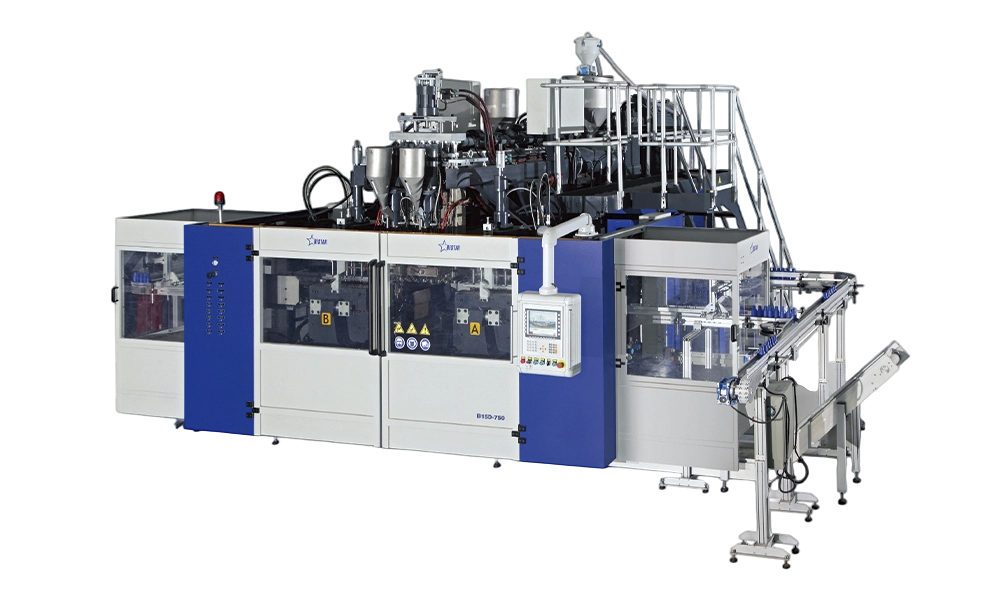
Semi-Automatic Machines
Semi-automatic machines require an operator to manually load preforms and remove finished bottles, making them suitable for small-scale production, startups, or businesses producing a wide variety of bottle shapes in low volumes. These machines have a lower upfront cost but produce fewer bottles per hour compared to automated alternatives.
Fully Automatic Linear Machines
Fully automatic linear machines handle preform feeding, heating, and blowing without manual intervention, moving preforms through the process in a straight-line sequence. These systems are well suited to mid-size operations that need consistent output with moderate labor requirements, and they generally offer a reasonable balance between cost and throughput.
Rotary Blow Moulding Machines
Rotary machines arrange multiple mould stations around a rotating wheel, allowing continuous, high-speed production that can exceed tens of thousands of bottles per hour on large-scale systems. These machines are the standard choice for beverage bottlers and high-volume packaging producers where maximizing output per hour is a top priority.
- Semi-automatic machines suit low-volume or highly varied production runs
- Linear automatic machines balance moderate cost with steady output
- Rotary machines deliver the highest throughput for large-scale operations
- Two-stage systems separate preform injection and blowing into distinct steps
One-Stage vs Two-Stage Systems
Beyond machine type, buyers must also decide between one-stage and two-stage production systems, which determine how preforms are made and processed into final bottles.
| Feature | One-Stage System | Two-Stage System |
| Process Flow | Preform injection and blowing combined | Separate injection and blowing stages |
| Best Production Volume | Low to medium | Medium to very high |
| Flexibility for Bottle Design | High | Moderate, depends on preform supply |
| Space Requirement | Smaller footprint | Larger, often two facilities |
A one-stage system injects and blows preforms into finished bottles within a single machine cycle, which reduces material handling and works well for operations that want flexibility to switch bottle designs frequently. A two-stage system, in contrast, purchases or produces preforms separately, then reheats and blows them into bottles in a dedicated blow moulding machine. This separation allows preform production to run continuously at a different facility, making two-stage systems the preferred approach for very high-volume beverage bottling where efficiency at scale outweighs the benefits of design flexibility.
Key Factors That Affect Production Efficiency
Achieving high efficiency in PET bottle production depends on more than just machine speed. Several operational factors directly influence how many usable bottles a facility can produce per hour.
Heating System Precision
Infrared heating ovens must deliver consistent, evenly distributed heat across each preform to prevent uneven wall thickness in the finished bottle. Machines with individually controlled heating zones and preform rotation during heating tend to produce more uniform bottles with fewer rejects, directly improving overall yield.
Mould Cooling Efficiency
Faster, more effective mould cooling shortens cycle time, which is one of the most significant levers for increasing hourly output. Machines equipped with optimized cooling channels and chilled water circulation systems can reduce cycle times without compromising bottle strength or dimensional accuracy.
Air Recovery Systems
Blow moulding requires substantial compressed air, and this represents a significant portion of a facility's operating cost. Machines with air recovery systems capture and reuse high-pressure air from the blowing stage, cutting compressed air consumption significantly and improving overall energy efficiency without sacrificing production speed.
Choosing the Right Machine for Your Production Needs
Selecting a PET bottle blow moulding machine should start with a realistic assessment of production volume, bottle variety, and available capital. Small businesses producing a limited number of bottles per day, or those testing new product lines, are often better served by a semi-automatic or entry-level linear machine, since the lower investment reduces financial risk while production volume is still being established. Companies with steady, predictable demand for a narrow range of bottle sizes typically benefit most from a fully automatic linear or rotary system, where the higher initial investment pays off through lower per-unit production costs at scale.
Buyers should also evaluate mould change-over time if the production line will handle multiple bottle shapes, since machines with quick-change mould systems reduce downtime between production runs. It is equally important to confirm that the chosen machine's cavity count and cycle time align with realistic hourly output targets, since manufacturer specifications often reflect ideal conditions rather than typical day-to-day performance.
- Match machine type to expected daily or hourly production volume
- Prioritize precise heating and efficient cooling for consistent quality
- Consider air recovery systems to reduce long-term operating costs
- Evaluate mould change-over speed if producing multiple bottle designs
Maintenance Practices That Sustain High Output
Even a well-selected machine will underperform without a consistent maintenance routine. Regular inspection of heating lamps, stretch rods, and mould seals helps catch wear before it leads to defective bottles or unplanned downtime. Lubrication schedules for moving components, along with periodic calibration of the blowing pressure and timing controls, should follow the manufacturer's recommended intervals rather than being deferred until a problem occurs.
Operators should also track key performance indicators such as reject rate, average cycle time, and compressed air consumption over time, since gradual shifts in these numbers often signal developing mechanical issues long before a breakdown happens. A disciplined preventive maintenance program, combined with the right machine selection for a facility's production scale, is what ultimately allows manufacturers to sustain high efficiency PET bottle production over the long term.
