


 English


Introduction to PETG Blow Molding
What is PETG?
PETG (Polyethylene Terephthalate Glycol) is a type of thermoplastic polyester, known for its excellent clarity, ...
Content
- 1 The Role of Blow Molding Machines in Food and Beverage Packaging
- 2 Main Types of Blow Molding Technology Used in Food and Beverage Production
- 3 Comparing Blow Molding Technologies
- 4 Key Factors When Selecting a Food and Beverage Blow Molding Machine
- 5 Maintenance Practices That Extend Machine Lifespan
- 6 Trends Shaping the Future of Food and Beverage Blow Molding
The Role of Blow Molding Machines in Food and Beverage Packaging
Food and beverage blow molding machines are the backbone of plastic container production for the packaging industry, transforming raw plastic resin into bottles, jugs, and jars used to hold water, juice, dairy products, sauces, and countless other consumable goods. These machines heat plastic material, typically PET, HDPE, or PP, until it becomes pliable, then shape it using compressed air within a mold cavity to create hollow containers with precise wall thickness and structural integrity.
Because food and beverage products require strict hygiene and safety standards, blow molding machines used in this sector must meet specific regulatory requirements related to material purity, contamination prevention, and consistent production quality. A poorly calibrated machine can lead to weak container walls, inconsistent neck finishes that compromise sealing, or contamination risks that make products unsuitable for food-grade use, making machine selection a critical decision for manufacturers entering this space.
Main Types of Blow Molding Technology Used in Food and Beverage Production
Different blow molding processes are suited to different container types and production volumes. Understanding these distinctions helps manufacturers choose equipment aligned with their specific product line.
Extrusion Blow Molding (EBM)
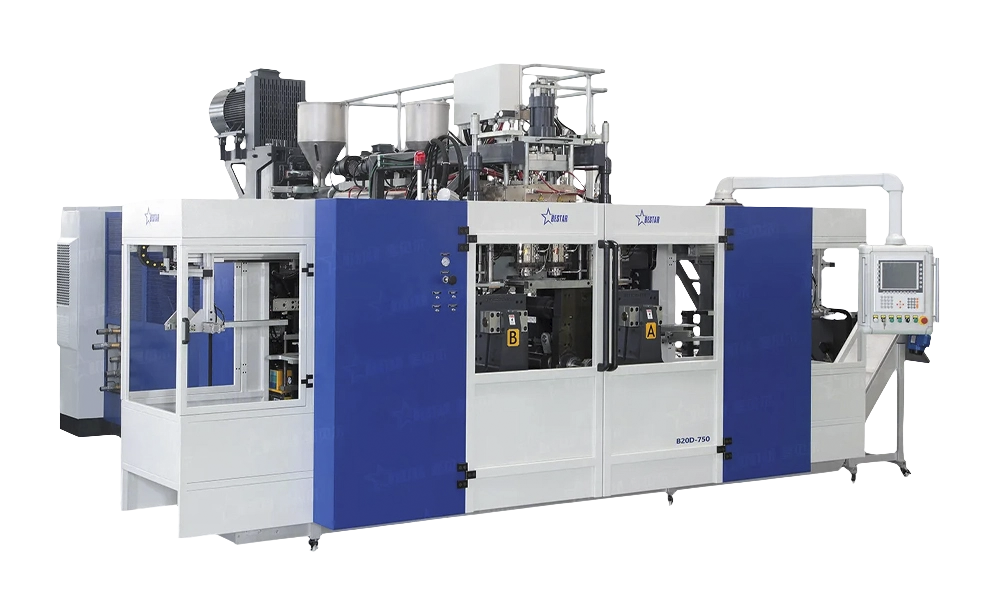
Extrusion blow molding involves melting plastic and forming it into a hollow tube, known as a parison, which is then clamped inside a mold and inflated with air to take the container's final shape. This method is commonly used for producing bottles with handles, such as milk jugs and larger beverage containers, due to its cost-effectiveness for thicker-walled, irregularly shaped products.
Injection Stretch Blow Molding (ISBM)
Injection stretch blow molding is the dominant technology for producing PET bottles used in water, soft drinks, and juice packaging. This two-stage process first injection-molds a preform, then reheats and stretches it using both mechanical force and compressed air to achieve the final bottle shape. ISBM produces bottles with superior clarity, strength, and precise wall distribution, making it the preferred choice for beverages requiring an attractive, transparent appearance.
One-Step vs Two-Step Machines
Within ISBM technology, manufacturers can choose between one-step machines, which combine preform injection and bottle blowing within a single unit, or two-step machines, which separate these processes across two distinct pieces of equipment. One-step systems are often favored by smaller operations needing flexibility across multiple bottle designs, while two-step systems are typically chosen by high-volume beverage producers focused on maximizing output efficiency for a limited range of bottle shapes.
Comparing Blow Molding Technologies
The table below outlines key differences between the main blow molding technologies used in food and beverage container manufacturing.
| Technology | Common Products | Key Strength |
| Extrusion Blow Molding | Milk jugs, handled containers | Cost-effective for thick-walled items |
| Injection Stretch Blow Molding | Water and soda PET bottles | High clarity and strength |
| One-Step Machines | Small-batch, varied bottle designs | Design flexibility |
| Two-Step Machines | High-volume beverage bottling | Maximum production efficiency |
Key Factors When Selecting a Food and Beverage Blow Molding Machine
Choosing the right machine involves evaluating several operational and product-specific factors that directly affect production efficiency and container quality.
- Production capacity — assess required bottles per hour to match machine output with demand.
- Container size range — confirm the machine can accommodate both current and future bottle volume needs.
- Material compatibility — verify the equipment supports the specific resin type used, such as PET or HDPE.
- Food-grade compliance — ensure the machine and its components meet relevant food safety certifications.
- Energy efficiency — compare power consumption, as this significantly affects long-term operating costs.
- Mold changeover time — consider how quickly the machine can switch between different bottle designs.
Maintenance Practices That Extend Machine Lifespan
Regular maintenance is essential for keeping food and beverage blow molding machines running efficiently while preserving product quality standards. Heating elements should be inspected periodically, as inconsistent temperature control directly affects wall thickness uniformity and can lead to defective bottles. Mold surfaces require routine cleaning to prevent buildup that could compromise container clarity or introduce contamination risks in food-grade production lines.
Air compression systems, which are central to the blowing process itself, should be monitored for pressure consistency and filtered regularly to prevent moisture or particulate contamination from affecting the plastic forming process. Establishing a scheduled maintenance routine not only reduces unplanned downtime but also helps manufacturers maintain the strict quality standards required for food and beverage packaging applications.
Trends Shaping the Future of Food and Beverage Blow Molding
The food and beverage packaging industry continues to shift toward lighter, more sustainable container designs, pushing blow molding machine manufacturers to develop equipment capable of producing thinner-walled bottles without sacrificing structural integrity. This trend toward lightweighting reduces both material costs and environmental impact, aligning with growing consumer and regulatory demand for more sustainable packaging solutions.
Additionally, increased automation and smart monitoring systems are becoming more common in modern blow molding lines, allowing manufacturers to track production metrics in real time, detect defects earlier, and reduce material waste. As beverage brands continue to diversify container shapes and sizes for marketing differentiation, machines offering faster mold changeover and greater design flexibility are likely to see growing demand across the packaging sector.
