


 English


Introduction to PETG Blow Molding
What is PETG?
PETG (Polyethylene Terephthalate Glycol) is a type of thermoplastic polyester, known for its excellent clarity, ...
Content
- 1 What Is a Blow Molding Machine?
- 2 Step 1: Feeding and Melting the Plastic Resin
- 3 Step 2: Forming the Parison or Preform
- 4 Step 3: Clamping the Mold
- 5 Step 4: Blowing and Inflating
- 6 Step 5: Cooling the Part
- 7 Step 6: Mold Opening and Part Ejection
- 8 Key Process Variables That Affect Part Quality
- 9 Comparing the Three Blow Molding Processes
- 10 Why Understanding the Process Matters for Buyers and Engineers
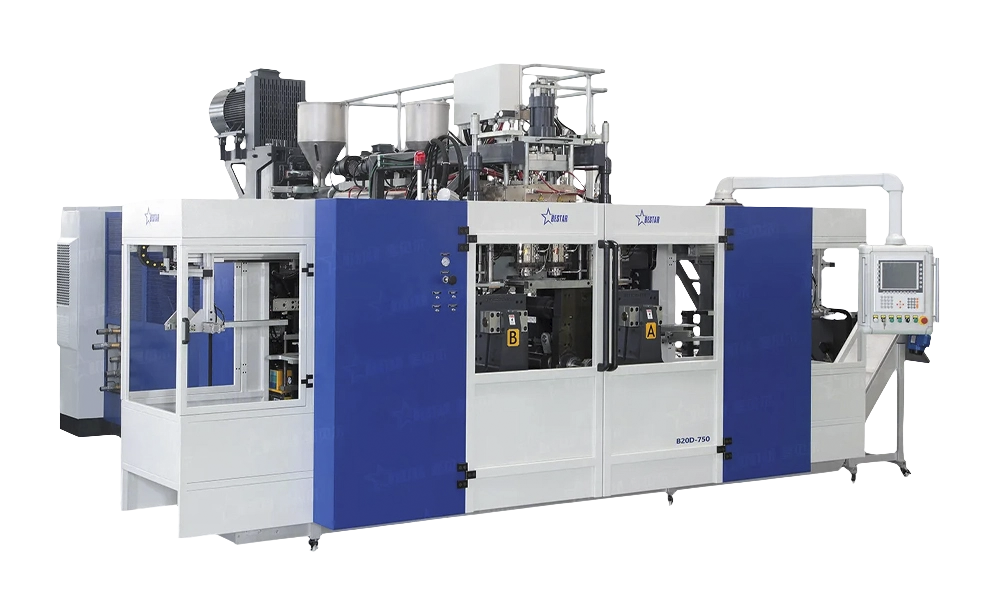
What Is a Blow Molding Machine?
A blow molding machine is industrial equipment used to manufacture hollow plastic parts — bottles, containers, automotive components, and more — by inflating a softened plastic tube or preform inside a mold until it takes the mold's shape. The process is fast, repeatable, and capable of producing millions of identical units with thin, uniform walls. It is the backbone of the packaging industry and a critical process in sectors ranging from food and beverage to pharmaceuticals and personal care.
Understanding how these machines work helps manufacturers select the right process for their product, troubleshoot quality defects, and optimize cycle times. There are three primary types — extrusion blow molding (EBM), injection blow molding (IBM), and injection stretch blow molding (ISBM) — each with a distinct operating sequence. Despite their differences, all three share the same fundamental logic: heat plastic, form a preform or parison, inflate it into a mold, cool it, and eject the finished part.
Step 1: Feeding and Melting the Plastic Resin
The process begins at the hopper, where plastic pellets or granules — commonly HDPE, PET, PP, or PVC — are loaded and gravity-fed into the barrel of an extruder or injection unit. Inside the barrel, a rotating screw conveys the material forward while electric heater bands and frictional heat from the screw's mechanical action melt the resin to a precise processing temperature. For HDPE, this is typically between 180°C and 230°C; for PET in stretch blow molding, preforms are reheated to around 100°C to 120°C before blowing.
Temperature uniformity across the melt is critical. Inconsistent melt temperature causes uneven wall thickness, surface defects, or incomplete inflation. Most modern machines use closed-loop temperature controllers with multiple heating zones to maintain tight tolerances throughout the barrel length.
Step 2: Forming the Parison or Preform
Once the plastic is molten and homogenous, it is shaped into an intermediate form before blowing. This step differs depending on the process type.
Extrusion Blow Molding (EBM)
In EBM, molten plastic is continuously or intermittently extruded downward through a die head, forming a hollow tube called a parison. The die gap controls wall thickness, and programmable parison controllers can vary the gap during extrusion to compensate for stretching at different points, ensuring the finished part has consistent walls. Once the parison reaches the correct length, the mold closes around it.
Injection Blow Molding (IBM)
In IBM, molten plastic is injected around a steel core pin inside a preform mold, creating a thick-walled tube called a preform with a precisely formed neck finish. The preform is then transferred — still on the core pin — to the blow mold station. IBM is preferred when bottle neck dimensions need tight tolerances, such as for pharmaceutical vials.
Injection Stretch Blow Molding (ISBM)
ISBM, the dominant process for PET bottles, either produces preforms in-house (one-stage) or uses pre-made preforms reheated in an oven (two-stage). The preforms are heated to a precise temperature and transferred to the blow station, where they are both stretched axially by a rod and inflated radially. This biaxial orientation improves clarity, barrier properties, and mechanical strength — which is why PET bottles are used for carbonated drinks.
Step 3: Clamping the Mold
As the parison or preform is positioned, the two halves of the blow mold close around it under hydraulic or electric clamping force. The mold is made from aluminum or steel and machined to the exact shape of the finished part. At the bottom of the mold, a pinch-off area seals the parison shut and trims the flash — excess plastic squeezed out during closing. Clamping force must be sufficient to resist the internal blow pressure without deforming the mold or allowing material to escape at the parting line.
Mold design plays a major role in part quality. Features like venting channels allow trapped air to escape as the plastic expands, preventing surface pitting. Cooling channels machined into the mold body circulate chilled water to remove heat quickly and consistently.
Step 4: Blowing and Inflating
With the mold clamped shut, a blow pin or blow needle is inserted into the open end of the parison or through the preform's neck. Compressed air — typically between 0.5 MPa and 1.0 MPa for EBM, and up to 4.0 MPa for ISBM — is injected into the hollow interior. The pressurized air forces the softened plastic outward against the mold walls, where it takes the exact shape of the cavity in fractions of a second.
In ISBM, the stretch rod descends into the preform at the same moment air is introduced, elongating the preform downward before the air fully expands it radially. This simultaneous stretching and blowing is what produces the biaxial molecular orientation that gives PET bottles their strength and gas barrier performance.
Step 5: Cooling the Part
After inflation, the plastic must be cooled below its heat distortion temperature while still held inside the mold under pressure. Cooling water circulates through channels in the mold at temperatures typically between 8°C and 15°C. The plastic solidifies and retains the mold's shape. Cooling time is one of the largest contributors to total cycle time — insufficient cooling causes the part to distort when ejected, while excessive cooling unnecessarily extends the cycle and reduces output.
Some machines use internal air cooling, where chilled air is blown through the blow pin into the interior of the part, cooling it from both inside and outside simultaneously to shorten cycle times. For thick-walled parts, this can meaningfully improve throughput.
Step 6: Mold Opening and Part Ejection
Once cooled, the mold halves open and the finished part is ejected — either by gravity, mechanical ejector pins, or a robotic take-out arm. In EBM, flash trimming typically happens at this stage: the tail flash at the bottom pinch-off and any neck flash are removed by trimming blades or a separate deflashing station downstream.
The ejected part moves through a conveyor to downstream operations, which may include leak testing, vision inspection, labeling, filling, or packaging. Scrap flash is often ground and reintroduced to the feed hopper as regrind, maintaining material efficiency.
Key Process Variables That Affect Part Quality
Blow molding quality depends on tight control of multiple interdependent variables. The table below summarizes the most critical parameters and their effects:
| Parameter | Effect on Part | Common Issue if Out of Range |
| Melt Temperature | Viscosity and flow behavior | Uneven wall thickness, degradation |
| Blow Pressure | Surface detail reproduction | Incomplete inflation, webbing |
| Mold Temperature | Surface finish and cycle time | Distortion, extended cycle, gloss defects |
| Parison Weight | Part weight and material use | Thin spots, excess flash |
| Cooling Time | Dimensional stability | Warpage, shrinkage variation |
Comparing the Three Blow Molding Processes
Choosing the right blow molding method depends on the part geometry, material, required tolerances, and production volume. Here is a practical comparison:
- Extrusion Blow Molding is best for large, complex shapes like jerry cans, automotive ducts, and industrial containers. It handles a wide range of materials and can produce parts with handles integrated into the mold. Tooling cost is relatively low, making it accessible for medium-volume production.
- Injection Blow Molding produces parts with no weld lines and exceptional neck finish accuracy. It is used for small, precise containers like medicine bottles and cosmetic jars. However, it is limited to simpler shapes and has higher tooling costs than EBM.
- Injection Stretch Blow Molding is the process of choice for PET beverage bottles. The biaxial orientation it produces gives excellent clarity and strength at very low wall thicknesses, reducing material cost per bottle. Two-stage ISBM is extremely fast, capable of producing thousands of bottles per hour on multi-cavity equipment.
Why Understanding the Process Matters for Buyers and Engineers
For procurement teams and product engineers, knowing how a blow molding machine works is not academic — it directly informs decisions about tooling investment, material selection, quality specifications, and supplier evaluation. A bottle with inconsistent wall thickness may pass a visual inspection but fail a drop test; understanding that wall thickness is controlled by parison programming and blow pressure helps teams ask the right questions during qualification.
For machine operators and process technicians, understanding each step makes root-cause analysis faster. A part with a thin bottom section points toward parison controller settings or pinch-off geometry; surface pitting suggests inadequate mold venting; excessive flash suggests a clamping force or parison weight issue. Each defect traces back to a specific point in the process sequence described above.
Blow molding machines are highly optimized systems, and their output quality is a direct reflection of how well each step in the process is understood and controlled. Whether you are specifying a new machine, sourcing a contract manufacturer, or debugging a production line, the step-by-step process is the foundation of every informed decision.
