


 English


Introduction to PETG Blow Molding
What is PETG?
PETG (Polyethylene Terephthalate Glycol) is a type of thermoplastic polyester, known for its excellent clarity, ...
Content
- 1 Understanding Pesticide Bottle Manufacturing Requirements
- 2 Extrusion Blow Molding for Pesticide Bottles
- 3 Injection Blow Molding for Pesticide Bottles
- 4 Comparative Technical Analysis
- 5 Material Selection and Chemical Compatibility
- 6 Regulatory Compliance and Safety Features
- 7 Economic Considerations and Production Planning
- 8 Technology Selection Decision Framework
- 9 Future Trends and Emerging Technologies
Understanding Pesticide Bottle Manufacturing Requirements
Pesticide bottle manufacturing demands specialized blow molding technology addressing unique requirements distinct from general consumer packaging. These agrochemical containers must provide exceptional barrier properties preventing chemical permeation, demonstrate resistance to aggressive formulations including concentrated acids and solvents, and meet stringent safety regulations protecting applicators and the environment. The bottles face extreme conditions during storage and field use including temperature fluctuations, UV exposure, mechanical stress from transportation, and potential contact with incompatible substances. Selecting appropriate blow molding technology between extrusion blow molding (EBM) and injection blow molding (IBM) fundamentally impacts production efficiency, bottle performance, regulatory compliance, and long-term cost-effectiveness.
The agrochemical packaging industry increasingly emphasizes child-resistant closures, tamper-evident features, precise dosing mechanisms, and clear product visibility through transparent or translucent materials. Modern pesticide bottles incorporate sophisticated designs including ergonomic handles for comfortable carrying, measuring chambers for accurate dilution, and specialized closures meeting international safety standards. Manufacturing technology must accommodate these complex geometries while maintaining consistent wall thickness, dimensional accuracy, and structural integrity. Understanding the capabilities, limitations, and optimal applications of extrusion versus injection blow molding enables manufacturers to select technology matching specific product requirements, production volumes, and quality standards demanded by this heavily regulated industry.
Extrusion Blow Molding for Pesticide Bottles
Process Description and Technical Characteristics
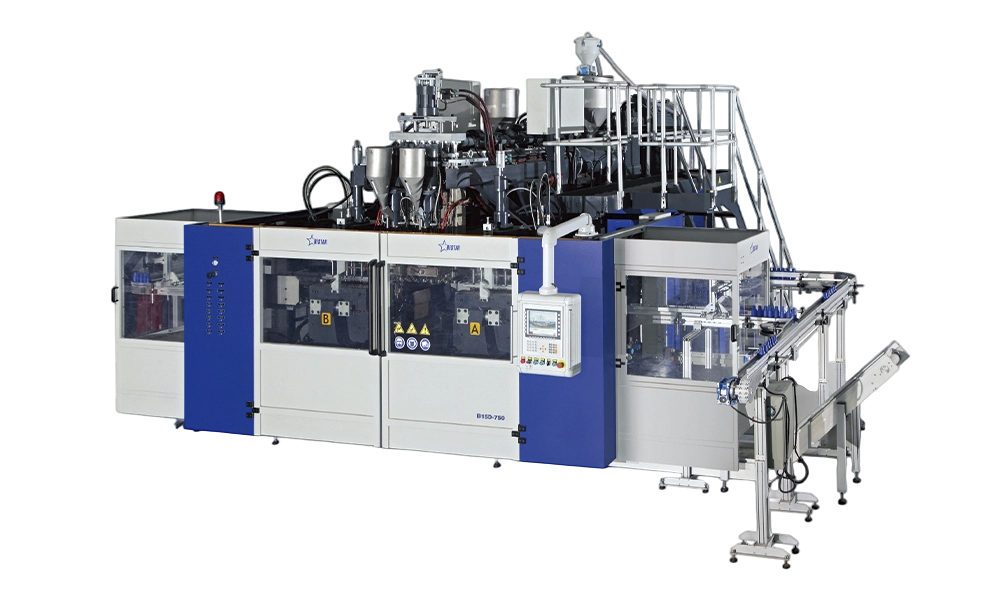
Extrusion blow molding creates pesticide bottles by extruding a hollow plastic parison through an annular die, clamping it within a cooled mold, and inflating it with compressed air to conform to the cavity shape. This continuous process suits medium to large bottles ranging from 250ml to 25 liters commonly used for concentrated pesticides, herbicides, and agricultural chemicals. The technology accommodates various materials including high-density polyethylene (HDPE) offering excellent chemical resistance, fluorinated HDPE providing enhanced barrier properties, and multi-layer structures combining different resins optimizing cost and performance. Extrusion blow molding excels at producing bottles with integrated handles, complex body shapes, and variable wall thickness distribution through programmable parison control directing material to high-stress areas.
Advantages for Pesticide Applications
Extrusion blow molding offers several advantages making it preferred for specific pesticide bottle applications. The process efficiently produces large-volume containers at lower tooling costs compared to injection blow molding, with mold expenses typically 30-50% less enabling economical production of specialized bottle designs for regional markets or limited product runs. Multi-layer co-extrusion capability creates sophisticated barrier structures incorporating EVOH or polyamide layers preventing pesticide active ingredient permeation and oxygen ingress that could degrade formulations. The technology handles wide bottles with large openings facilitating powder or granular formulation filling without specialized equipment. Integrated handle formation during molding eliminates secondary assembly operations while creating ergonomically designed grips distributing weight comfortably during field application.
Limitations and Challenges
Despite advantages, extrusion blow molding faces limitations in pesticide bottle production. The process generates material waste through pinch-off scrap where mold halves seal the parison, typically 5-15% of total material usage representing cost and environmental considerations. Precise neck finish dimensions critical for child-resistant closure compatibility prove more challenging to control compared to injection blow molding, potentially requiring secondary operations or tighter process control. Wall thickness variation from parison sag and inflation dynamics can create inconsistencies affecting structural performance and barrier properties unless advanced parison programming systems optimize material distribution. The technology struggles with extremely precise dimensional tolerances and intricate neck threading required for some specialty closure systems, potentially limiting design options for premium pesticide products.
Injection Blow Molding for Pesticide Bottles
Process Mechanics and Capabilities
Injection blow molding produces pesticide bottles through a two-stage process beginning with injection molding a preform around a core rod, then transferring the hot preform to a blow mold where compressed air inflates it to final shape. This technology delivers exceptional dimensional precision particularly in neck finish areas, producing threads, tamper-evident rings, and sealing surfaces to tight tolerances ensuring reliable closure performance. The process excels at small to medium bottles from 30ml to 5 liters commonly used for ready-to-use pesticide formulations, household insecticides, and concentrated products requiring precise dosing. Injection blow molding achieves superior surface finish quality, optical clarity in transparent materials, and consistent wall thickness distribution beneficial for bottles requiring uniform barrier properties throughout.
Benefits in Pesticide Packaging
Injection blow molding provides distinct advantages for sophisticated pesticide bottle applications. The process generates virtually no material waste since preform mass equals finished bottle weight, improving material efficiency and reducing environmental impact compared to extrusion blow molding's inherent scrap generation. Precise neck finish control ensures consistent torque requirements for child-resistant closures and reliable sealing preventing leakage or contamination during distribution and storage. The technology produces bottles with excellent dimensional stability and repeatability critical for automated filling lines demanding consistent bottle geometry for high-speed operation. Superior optical properties in clear materials enable product visibility and integrated measurement markings helping users achieve accurate dilution ratios reducing application errors and environmental contamination from overdosing.
Process Limitations
Injection blow molding faces constraints limiting its universal application in pesticide packaging. Higher tooling costs stemming from complex three-station machinery and precision mold components make it less economical for low-volume specialty products or frequent design changes. The process typically limits bottle capacity to approximately 5 liters due to preform weight and handling considerations, excluding it from large agricultural chemical containers popular in commercial farming applications. Handle integration proves more challenging requiring secondary assembly operations rather than in-mold formation available with extrusion blow molding. Wide-mouth containers present difficulties as preform diameter constraints limit maximum opening sizes achievable, potentially restricting options for powder formulation packaging requiring large fill openings.
Comparative Technical Analysis
| Feature | Extrusion Blow Molding | Injection Blow Molding |
| Bottle Size Range | 250ml - 25L | 30ml - 5L |
| Neck Precision | Good (±0.2mm) | Excellent (±0.05mm) |
| Material Waste | 5-15% scrap | Minimal (<2%) |
| Tooling Cost | $15,000-$50,000 | $30,000-$100,000 |
| Cycle Time | 10-45 seconds | 15-60 seconds |
| Handle Integration | In-mold formation | Secondary assembly |
| Multi-Layer Capability | Excellent (3-7 layers) | Limited (single layer typical) |
| Production Rate | 500-2000 bottles/hour | 1000-4000 bottles/hour |
Material Selection and Chemical Compatibility
HDPE for Aggressive Formulations
High-density polyethylene dominates pesticide bottle production across both blow molding technologies due to excellent chemical resistance against acids, bases, oxidizers, and organic solvents commonly found in agrochemical formulations. HDPE maintains structural integrity when exposed to concentrated active ingredients including glyphosate, 2,4-D, organophosphates, and pyrethroids without stress cracking, swelling, or mechanical property degradation. The material's moisture barrier properties protect water-sensitive formulations while preventing external humidity from affecting product concentration. Both extrusion and injection blow molding process HDPE effectively, though extrusion blow molding offers advantages for fluorinated HDPE grades providing enhanced barrier performance through surface fluorination creating a thin barrier layer preventing permeation of volatile active ingredients.
Specialty Resins and Barrier Technologies
Advanced pesticide formulations containing volatile organic compounds or oxygen-sensitive active ingredients require specialty barrier technologies beyond standard HDPE capabilities. Extrusion blow molding's multi-layer co-extrusion integrates EVOH barrier layers between HDPE structural layers, reducing permeation rates by 10-100 times compared to monolayer HDPE while maintaining chemical resistance and mechanical properties. This technology proves essential for emulsifiable concentrate formulations and products with stringent shelf-life requirements. Injection blow molding typically produces monolayer bottles but can utilize specialty barrier resins like HDPE with integrated barrier additives or post-treatment fluorination achieving intermediate barrier performance. The technology choice depends on required barrier levels, production volumes, and cost constraints balancing material expenses against performance requirements.
Regulatory Compliance and Safety Features
Child-Resistant Closure Compatibility
Regulatory frameworks worldwide mandate child-resistant packaging for pesticide products protecting children from accidental ingestion. Both blow molding technologies must produce neck finishes compatible with certified child-resistant closures meeting standards including ISO 8317, ASTM D3475, or regional equivalents. Injection blow molding's superior neck precision provides advantages ensuring consistent closure engagement, torque requirements, and child-resistant mechanism performance across production runs. The tight dimensional tolerances prevent bottles from failing child-resistant testing due to neck variation allowing easier opening than intended. Extrusion blow molding achieves adequate performance through careful process control and secondary trimming operations ensuring neck dimensions fall within specification ranges, though requiring more rigorous quality monitoring compared to injection blow molding's inherent precision.
UN Certification for Hazardous Materials
Many pesticide formulations classify as hazardous materials requiring UN-certified packaging for legal transportation and distribution. Bottles must pass drop tests, stack load compression, and internal pressure resistance demonstrating adequate strength containing products during normal and accident conditions. Both blow molding technologies produce certifiable packaging, though design and process optimization differ. Extrusion blow molding's parison programming optimizes wall thickness distribution reinforcing stress concentration areas including corners, handles, and base regions critical for drop impact survival. Injection blow molding achieves uniform wall thickness naturally through the injection process, providing consistent strength throughout the bottle beneficial for pressure resistance but potentially over-designing areas where thinner walls would suffice, increasing material costs unnecessarily.
Economic Considerations and Production Planning
Capital Investment and Operating Costs
Capital equipment investment differs significantly between technologies affecting project economics and return on investment timelines. Extrusion blow molding machines suitable for pesticide bottle production range from $150,000 to $500,000 depending on automation level, multi-layer capability, and production capacity. Injection blow molding systems typically cost $300,000 to $800,000 reflecting more complex machinery with three-station operation and precision control systems. However, per-unit operating costs must be evaluated comprehensively including material efficiency, labor requirements, energy consumption, and maintenance expenses. Injection blow molding's minimal scrap generation and higher production rates can offset capital cost premiums in high-volume applications, while extrusion blow molding's flexibility and lower tooling costs benefit specialty products or frequently changing designs serving diverse market segments.
Break-Even Analysis and Volume Thresholds
Selecting optimal technology requires break-even analysis comparing total costs across expected production volumes and product lifecycles. For pesticide bottles produced in quantities below 500,000 units annually, extrusion blow molding typically offers cost advantages through lower tooling investment and flexibility accommodating design modifications responding to regulatory changes or market feedback. Above one million units annually, injection blow molding's material efficiency and higher automation potential deliver lower per-unit costs justifying capital and tooling premiums. Regional market considerations affect these thresholds, with developing agricultural markets favoring extrusion blow molding's adaptability producing diverse bottle sizes serving varied farm scales, while developed markets with standardized products benefit from injection blow molding's consistency and efficiency supporting high-volume production serving large agricultural operations and retail distribution channels.
Technology Selection Decision Framework
Choosing between extrusion and injection blow molding for pesticide bottle manufacturing requires systematic evaluation of multiple factors balancing technical requirements, economic constraints, and strategic considerations.
- Product size and capacity requirements largely dictate technology feasibility. Bottles exceeding 5 liters essentially require extrusion blow molding, while small precise bottles under 500ml favor injection blow molding's superior dimensional control and surface quality.
- Barrier property specifications determine material structure needs. Products requiring multi-layer barrier construction to prevent permeation favor extrusion blow molding's co-extrusion capabilities, while monolayer HDPE applications can utilize either technology based on other factors.
- Production volume forecasts establish economic viability. High volumes above one million units annually typically justify injection blow molding investment, while lower volumes or multiple SKUs benefit from extrusion blow molding's tooling flexibility and lower mold costs.
- Design complexity including handles, measuring chambers, and specialty features influences technology selection. Integrated handles favor extrusion blow molding's in-mold formation capability, while complex neck finishes requiring extreme precision benefit from injection blow molding.
- Market dynamics and product lifecycle expectations affect technology choice. Rapidly evolving products serving diverse regional preferences favor extrusion blow molding's lower tooling costs enabling economical design iterations, while standardized global products benefit from injection blow molding's consistency and efficiency.
Future Trends and Emerging Technologies
The pesticide bottle manufacturing landscape continues evolving driven by sustainability pressures, regulatory advancement, and technological innovation. Both extrusion and injection blow molding technologies incorporate increasing recycled content meeting environmental mandates and corporate sustainability commitments, with post-consumer recycled HDPE integration reaching 25-50% in non-barrier applications through advanced sorting and cleaning technologies. Lightweighting initiatives reduce material consumption per bottle by 15-30% through optimized design and high-performance resins maintaining structural requirements with thinner walls, delivering cost savings and environmental benefits simultaneously.
Smart packaging integration adds functionality beyond basic containment including RFID tags for supply chain traceability, near-field communication enabling smartphone connectivity for application guidance, and time-temperature indicators monitoring storage conditions. Both blow molding technologies accommodate these features through in-mold integration or post-molding application depending on component complexity. Biobased and biodegradable resins emerge as sustainable alternatives to petroleum-based HDPE, though chemical resistance and regulatory approval for pesticide contact remain development challenges. Understanding these trends and evaluating technology roadmaps ensures equipment investments remain relevant and competitive throughout expected 15-20 year operational lifetimes supporting evolving market demands and regulatory landscapes in global agrochemical packaging markets.
