


 English


Introduction to PETG Blow Molding
What is PETG?
PETG (Polyethylene Terephthalate Glycol) is a type of thermoplastic polyester, known for its excellent clarity, ...
Content
- 1 Understanding the Chemical Barrel Bottle Blow Molding Machine
- 2 Key Components and Their Functional Roles
- 3 How a Chemical Barrel Bottle Blow Molding Machine Works
- 4 Applications and Container Types Produced
- 5 Advantages of Using Blow Molding for Chemical Containers
- 6 Conclusion: A Critical Machine for Chemical Container Manufacturing
Understanding the Chemical Barrel Bottle Blow Molding Machine
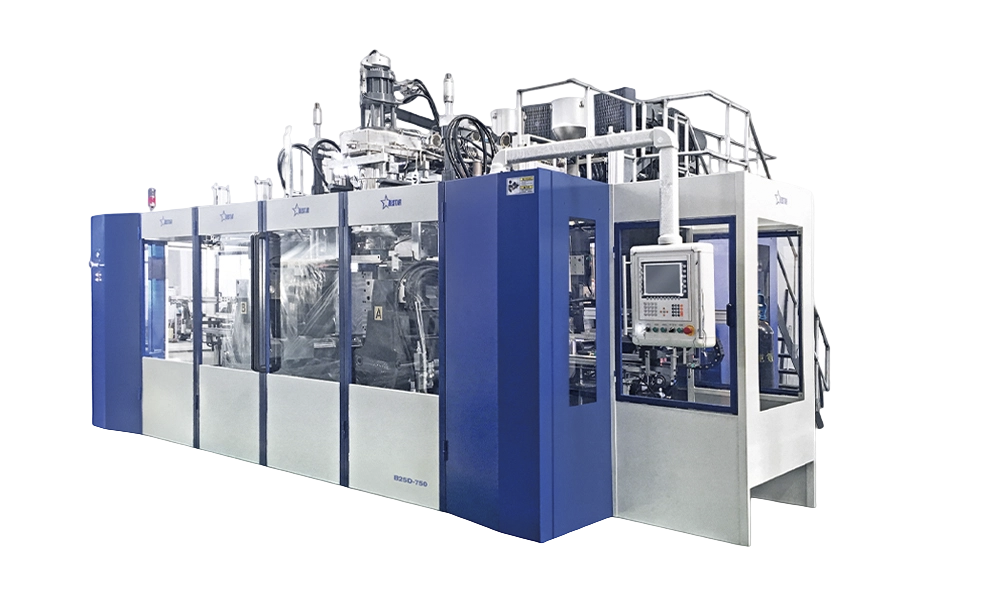
A Chemical Barrel Bottle Blow Molding Machine is specialized industrial equipment designed to produce high-strength, chemical-resistant barrels and bottles made from thermoplastic materials. These containers are commonly used for storing corrosive substances, industrial liquids, detergents, oils, and hazardous materials. The machine ensures uniform wall thickness, structural integrity, and long-term durability, which are critical for handling chemicals safely. To achieve these results, the equipment incorporates precise temperature control, extrusion systems, mold clamping mechanisms, and advanced automation technology.
Key Components and Their Functional Roles
A Chemical Barrel Bottle Blow Molding Machine relies on multiple core components that work together to convert raw materials into finished chemical-grade barrels. Each component plays a crucial role in determining the product’s strength, uniformity, and chemical compatibility.
Extrusion System
The extrusion system melts and plasticizes raw materials such as HDPE or PP before pushing the molten plastic through a die head. The quality of this stage directly influences the density, clarity, and wall thickness of the barrel or bottle. High-performance machines feature screw designs optimized for chemical-grade resin, ensuring stable melt flow and minimal material degradation.
Die Head and Parison Control
The die head shapes the molten plastic into a hollow tube known as a parison. Advanced machines utilize multilayer die heads for producing containers with enhanced chemical resistance or barrier properties. Parison control technology ensures consistent thickness distribution, which is essential for large chemical barrels that must withstand internal pressure and external handling impact.
Clamping and Mold System
The clamping unit holds the mold securely in place during the blowing process. For chemical container production, molds are engineered for heavy-duty operation and precise cooling, ensuring stable container shapes. The mold design also influences the capacity, rib structure, and overall mechanical strength of the final product.
Blowing and Cooling Mechanism
Compressed air expands the parison against the mold wall, forming the barrel or bottle. Chemical containers require careful control of air pressure and cooling cycles to avoid weak points or deformation. Enhanced cooling systems improve production speed and ensure stable structural performance.
Automation and Control System
Modern blow molding machines integrate PLCs, touchscreen interfaces, and digital sensors to automate temperature, pressure, timing, and material flow. This automation enables consistent production quality, reduces operator error, and increases output efficiency. Data monitoring also supports preventive maintenance.
How a Chemical Barrel Bottle Blow Molding Machine Works
The machine transforms plastic pellets into durable chemical containers through a controlled sequence of extrusion, blowing, and cooling steps. Each stage must be precisely timed and carefully monitored to achieve uniform strength and chemical resistance.
Material Feeding and Melting
The process begins with feeding plastic resin into the hopper. The screw rotates and pushes the material toward heated zones where it gradually melts. Chemical containers typically use HDPE for its excellent chemical resistance, strength, and lightweight properties. Additives may be blended to enhance UV protection or improve environmental stress-crack resistance.
Extrusion of the Parison
Once melted, the material is extruded downward through the die head, creating a parison. Precision in this step is critical since uneven parison thickness can lead to weak spots in the final product. Advanced machines automatically adjust wall thickness based on mold design.
Mold Clamping and Shaping
The mold closes around the parison, sealing the top and bottom. The system applies high-pressure air that inflates the parison, causing it to adopt the mold’s shape. For chemical barrels, ribs, handles, and reinforced sections are incorporated to improve load-bearing performance.
Cooling and Mold Release
After shaping, the container undergoes a cooling process where water channels inside the mold remove heat evenly. Proper cooling prevents deformation, improves dimensional stability, and enhances long-term strength. Once fully cooled, the mold opens and ejects the finished container.
Applications and Container Types Produced
Chemical Barrel Bottle Blow Molding Machines can manufacture various high-performance containers used across chemical, industrial, and agricultural sectors. These containers must meet strict safety, impact resistance, and product compatibility standards.
| Container Type | Typical Capacity | Common Applications |
| Chemical Barrels | 30L–250L | Acids, solvents, industrial liquids |
| Jerry Cans | 5L–25L | Detergents, oils, agricultural chemicals |
| Drums | 100L–220L | Hazardous liquids and bulk materials |
Advantages of Using Blow Molding for Chemical Containers
Blow molding offers several advantages that make it the preferred method for producing chemical-resistant containers. These benefits extend beyond cost efficiency, contributing to long-term safety and performance.
- High chemical resistance due to material selection and uniform structure.
- Lightweight containers that maintain exceptional strength and impact resistance.
- Efficient and cost-effective for mass production.
- Highly customizable shapes, capacities, and wall thicknesses.
- Suitable for hazardous materials requiring strict safety compliance.
Conclusion: A Critical Machine for Chemical Container Manufacturing
A Chemical Barrel Bottle Blow Molding Machine is essential for producing reliable, durable, and safe chemical containers. Through precise extrusion, controlled parison shaping, and optimized cooling, the machine delivers containers fit for highly demanding industrial applications. Companies that require consistent quality, contamination-free production, and long-term performance rely on blow molding machines to meet strict safety and manufacturing standards.
