


 English


Introduction to PETG Blow Molding
What is PETG?
PETG (Polyethylene Terephthalate Glycol) is a type of thermoplastic polyester, known for its excellent clarity, ...
Content
- 1 Introduction: scope and machine processes for 2L–10L bottles
- 2 Common bottle materials and their implications
- 3 Bottle shapes and structural types
- 4 Neck finishes, closures and fittings
- 5 Specialty bottle types and functional features
- 6 Process and tooling considerations for reliable production
- 7 Quality, testing and regulatory considerations
- 8 Design tips for manufacturability and cost control
- 9 Conclusion: match bottle design to material and process
Introduction: scope and machine processes for 2L–10L bottles
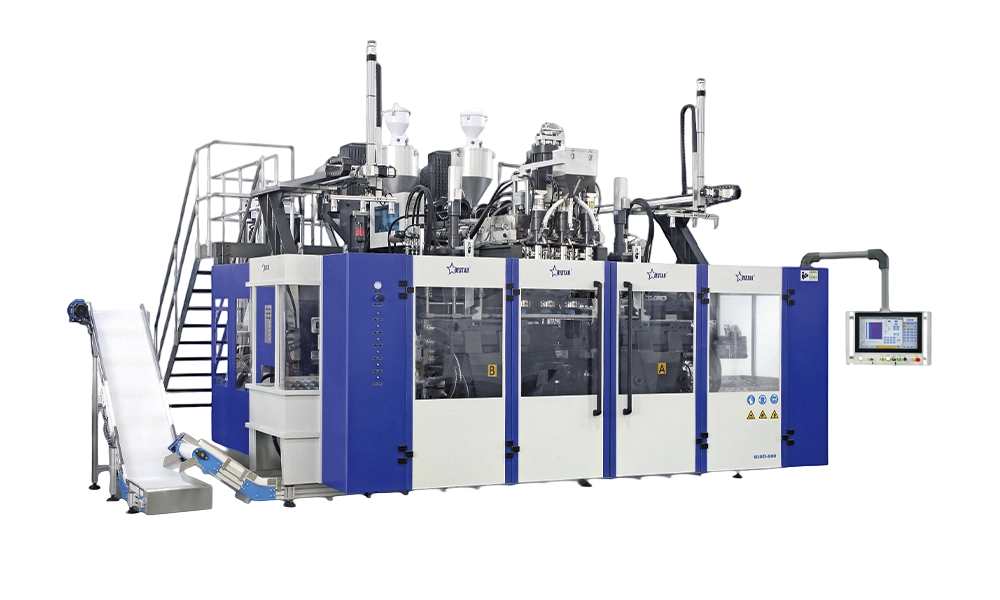
A 2L–10L bottle blow molding machine serves a production niche between small beverage bottles and large IBCs. Machines in this range typically produce containers for drinking water, edible oil, liquid detergents, agricultural chemicals, motor oil, and industrial liquids. Two main molding technologies are relevant: extrusion blow molding (EBM) — including intermittent and continuous extrusion — and injection blow molding or stretch blow molding for certain materials (typically PET up to the lower end of this range). Material selection (HDPE, LDPE, PET, PP, or multi-layer co-extrusions) and the machine process largely determine what bottle geometries, neck finishes, and functional features can be produced economically and reliably.
Common bottle materials and their implications
Material choice constrains and enables certain bottle types. HDPE and PP are dominant for 2–10L due to chemical resistance, toughness, and low cost. PET is used where clarity and gas barrier properties are required, usually up to the smaller end of the range. LDPE and LLDPE appear in collapsible or squeezable containers. Multi-layer (co-extruded) constructions allow combinations of barrier layers (EVOH, PA) and structural layers to meet oxygen or aroma sensitivity requirements without sacrificing mechanical performance.
HDPE (high-density polyethylene)
HDPE is the workhorse for large-capacity bottles: it offers chemical resistance (detergents, many oils), good impact strength at ambient temperatures, and easy weldability of seams for accessories like handles. HDPE is also ideal for blow molding with good parison control leading to uniform wall thickness in vertical sections such as necks and handles.
PET (polyethylene terephthalate)
PET is prized for clarity and high stiffness. For 2L PET is common for beverage bottles; above ~3L PET becomes less common because of material cost and stretching limits. Stretch blow molding yields excellent orientation-induced strength in PET, but equipment capable of reheating and stretching is required.
Co-extruded and barrier bottles
Multi-layer bottles combine structural layers with barrier films to protect oxygen- or aroma-sensitive liquids (e.g., certain edible oils). Co-extrusion allows a thin EVOH or PA barrier to be sandwiched between HDPE layers, delivering long shelf life while remaining blow-moldable on specialized multi-layer EBM lines.
Bottle shapes and structural types
Within the 2–10L range, a wide variety of shapes are possible. Each shape has implications for parison programming, mold design, and downstream processes. Below are the most common structural types and their production notes.
Cylindrical and drum bottles
Cylindrical containers (2–5L) and drum-shaped bottles (5–10L) are straightforward to produce by EBM. They have predictable stretch and require less complex parison profiling. Drums for chemicals often use thicker walls, reinforced bases, and standardized thread finishes for caps and bung fittings.
Rectangular and square cross-section bottles
Square bottles maximize packing efficiency and are popular for packaged water, oils, and chemicals. Rectangular cross-sections require careful parison control to avoid uneven wall thickness and require molds with support cores to achieve sharp corners without thinning.
Ergonomic and handled bottles
One of the most common 2–10L designs includes integrated handles: side handles, saddle handles, or molded-in top handles. Handles are typically produced using split molds or by forming the parison around inserts. Parison programming must thicken ribs and neck bridges to ensure handle strength and avoid stress concentrators that cause failure during filling or transport.
Neck finishes, closures and fittings
Neck finish defines end-use compatibility: standard screw threads (ISO or proprietary), bungs for drums, sport caps for water dispensers, and pour spouts for edible oils. Machines and molds must be designed to reproduce the required neck geometry, including thread pitch, seal land dimensions, and tamper-evident features.
ISO and proprietary thread standards
Many industries adopt ISO standards for thread sizes (e.g., 38–400 for large closures), facilitating global closure sourcing. For specialty uses, manufacturers create custom necks and integral spouts that require matched mold tooling and closure suppliers.
Bungs, taps and threaded inserts
For drums and 5–10L jerrycans, bungs and taps are common. Some designs incorporate welded-in or over-molded threaded metal inserts to withstand repeated torque; others rely on reinforced plastic threads. Consider torque specification and operator ergonomics during design to prevent cross-threading or failure.
Specialty bottle types and functional features
Beyond basic shapes, machines can produce bottles with integrated features that add functional value: measured pourers, internal partitions, nested stacks, and tamper-evident bands. These require advanced tooling, inserts, or secondary operations but can significantly increase product differentiation.
- Integrated measuring chambers or sight tubes for dosing—useful in agricultural and chemical packaging.
- Nestable stacking features to reduce transport volume in empty return logistics.
- Child-resistant caps and tamper bands requiring matched closures and often secondary assembly equipment.
Process and tooling considerations for reliable production
Producing high-quality bottles in this range demands attention to parison control, cooling, mold venting, and cycle time optimization. Wall distribution is critical—excess thinning around corners or handles causes weak points. Modern machines use servo-driven extruders and closed-loop parison control to match parison weight to part geometry, improving repeatability and material efficiency.
Mold design and split options
Tooling must reflect final use: taller, narrow bottles need deeper molds and longer cooling times; wide rectangular parts need internal supports to avoid sagging. Multi-cavity molds increase output but complicate parison distribution and cooling balance—consider single-cavity high-cycle vs multi-cavity trade-offs.
Secondary operations: trimming, printing and assembly
After molding, bottles may require trimming, transfer to printing or labeling lines, neck finishing, fitting of spouts or taps, and palletizing. Inline automation for trimming and marking reduces labor and ensures registration accuracy — important for branded edible oils and chemical product traceability.
Quality, testing and regulatory considerations
Bottles intended for food, pharmaceuticals, or hazardous chemicals must meet regulatory standards. Migration testing, barrier performance, burst and drop testing, and closure compatibility tests are common. Track lot numbers, run periodic material property tests, and maintain certificates of compliance for food-contact polymers.
| Bottle Type | Typical Material | Common Uses |
| Cylindrical water jugs (2–5L) | PET or HDPE | Drinking water, beverage, dispenser bottles |
| Rectangular jerrycans (4–10L) | HDPE, multi-layer HDPE | Edible oil, detergents, chemicals |
| Blow-molded drums (5–10L) | HDPE | Industrial fluids, motor oils, solvents |
Design tips for manufacturability and cost control
Early collaboration between designers and blow molding engineers reduces tooling iterations. Simplify neck geometries to common standards, reduce sharp corners that cause wall thinning, and design handles with generous radii and local thickening. Optimize parison programming to place material where needed rather than over-specifying wall thickness uniformly, which wastes resin and increases cycle time.
Conclusion: match bottle design to material and process
A 2L–10L blow molding machine can produce a broad spectrum of bottle types — from clear PET water jugs to heavy-duty HDPE jerrycans with integrated handles and barrier layers. Success depends on aligning the target application with the right material, molding process, and tooling strategy. Consider functional requirements (chemical resistance, clarity, barrier), handling features (handles, spouts, bungs), and downstream operations during the design phase to ensure efficient, high-quality production.
