


 English


Introduction to PETG Blow Molding
What is PETG?
PETG (Polyethylene Terephthalate Glycol) is a type of thermoplastic polyester, known for its excellent clarity, ...
Content
- 1 What Is a 1.5L Milk Bottle Blow Molding Machine?
- 2 Extrusion Blow Molding vs. Injection Stretch Blow Molding for 1.5L Milk Bottles
- 3 Key Technical Specifications to Evaluate
- 4 Material Selection: HDPE, PP, and PET for Dairy Bottles
- 5 Mold Design Considerations for 1.5L Milk Bottles
- 6 Automation, Integration, and Downstream Equipment
- 7 Quality Control Requirements for Dairy Bottle Production
- 8 What to Ask a Machine Supplier Before You Buy
What Is a 1.5L Milk Bottle Blow Molding Machine?
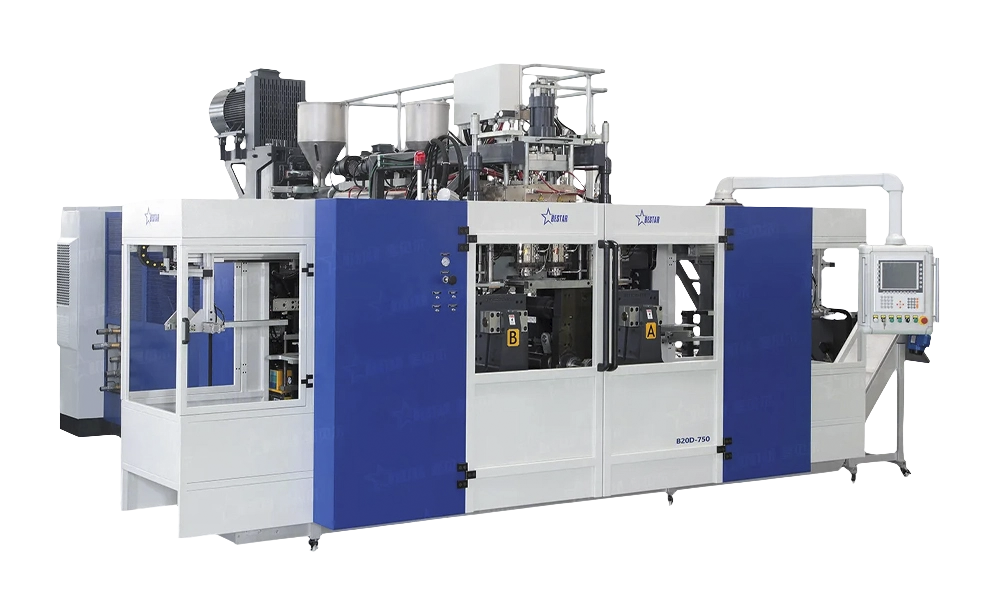
A 1.5L milk bottle blow molding machine is a specialized piece of packaging equipment designed to produce 1.5-liter plastic bottles intended for dairy products — fresh milk, flavored milk, UHT milk, and milk-based beverages — at high volume with consistent dimensional accuracy, food-grade surface quality, and structural integrity suitable for filling, capping, and retail distribution. The machine forms bottles from thermoplastic resin — most commonly high-density polyethylene (HDPE) or polypropylene (PP) for dairy applications — by either extrusion blow molding (EBM) or injection stretch blow molding (ISBM), depending on the bottle geometry, required wall thickness distribution, and production volume targets.
The 1.5L format is a commercially significant size in the dairy sector, balancing the consumer preference for larger-format take-home packaging with the logistical constraints of retail shelf space and household refrigerator storage. Producing this format efficiently and consistently requires a machine specifically calibrated for the parison weight, mold geometry, blow ratio, and cooling time associated with a bottle of this capacity — not simply a general-purpose blow molder with an interchangeable mold. Understanding the technical distinctions between machine types, configurations, and specifications is therefore essential before any capital equipment decision is made.
Extrusion Blow Molding vs. Injection Stretch Blow Molding for 1.5L Milk Bottles
The two dominant blow molding processes used for 1.5L milk bottles have fundamentally different operating principles, capital costs, and output characteristics. Choosing the correct process for a specific dairy packaging application is the most consequential technical decision in the machine selection process.
Extrusion Blow Molding (EBM)
In extrusion blow molding, a continuous tube of molten thermoplastic — the parison — is extruded downward from a die head. The mold closes around the parison, pinches it at the bottom, and compressed air is injected to inflate the molten tube against the mold cavity walls, where it cools and solidifies into the bottle shape. EBM is the dominant process for HDPE dairy bottles in the 1.5L format because HDPE is well-suited to extrusion processing, and EBM tooling is relatively economical compared to ISBM molds. EBM machines can produce bottles with handles — an important design feature for 1.5L and larger dairy bottles in many markets — because the hollow handle is formed simultaneously with the bottle body by the parison inflation process. EBM produces a pinch-off weld at the bottle base and sometimes the handle, which must be trimmed after molding; this flash trimming adds an operation but is standard practice in HDPE dairy bottle production.
Injection Stretch Blow Molding (ISBM)
Injection stretch blow molding is a two-stage process: first, a precision-molded preform is injection molded with a defined neck finish and wall thickness distribution; second, the preform is reheated and simultaneously stretched axially by a stretch rod while being inflated radially by blow air into the final bottle shape. ISBM — particularly the reheat stretch blow molding (RSBM) variant — is the standard process for PET bottles and produces bottles with exceptional optical clarity, very uniform wall thickness, high strength-to-weight ratios, and excellent top-load performance. However, ISBM is less commonly used for 1.5L HDPE milk bottles because HDPE does not respond as predictably to stretch-blow processing as PET, and the capital investment in preform injection tooling adds significantly to the total project cost. Where the specification calls for a transparent 1.5L milk bottle — as is required in some premium dairy product segments — PET-ISBM may be the appropriate choice despite the higher tooling investment.
Key Technical Specifications to Evaluate
When comparing 1.5L milk bottle blow molding machines from different manufacturers, the specification sheet typically contains a range of technical parameters that have direct implications for output quality, production cost, and operational flexibility. The following are the most practically important parameters to evaluate and verify.
| Specification | Typical Range | Why It Matters |
| Number of cavities | 1 to 6 cavities | Directly determines output per cycle |
| Output rate | 200–1,200 bottles/hour | Must match filling line speed |
| Extruder screw diameter | 50–120 mm | Determines plasticizing capacity |
| Clamping force | 20–100 kN per cavity | Ensures mold closure under blow pressure |
| Blow pressure | 6–10 bar | Affects bottle detail and surface quality |
| Parison programming control | 24–100 point control | Controls wall thickness distribution |
| Cooling water circuit | Independent per mold half | Determines cycle time and bottle distortion |
Output rate deserves particular attention in the context of dairy filling lines. A blow molder producing 1.5L bottles must be synchronized with the downstream filling, capping, labeling, and case-packing equipment. Specifying a machine with insufficient output to feed the filling line creates a production bottleneck; specifying one with excessive output relative to the filler capacity means the blow molder must be run intermittently, which is inefficient and increases wear on the machine's drive and heating systems through repeated thermal cycling.
Material Selection: HDPE, PP, and PET for Dairy Bottles
The choice of resin for 1.5L milk bottles is a packaging design decision that must be made before the blow molding machine is specified, because different resins require different machine configurations and processing conditions. Each material offers a distinct performance profile for dairy packaging.
- HDPE (High-Density Polyethylene): The most widely used material for dairy milk bottles globally. HDPE offers excellent chemical resistance to dairy fats and cleaning agents, good impact resistance at refrigerator temperatures, low moisture vapor transmission, and compatibility with extrusion blow molding. It produces an opaque, white or naturally translucent bottle that protects light-sensitive dairy products from photodegradation. HDPE bottles are food-grade compliant, recyclable, and cost-effective, making HDPE EBM the standard process-material combination for commodity 1.5L milk bottles.
- PP (Polypropylene): Polypropylene offers higher temperature resistance than HDPE — important for hot-fill dairy applications such as UHT flavored milk — and can produce bottles with a slightly glossier surface finish. PP EBM machines require higher processing temperatures than HDPE machines and different screw geometry. PP bottles are lighter than equivalent HDPE bottles at the same wall thickness but have lower impact resistance at cold temperatures, which must be considered for refrigerated distribution environments.
- PET (Polyethylene Terephthalate): PET injection stretch blow molding produces transparent, high-clarity bottles that showcase the product and signal premium quality. PET offers excellent barrier properties, high top-load strength, and compatibility with standard dairy filling and capping equipment. The trade-off is higher tooling cost — preform injection molds are expensive — and the need for a two-stage ISBM process rather than single-stage EBM. PET is increasingly specified for premium flavored milk, drinking yogurt, and value-added dairy beverages where visual differentiation on shelf is a marketing priority.
Mold Design Considerations for 1.5L Milk Bottles
The mold is the tooling heart of a blow molding machine, and its design quality has a direct impact on bottle dimensional consistency, surface finish, cycle time, and the machine's ability to run continuously without excessive downtime for maintenance. For a 1.5L milk bottle mold on an EBM machine, the following design elements are particularly important.
- Cooling channel design: The mold must remove heat from the bottle wall rapidly and uniformly to minimize cycle time and prevent warpage or distortion during ejection. Conformal cooling channels — machined to follow the contour of the bottle cavity — provide more uniform cooling than straight-drilled channels and can reduce cycle times by 15 to 25% compared to conventionally cooled tooling, directly improving machine output per hour.
- Pinch-off geometry: The pinch-off zone at the bottle base must be designed to produce a strong, clean weld with minimal flash and a parting line that is easy to trim without leaving a sharp edge. Poor pinch-off design produces weak base welds that fail under drop impact testing and creates irregular flash that requires extra trimming labor.
- Neck and finish dimensions: The bottle neck finish — thread form, diameter, and height — must be precisely matched to the cap and closure system used on the downstream filling line. Any dimensional deviation in the neck finish results in capping failures, leakage, and product rejection. Neck dimensions should be specified to the relevant standard (PCO, ROPP, or dairy-specific closure standards) and verified by gauge measurement on first-article bottles before production begins.
- Material selection for the mold body: Most EBM molds for HDPE dairy bottles are machined from aluminum alloy (typically 7075 or similar) because aluminum's high thermal conductivity supports rapid and uniform cooling, and its machinability allows complex cavity geometries to be produced economically. Beryllium copper inserts are sometimes used in high-wear areas such as the pinch-off zone. Steel molds are used where very long production runs or abrasive-filled resins require higher wear resistance, but their lower thermal conductivity results in longer cycle times.
Automation, Integration, and Downstream Equipment
Modern 1.5L milk bottle blow molding machines are rarely operated as standalone units. Dairy production lines typically integrate the blow molder with downstream equipment in either a blow-fill-seal configuration or a blow-and-convey layout where bottles are transferred to a separate aseptic or conventional filling line. The level of automation and integration chosen has direct implications for labor cost, contamination risk, floor space, and total line throughput efficiency.
In-line integration between the blow molder and filler — where bottles are conveyed directly from the blow molder outlet to the filler inlet without intermediate storage — minimizes bottle handling, reduces contamination exposure for the interior of the freshly molded bottles, and eliminates the need for empty bottle storage and conveyance infrastructure. This configuration works well when the blow molder output rate is reliably matched to the filler speed and both machines have comparable uptime characteristics. Buffer conveyor systems between the blow molder and filler are used to accommodate short stoppages on either machine without interrupting the other, but very large buffer systems add capital cost and floor space.
Flash trimming and removal is a necessary downstream operation for EBM bottles. On higher-volume lines, automated in-line trimming systems remove the bottom flash immediately after the bottle is ejected from the mold, using trimming blades or wheels integrated into the machine's discharge conveyor. Manual trimming is used on lower-volume or high-variety lines but adds labor cost and is a source of bottle surface damage if done carelessly. Trimmed flash is typically granulated and reintroduced into the process as regrind material, mixed with virgin resin at a controlled proportion to manage the impact on bottle properties.
Quality Control Requirements for Dairy Bottle Production
Dairy products are food-contact applications subject to stringent food safety regulations in every market. The bottles produced by a 1.5L milk bottle blow molding machine must consistently meet the quality requirements of the dairy brand owner, the packaging supplier, and the applicable food contact material regulations — such as EU Regulation 10/2011, FDA 21 CFR for the US market, or equivalent national standards. The following quality checks should be integrated into routine production monitoring.
- Weight check: Bottle weight is the primary proxy for wall thickness in EBM production. Each bottle should be weighed at regular intervals — typically every 15 to 30 minutes in stable production — and any trend toward underweight or overweight bottles triggers investigation of parison programming, resin melt temperature, or screw speed settings.
- Volume verification: Actual bottle volume must be verified against the nominal 1.5L specification using a water-fill gravimetric test. Under-volume bottles result in short-fill complaints from consumers and potential regulatory non-compliance with pre-packaged goods legislation; over-volume bottles represent a product giveaway cost on the filling line.
- Drop impact test: Filled bottles must survive the drop impacts encountered in distribution — typically a 1.2 to 1.5 meter drop onto a concrete surface at refrigerator temperature — without base weld failure or body cracking. Drop impact testing should be performed on first-article samples from each mold cavity and repeated after any process change or material lot change.
- Top-load compression test: Palletized dairy bottles must withstand the stacking loads imposed during warehouse storage and transport. Top-load testing verifies that the bottle geometry and wall thickness distribution provide sufficient axial rigidity under the specified compression load without buckling or collapsing.
- Visual inspection for surface defects: Each bottle should be visually inspected for contamination inclusions, gate marks, surface streaks, incomplete blow-out, pinch-off defects, and neck finish irregularities. Automated vision systems integrated into the discharge conveyor are used on high-volume lines to perform 100% inspection at production speed, eliminating the human error and fatigue associated with manual visual inspection of high-throughput production.
What to Ask a Machine Supplier Before You Buy
Purchasing a 1.5L milk bottle blow molding machine is a capital investment typically ranging from $80,000 for an entry-level single-cavity machine to over $500,000 for a high-cavity, fully automated system with integrated downstream equipment. The supplier relationship and the technical support infrastructure behind the machine are as important as the machine's specification. Before committing to a purchase, the following questions should be answered in writing by any prospective machine supplier.
- Can you provide documented output and cycle time data from a reference installation producing 1.5L HDPE dairy bottles on the same model machine — and can we visit that installation or speak with the customer directly?
- What is the lead time for critical spare parts — die heads, extruder screws, barrel liners, and hydraulic seals — and do you hold them in stock in our region or country?
- What training is provided for our operators and maintenance technicians, and is on-site commissioning support included in the purchase price or billed separately?
- What warranty is provided, and does it cover both parts and labor for on-site repair? What is the typical response time for a service engineer to attend an unplanned breakdown at our facility?
- Is the machine control system compatible with our factory's network infrastructure for production data logging and remote diagnostics, and what cybersecurity protocols are implemented for remote access connections?
A supplier who can answer these questions with specific, verifiable evidence — rather than general assurances — is demonstrating the technical depth and operational maturity that a long-term equipment partnership demands. Combined with a thorough factory acceptance test using your actual HDPE resin and target bottle specification before shipment, this due diligence process is the most reliable foundation for a successful 1.5L milk bottle blow molding machine installation.
