


 English


Introduction to PETG Blow Molding
What is PETG?
PETG (Polyethylene Terephthalate Glycol) is a type of thermoplastic polyester, known for its excellent clarity, ...
Content
- 1 How Does a Milk Bottle Blow Molding Machine Actually Work?
- 2 Three Main Machine Types — and When to Use Each
- 3 Key Specifications You Must Evaluate Before Buying
- 4 Food Safety and Compliance Requirements in Dairy Packaging
- 5 Automation Integration and Total Cost of Ownership
- 6 Practical Questions to Ask Before Placing an Order
How Does a Milk Bottle Blow Molding Machine Actually Work?
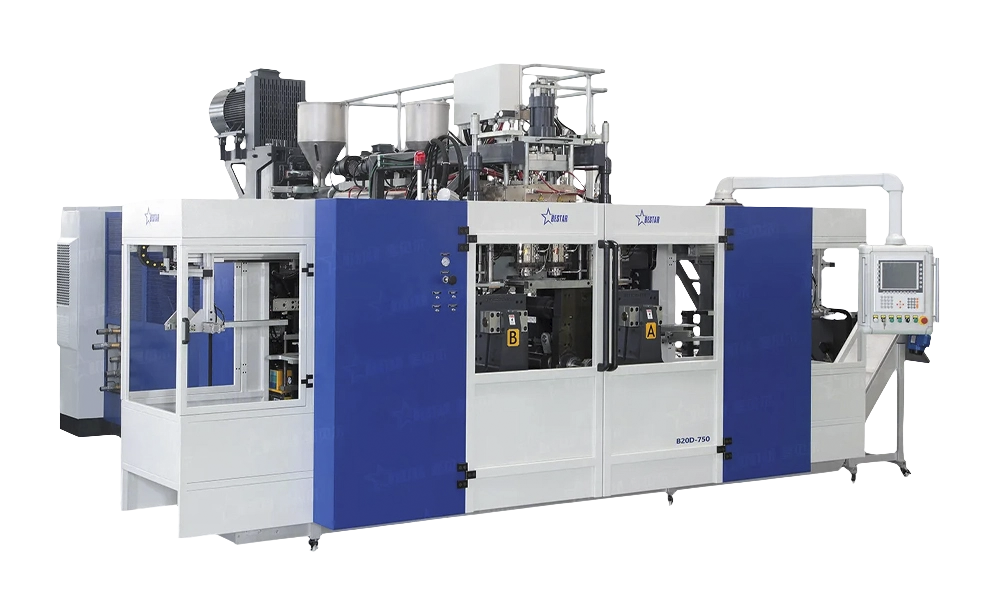
A milk bottle blow molding machine forms hollow plastic containers by inflating a heated plastic parison or preform inside a mold cavity. The process applies air pressure — typically between 6 and 10 bar — to push softened plastic against the mold walls, creating a container that perfectly mirrors the mold's interior shape. Once cooled, the mold opens and a finished bottle is ejected, ready for downstream filling or labeling.
For milk bottles specifically, the machine must meet food-grade production standards. Materials like High-Density Polyethylene (HDPE) and Polypropylene (PP) dominate this segment because they resist moisture absorption, tolerate pasteurization temperatures, and carry FDA/EU food contact approvals. The machine's mold, clamping unit, and extrusion or injection components are all designed around these materials' rheological behavior, ensuring consistent wall thickness and dimensional stability across millions of cycles.
The entire blow molding cycle — from material plasticization through ejection — typically takes between 8 and 20 seconds depending on bottle size, material, and machine configuration. High-output dairy plants commonly run multi-cavity molds to push production rates above 10,000 bottles per hour on a single machine.
Three Main Machine Types — and When to Use Each
Not all blow molding machines are suited to every milk bottle format. The three dominant technologies each excel in different production scenarios.
Extrusion Blow Molding (EBM)
EBM machines extrude a continuous tube of molten plastic (the parison), clamp it inside a mold, and blow it to shape. This is the most common technology for HDPE milk bottles in volumes ranging from 250 ml to 5 liters. EBM offers lower tooling costs, excellent material flexibility, and easy integration of handles — making it the default choice for standard dairy bottle production. A typical 2-cavity HDPE EBM machine produces 2,000–3,500 one-liter bottles per hour.
Injection Stretch Blow Molding (ISBM)
ISBM is the technology behind PET milk bottles, which are increasingly popular for their clarity and lightweight properties. The process first injection-molds a thick-walled preform, then reheats it and stretches it axially while blow-forming it. The biaxial orientation produced during stretching dramatically improves barrier properties and drop resistance — critical for pasteurized or ESL (Extended Shelf Life) milk. Cycle times are fast, mold cavitation can be high, and finished bottle weight is typically 15–25% lighter than equivalent HDPE bottles.
Injection Blow Molding (IBM)
IBM combines injection molding and blow molding in one station without a separate stretch step. It delivers very tight neck tolerances — making it preferred for small-format milk bottles (under 500 ml) where closure sealing accuracy is paramount. IBM is less common in large-scale dairy production but valued in pharmaceutical dairy and specialty portion-control formats.
| Technology | Common Material | Typical Bottle Size | Best For |
|---|---|---|---|
| EBM | HDPE, PP | 250 ml – 5 L | Standard opaque milk bottles, handled jugs |
| ISBM | PET | 200 ml – 2 L | Clear ESL / pasteurized milk, lightweight format |
| IBM | PP, PE | 50 ml – 500 ml | Small portions, tight neck tolerances |
Key Specifications You Must Evaluate Before Buying
Choosing a milk bottle blow molding machine based on brand name or price alone is a costly mistake. The following specifications directly determine whether a machine can meet your production targets and quality requirements.
Clamping Force and Mold Cavity Count
Clamping force — measured in kilonewtons (kN) or tons — must exceed the blow pressure multiplied by the projected bottle area. For a standard one-liter HDPE milk bottle, a minimum of 40–60 kN per cavity is a practical benchmark. Higher clamping force allows larger molds and more cavities, directly multiplying output. A machine rated at 200 kN with a 4-cavity mold can theoretically produce four times the output of a single-cavity setup at the same cycle time.
Extruder Screw Design and L/D Ratio
For EBM machines, the screw's length-to-diameter (L/D) ratio determines plasticization quality. HDPE milk bottle production typically requires an L/D ratio of 24:1 to 30:1 with a barrier screw design to ensure consistent melt temperature. Poor plasticization causes uneven wall distribution, which results in weak spots — a critical defect in a container that must survive stacking, refrigeration, and pouring.
Parison Control System
A parison programming controller adjusts wall thickness at different points along the parison length, compensating for stretch variations during blowing. Machines with 100-point or higher parison programming produce bottles with tighter wall thickness tolerances — typically ±0.05 mm — which is essential for achieving consistent bottle weight and material savings at scale. Over a production run of 10 million bottles, a 0.5 g reduction in average bottle weight saves hundreds of kilograms of raw material.
Cooling Efficiency
Cooling accounts for 60–70% of total cycle time in blow molding. Machines equipped with conformal-cooled molds or enhanced chilled water circuits (operating at 6–10°C coolant temperature) can cut cooling time by 20–30% compared to standard setups. For a high-volume dairy plant running 24/7, that efficiency gain translates directly into millions of additional bottles per year at zero additional capital cost.
Food Safety and Compliance Requirements in Dairy Packaging
Milk is a regulated food product in virtually every market, and the packaging equipment that touches it must comply with strict hygienic standards. When specifying a milk bottle blow molding machine, verify the following compliance criteria:
- All wetted parts and surfaces exposed to the bottle interior should meet FDA 21 CFR or EU Regulation 10/2011 for food contact materials.
- Mold materials should be stainless steel or food-grade aluminum alloy to prevent contamination and support CIP (Clean-in-Place) protocols.
- The machine frame and conveyors should be designed to minimize dust traps and allow easy cleaning — critical in dairy environments where microbial contamination risks are elevated.
- For markets requiring aseptic filling, the blow molding unit may need to be integrated into a cleanroom-class environment (ISO Class 7 or better).
- CE marking (for European markets) or relevant local certifications should be verified on the machine's electrical cabinet and safety guarding.
Suppliers who offer full documentation packages — including material certifications, Declaration of Conformity, and validated cleaning protocols — significantly reduce the compliance burden on the dairy manufacturer during factory audits.
Automation Integration and Total Cost of Ownership
Modern milk bottle blow molding lines rarely operate as standalone machines. Integration with downstream automation — including leak testers, in-mold labeling (IML) units, vision inspection systems, and bottle conveyors — is a standard expectation in high-volume dairy plants. When evaluating total cost of ownership (TCO), consider the following cost drivers beyond the initial machine price:
- Energy consumption: All-electric blow molding machines consume up to 50% less energy than hydraulic equivalents. At industrial electricity rates, this difference can amount to tens of thousands of dollars annually.
- Spare parts availability: Machines using standardized servo drives, PLCs (Siemens, Beckhoff, or Mitsubishi), and pneumatic components from global suppliers reduce downtime risk dramatically compared to proprietary systems.
- Mold changeover time: Quick-release mold clamping systems can reduce changeover from 4 hours to under 45 minutes — a significant factor for plants producing multiple SKUs.
- Remote monitoring: Machines equipped with Industry 4.0-compatible OPC-UA interfaces allow real-time performance tracking and predictive maintenance, reducing unplanned downtime by an estimated 15–25%.
A machine with a higher upfront cost but lower energy use, faster changeovers, and better uptime can deliver a significantly better 5-year TCO than a cheaper alternative. Dairy operations running three shifts, 350 days per year, amplify every efficiency advantage — and every reliability weakness.
Practical Questions to Ask Before Placing an Order
Before committing to a milk bottle blow molding machine purchase, use these questions to stress-test supplier claims and protect your investment:
- Can the supplier provide factory acceptance test (FAT) data showing actual output rates, bottle weight consistency (Cpk ≥ 1.33), and energy consumption under production conditions?
- What is the guaranteed Overall Equipment Effectiveness (OEE) rate, and what remedies are available if it falls below the contractual threshold?
- Does the supplier have reference customers operating the same model in dairy or food packaging — and are site visits or direct reference calls possible?
- What is the lead time for critical wear parts (screw, barrel, blow pins), and does the supplier maintain a local stock or service center?
- Is training — including operator certification and maintenance technician training — included in the commissioning package, or priced separately?
A reputable machine supplier will welcome these questions and back their answers with documented evidence. Any hesitation or vague responses to FAT data requests or reference customer inquiries should be treated as a serious red flag.
