


 English


Introduction to PETG Blow Molding
What is PETG?
PETG (Polyethylene Terephthalate Glycol) is a type of thermoplastic polyester, known for its excellent clarity, ...
Content
- 1 What Is a Chemical Barrel Bottle Blow Molding Machine?
- 2 How Does the Blow Molding Process Work?
- 3 Why Is It Ideal for Chemical Packaging?
- 4 Which Materials Are Commonly Used?
- 5 How Does It Improve Production Efficiency?
- 6 What Features Should Buyers Focus On?
- 7 How Does It Support Safer Chemical Logistics?
- 8 Why Is the Market Demand Growing?
- 9 Final Thoughts: Why Is This Machine a Smart Investment?
What Is a Chemical Barrel Bottle Blow Molding Machine?
A chemical barrel bottle blow molding machine is a specialized industrial system designed to manufacture hollow plastic containers used for storing and transporting chemical liquids, industrial solvents, detergents, lubricants, agricultural chemicals, and hazardous materials. These machines are widely used in the packaging industry because they can produce durable, leak-resistant, and chemically stable containers in high volumes.
Unlike general-purpose bottle production equipment, chemical barrel blow molding machines are engineered to meet the strict requirements of chemical packaging, including wall thickness consistency, impact resistance, chemical compatibility, and sealing reliability. They are commonly used to produce containers ranging from small laboratory bottles to large industrial barrels and jerry cans.
As the chemical industry continues to demand safer and more efficient packaging solutions, these machines have become essential for modern manufacturing lines.
How Does the Blow Molding Process Work?
The blow molding process used for chemical barrels and bottles typically follows extrusion blow molding technology. In this process, molten plastic resin is extruded into a tube-like parison. The mold then closes around the parison, and compressed air is introduced to inflate the material against the mold cavity walls.
Once cooled, the plastic retains the shape of the mold, creating a hollow container with precise dimensions and structural integrity.
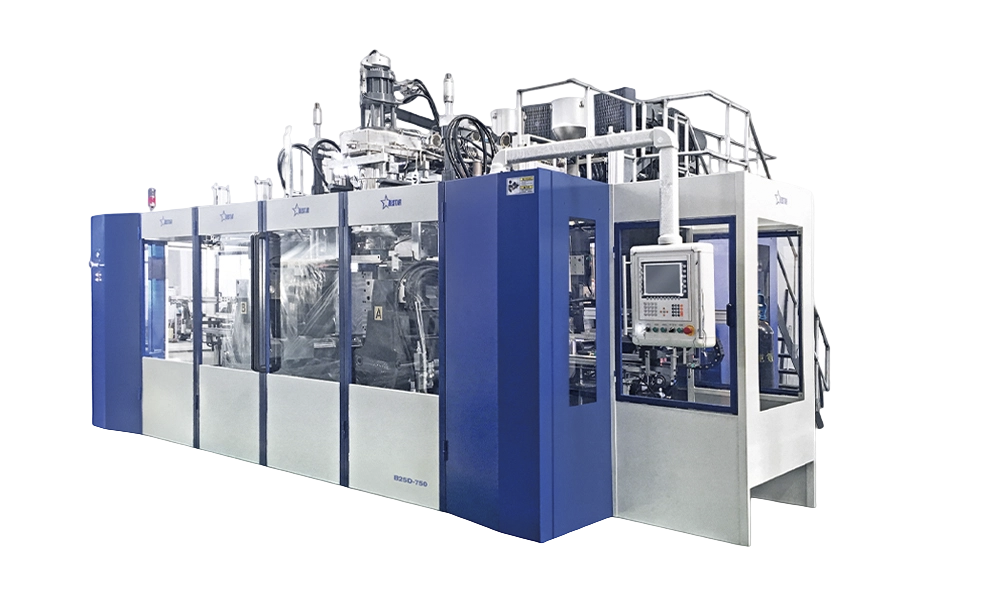
Material Feeding
Plastic raw materials such as HDPE, PP, or specialty chemical-resistant polymers are fed into the extruder.
Parison Extrusion
The heated material is extruded into a tubular shape with controlled thickness.
Air Blowing and Forming
High-pressure air expands the parison to match the mold shape.
Cooling and Ejection
The formed container is cooled and automatically ejected for trimming and inspection.
Why Is It Ideal for Chemical Packaging?
Chemical containers require more than basic shape accuracy. They must withstand pressure, transportation stress, temperature fluctuations, and chemical corrosion.
A dedicated chemical barrel bottle blow molding machine is optimized to produce containers with reinforced structural strength and excellent sealing properties.
- Uniform wall thickness
- High impact resistance
- Leak-proof sealing surfaces
- Excellent chemical resistance
These characteristics are essential for safely storing acids, alkalis, solvents, oils, and industrial cleaning liquids.
Which Materials Are Commonly Used?
Material selection directly affects container performance. The most common polymers used include:
| Material | Main Advantage | Typical Use |
| HDPE | Chemical resistance | Detergent barrels |
| PP | Heat resistance | Industrial chemicals |
| Multi-layer polymers | Barrier protection | Hazardous liquids |
How Does It Improve Production Efficiency?
Modern blow molding machines significantly improve manufacturing efficiency through automation and precision control systems.
High-Speed Output
Advanced systems can produce large quantities of chemical bottles and barrels continuously with minimal downtime.
Automatic Thickness Control
Servo-controlled parison programming ensures consistent wall thickness distribution.
Reduced Material Waste
Precision extrusion control minimizes excess trimming and scrap material.
What Features Should Buyers Focus On?
For practical purchasing decisions, manufacturers should evaluate several key machine features.
- Production capacity per hour
- Maximum container size
- Multi-layer capability
- Energy consumption
- Automation level
- Mold change convenience
These factors directly affect return on investment and long-term operational efficiency.
How Does It Support Safer Chemical Logistics?
High-quality chemical packaging containers are critical for transportation safety. Blow molding machines help produce containers that comply with strict industrial packaging standards, reducing risks of leakage, breakage, and contamination during storage and shipping.
This is especially important for export packaging and hazardous material transport.
Why Is the Market Demand Growing?
As global demand for industrial chemicals, household cleaners, agrochemicals, and lubricants continues to grow, the need for reliable packaging machinery is increasing rapidly.
Manufacturers are also adopting smart blow molding systems with digital monitoring, predictive maintenance, and energy-saving technologies to remain competitive.
Final Thoughts: Why Is This Machine a Smart Investment?
A chemical barrel bottle blow molding machine is more than just production equipment. It is a strategic manufacturing asset that improves packaging safety, production efficiency, product consistency, and long-term profitability. For companies involved in chemical packaging, investing in a high-performance blow molding system is essential for meeting modern market demands and regulatory standards.
