


 English


Introduction to PETG Blow Molding
What is PETG?
PETG (Polyethylene Terephthalate Glycol) is a type of thermoplastic polyester, known for its excellent clarity, ...
Content
- 1 Introduction to Lubricant Oil Bottle Blow Molding Machines
- 2 Types of Blow Molding Machines
- 3 Key Components of a Lubricant Bottle Blow Molding Machine
- 4 Materials for Lubricant Oil Bottles
- 5 Production Efficiency and Automation
- 6 Quality Control in Bottle Production
- 7 Advantages of Using Blow Molding for Lubricant Bottles
- 8 Common Applications of Lubricant Oil Bottles
- 9 Maintenance and Longevity of Blow Molding Machines
- 10 Conclusion
Introduction to Lubricant Oil Bottle Blow Molding Machines
Lubricant oil bottle blow molding machines are specialized equipment designed for manufacturing high-precision plastic bottles used in lubricants, motor oils, and industrial fluids. These machines enable efficient, consistent production of durable bottles that meet strict industry standards for chemical resistance, dimensional accuracy, and aesthetic appeal.
The rise in automotive, industrial, and machinery sectors has significantly increased demand for high-quality lubricant packaging. Blow molding machines are central to this process, providing flexibility in bottle shapes, sizes, and wall thicknesses.
Types of Blow Molding Machines
Blow molding machines for lubricant bottles can be classified based on the production method and the type of plastic used. The main types include extrusion blow molding, injection stretch blow molding, and injection blow molding.
Extrusion Blow Molding (EBM)
Extrusion blow molding is widely used for medium to large lubricant bottles. In this process, a molten tube of plastic, known as a parison, is extruded vertically into a mold. Air is then injected to expand the parison against the mold walls, forming the bottle. EBM offers high flexibility in bottle shapes and sizes, suitable for both single-piece and multi-layer bottles.
Injection Blow Molding (IBM)
Injection blow molding provides excellent dimensional accuracy and is often used for smaller lubricant bottles. In IBM, the plastic is injected into a preform mold, cooled, and then transferred to a blow mold where air inflates the preform to the final shape. This method ensures uniform wall thickness and precise neck finishes, which are critical for sealing with caps.
Injection Stretch Blow Molding (ISBM)
Injection stretch blow molding combines injection molding and biaxial stretching, producing lightweight yet strong bottles. ISBM is ideal for bottles requiring high clarity, chemical resistance, and mechanical strength. It is particularly popular in the production of multi-layer bottles that incorporate barrier resins for improved lubricant shelf life.
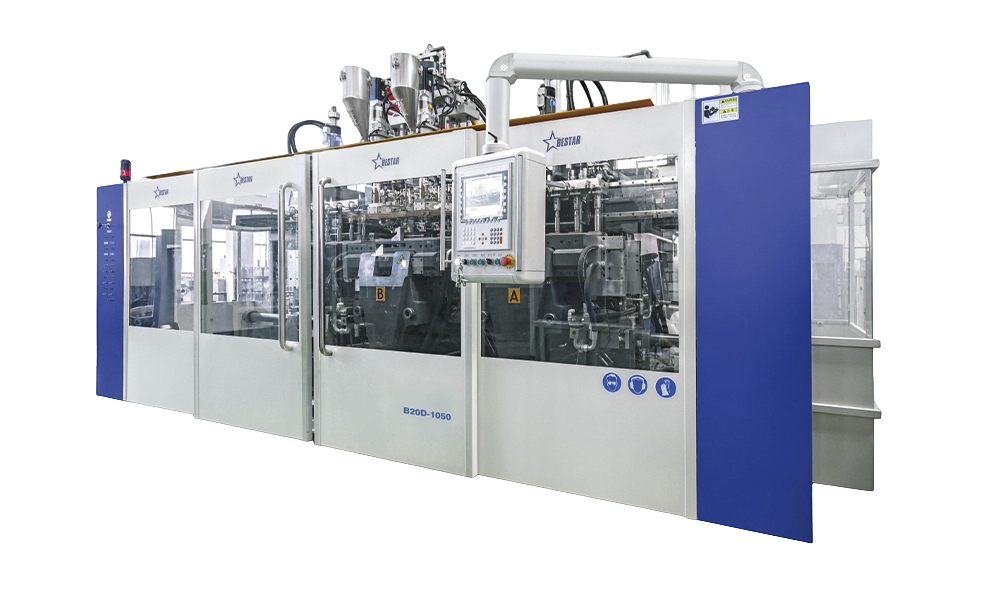
Key Components of a Lubricant Bottle Blow Molding Machine
Understanding the main components of a blow molding machine helps in optimizing performance and maintenance.
- Extruder: Melts and conveys plastic pellets to form the parison
- Mold: Defines the shape, size, and design details of the bottle
- Blow Pin and Air System: Inflates the parison into the mold cavity
- Cooling System: Controls bottle solidification and prevents deformation
- Take-out and Conveyor System: Ejects finished bottles and transports them for further processing
Materials for Lubricant Oil Bottles
The choice of plastic material directly affects the chemical compatibility, durability, and clarity of lubricant bottles. Common materials include:
- High-Density Polyethylene (HDPE): Excellent chemical resistance, widely used for motor oils
- Polypropylene (PP): High temperature resistance, suitable for heat-stable lubricants
- Multi-layer co-extrusions: Combines barrier layers to extend lubricant shelf life
Production Efficiency and Automation
Modern lubricant bottle blow molding machines incorporate advanced automation for higher efficiency. Features include:
- Servo-controlled extrusion for precise parison thickness
- Automatic mold clamping and air injection
- Integrated bottle ejection and conveyor systems
- Real-time monitoring of temperature, pressure, and cycle time
Quality Control in Bottle Production
Ensuring the quality of lubricant bottles is critical for safety, durability, and brand reputation. Key quality checks include:
- Visual inspection for surface defects, warping, and uneven walls
- Dimensional inspection to verify neck diameter, height, and capacity
- Leak testing for seal integrity under pressure
- Material testing for chemical compatibility and tensile strength
Advantages of Using Blow Molding for Lubricant Bottles
Blow molding offers several benefits that make it ideal for lubricant packaging:
- High production speed and volume, suitable for large-scale operations
- Flexibility in bottle design and capacity
- Uniform wall thickness and structural strength
- Reduced material waste due to precision extrusion and molding
Common Applications of Lubricant Oil Bottles
Blow molded lubricant bottles are used in various sectors, including:
- Automotive oils and additives
- Industrial lubricants and hydraulic fluids
- Motorcycle and marine oil packaging
- Specialty chemical packaging with barrier requirements
Maintenance and Longevity of Blow Molding Machines
Regular maintenance ensures consistent production quality and machine longevity. Recommended practices include:
- Routine cleaning of extruder screws, barrels, and molds
- Periodic calibration of sensors and temperature controls
- Lubrication of moving components to prevent wear
- Inspection and replacement of worn or damaged molds
Conclusion
Lubricant oil bottle blow molding machines are essential for producing high-quality, durable, and chemically resistant bottles. Selecting the appropriate machine type, material, and production settings ensures efficiency, consistent quality, and scalability. With proper maintenance and quality control, blow molding machines continue to meet the growing demands of automotive, industrial, and specialty lubricant markets.
Understanding the nuances of extrusion, injection, and stretch blow molding allows manufacturers to optimize bottle design, reduce material waste, and maintain brand integrity. Advanced automation and monitoring systems further enhance production efficiency and reliability.
