


 English


Introduction to PETG Blow Molding
What is PETG?
PETG (Polyethylene Terephthalate Glycol) is a type of thermoplastic polyester, known for its excellent clarity, ...
Content
- 1 What Is a Pharmaceutical Bottle Blow Molding Machine?
- 2 Types of Blow Molding Technologies Used in Pharma
- 3 Key Materials Used in Pharmaceutical Bottle Production
- 4 Critical Features to Look for in a Pharmaceutical Blow Molding Machine
- 5 Regulatory Compliance and GMP Considerations
- 6 Production Efficiency and Output Optimization
- 7 How to Choose the Right Machine for Your Facility
- 8 The Future of Pharmaceutical Blow Molding Technology
What Is a Pharmaceutical Bottle Blow Molding Machine?
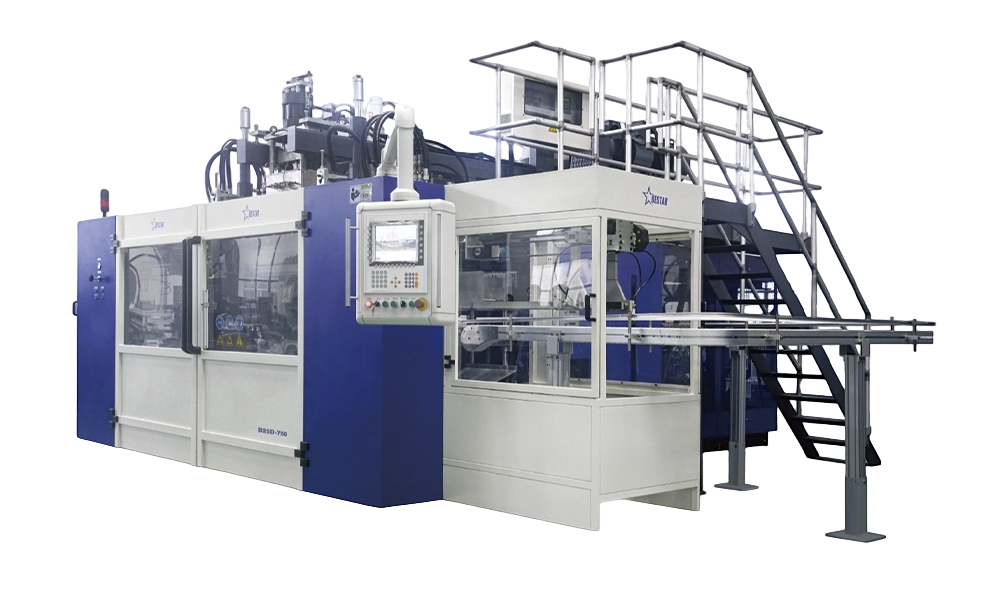
A pharmaceutical bottle blow molding machine is a specialized piece of manufacturing equipment designed to produce hollow plastic containers used in the pharmaceutical industry. These bottles are used to package tablets, capsules, liquid medicines, syrups, and other healthcare products. Unlike standard blow molding equipment used in consumer goods, pharmaceutical-grade machines must meet stringent hygiene, precision, and regulatory standards. The output must be consistent in wall thickness, neck dimensions, and volumetric capacity to ensure accurate dosing and safe storage of medical substances.
The core principle involves heating a plastic preform or parison to a pliable state and then inflating it inside a mold cavity using compressed air. As the material expands to fill the mold shape, it cools and solidifies into the final bottle form. This process is repeated continuously at high speed, enabling manufacturers to produce thousands of units per hour with minimal material waste.
Types of Blow Molding Technologies Used in Pharma
Not all blow molding machines operate the same way. The pharmaceutical sector typically relies on three main technologies, each with distinct advantages depending on bottle design, material, and production volume.
Extrusion Blow Molding (EBM)
In extrusion blow molding, a continuous tube of molten plastic (called a parison) is extruded downward between two mold halves. The mold closes around the parison, and compressed air inflates it to form the bottle shape. EBM is well-suited for producing HDPE bottles commonly used for tablets and capsules. It is cost-effective for large runs and handles complex bottle geometries with ease.
Injection Blow Molding (IBM)
Injection blow molding combines injection molding and blow molding in a two-stage process. A preform is first injection-molded around a core rod, then transferred to a blow mold where it is inflated. IBM produces bottles with excellent dimensional accuracy and a very consistent neck finish — critical for pharmaceutical caps and closures. It is ideal for small, narrow-neck bottles such as eye drops or nasal spray containers.
Stretch Blow Molding (SBM)
Stretch blow molding is used primarily with PET (polyethylene terephthalate). A preform is stretched both axially and radially before being blown into shape, resulting in a biaxially oriented bottle with superior clarity, strength, and barrier properties. SBM is common for liquid pharmaceutical products such as syrups, oral solutions, and injectable packaging where product visibility and sterility are essential.
Key Materials Used in Pharmaceutical Bottle Production
Material selection directly impacts the safety, compatibility, and shelf life of the pharmaceutical product inside. The most frequently used resins include:
- HDPE (High-Density Polyethylene): Widely used for solid dosage forms. Excellent chemical resistance, moisture barrier, and impact strength.
- PET (Polyethylene Terephthalate): Preferred for liquid medicines and syrups. High clarity, good barrier properties, and lightweight.
- PP (Polypropylene): Suitable for bottles requiring sterilization. Heat-resistant and chemically inert.
- LDPE (Low-Density Polyethylene): Used for squeezable bottles such as eye drop containers due to its flexibility.
Each material has specific processing temperature requirements and compatibility considerations that the blow molding machine must accommodate. A high-quality pharmaceutical blow molding machine will allow precise temperature zone control across the barrel and die head to handle multiple resins without compromising output quality.
Critical Features to Look for in a Pharmaceutical Blow Molding Machine
When evaluating pharmaceutical bottle blow molding machines, several technical features distinguish pharmaceutical-grade equipment from standard industrial machines.
| Feature | Why It Matters |
| GMP-compliant design | Ensures equipment meets Good Manufacturing Practice standards for hygiene and traceability |
| Servo-driven systems | Offers high precision, repeatability, and energy efficiency compared to hydraulic systems |
| Clean room compatibility | Required for sterile or injectable bottle manufacturing environments |
| Integrated quality inspection | Vision systems or wall thickness sensors detect defects in real time, reducing reject rates |
| PLC/HMI controls | Allows recipe storage, parameter monitoring, and operator-friendly process management |
| Multi-cavity molds | Increases output per cycle while reducing per-unit production cost |
Machines that incorporate servo motors instead of traditional hydraulic actuators offer significant advantages in pharmaceutical environments: quieter operation, reduced contamination risk from hydraulic fluid, and better energy efficiency — all factors that contribute to lower total cost of ownership.
Regulatory Compliance and GMP Considerations
Pharmaceutical manufacturers operate under rigorous regulatory frameworks including FDA 21 CFR Part 211, EU GMP Annex 1, and ISO 15378 (the primary packaging materials standard for medicinal products). A pharmaceutical bottle blow molding machine must be validated before it enters production — this includes Installation Qualification (IQ), Operational Qualification (OQ), and Performance Qualification (PQ).
The machine's surfaces that contact raw materials or finished bottles should be made from stainless steel or food-grade materials that resist corrosion and do not leach chemicals. Smooth, crevice-free designs are essential to prevent microbial growth and facilitate cleaning. Machines intended for cleanroom environments must also comply with ISO 14644 classifications relevant to the contamination control requirements of the product being manufactured.
Documentation capabilities are equally important. Pharmaceutical manufacturers need complete audit trails, batch records, and process parameter logs. Advanced machines now feature 21 CFR Part 11-compliant electronic records and electronic signature capabilities, enabling paperless manufacturing while satisfying regulatory inspectors.
Production Efficiency and Output Optimization
Maximizing throughput without sacrificing quality is a central challenge in pharmaceutical bottle manufacturing. Several operational strategies and machine features can help achieve this balance.
- Quick mold change systems: Reduce downtime between product changeovers, which is critical when producing multiple bottle sizes for different formulations.
- Automatic deflashing and trimming: Removes excess plastic (flash) from bottles immediately after molding, eliminating a manual post-processing step and improving line speed.
- Integrated leak testing: Inline leak detection systems verify bottle integrity immediately after production, ensuring only defect-free units proceed to filling lines.
- Scrap regrind integration: Controlled regrind loops allow a percentage of clean production waste to be reintroduced into the process, reducing material cost without compromising quality.
Modern pharmaceutical blow molding machines are increasingly connected to Manufacturing Execution Systems (MES) and Industry 4.0 platforms. Real-time OEE (Overall Equipment Effectiveness) monitoring, predictive maintenance alerts, and remote diagnostics help production managers identify bottlenecks, minimize unplanned downtime, and maintain consistent output across multi-shift operations.
How to Choose the Right Machine for Your Facility
Selecting the appropriate pharmaceutical bottle blow molding machine depends on a combination of product specifications, production volume requirements, and regulatory context. Here are the most important factors to evaluate before making a purchasing decision:
- Bottle size and design complexity: Small, narrow-neck bottles suit injection blow molding, while larger or custom-shaped bottles may require extrusion blow molding.
- Material compatibility: Ensure the machine supports the specific resin grades required by your formulation and regulatory submission.
- Output capacity: Match the machine's cycle time and number of cavities to your projected annual demand, including buffer capacity for growth.
- Validation support: Choose suppliers who provide IQ/OQ/PQ documentation packages and have experience supporting regulatory audits.
- After-sales service: Reliable technical support, spare parts availability, and training programs are essential for maintaining uptime in a regulated manufacturing environment.
It is also worth requesting a Factory Acceptance Test (FAT) before delivery. This allows your engineering and quality teams to verify machine performance against agreed specifications in a controlled setting, reducing the risk of costly installation delays and compliance issues at your facility.
The Future of Pharmaceutical Blow Molding Technology
The pharmaceutical packaging sector is evolving rapidly. Sustainability pressures are driving interest in lightweighting — producing bottles with thinner walls that use less plastic without compromising structural integrity. Advanced simulation software now allows engineers to optimize wall thickness distribution before cutting a single mold, reducing development time and material usage simultaneously.
There is also growing demand for machines capable of processing bio-based or recycled resins (rPET, bio-HDPE) as pharmaceutical companies work toward environmental commitments. Hybrid machine designs that combine electric and pneumatic actuation are emerging as a practical middle ground between cost and performance. Meanwhile, artificial intelligence-driven process control is beginning to appear in premium pharmaceutical blow molding platforms — enabling autonomous adjustment of parameters in response to real-time quality data, further reducing human error and ensuring batch-to-batch consistency across global manufacturing networks.
