


 English


Introduction to PETG Blow Molding
What is PETG?
PETG (Polyethylene Terephthalate Glycol) is a type of thermoplastic polyester, known for its excellent clarity, ...
Content
A 2L bottle blow molding machine is specifically designed for manufacturing 2-liter plastic bottles commonly used in beverages, water, chemicals, and other industries. These machines utilize blow molding technology, which involves heating plastic preforms and expanding them into the desired bottle shape using high-pressure air.
Choosing the right machine is crucial for optimizing production efficiency, minimizing defects, and reducing operational costs. Various factors, such as machine type, automation level, production capacity, and energy efficiency, must be considered.
Types of 2L Bottle Blow Molding Machines
2L bottle blow molding machines are available in several types, each suited for different production needs and scales.
Extrusion Blow Molding Machines
- Plastic is melted and extruded into a hollow tube called a parison.
- The parison is clamped into a mold and inflated using compressed air.
- Suitable for producing uniform, simple-shaped 2L bottles.
Injection Blow Molding Machines
- Plastic is injected into a preform mold and then transferred to a blow mold.
- Allows for precise control of bottle thickness and uniformity.
- Ideal for high-quality beverage bottles requiring strict dimensional accuracy.
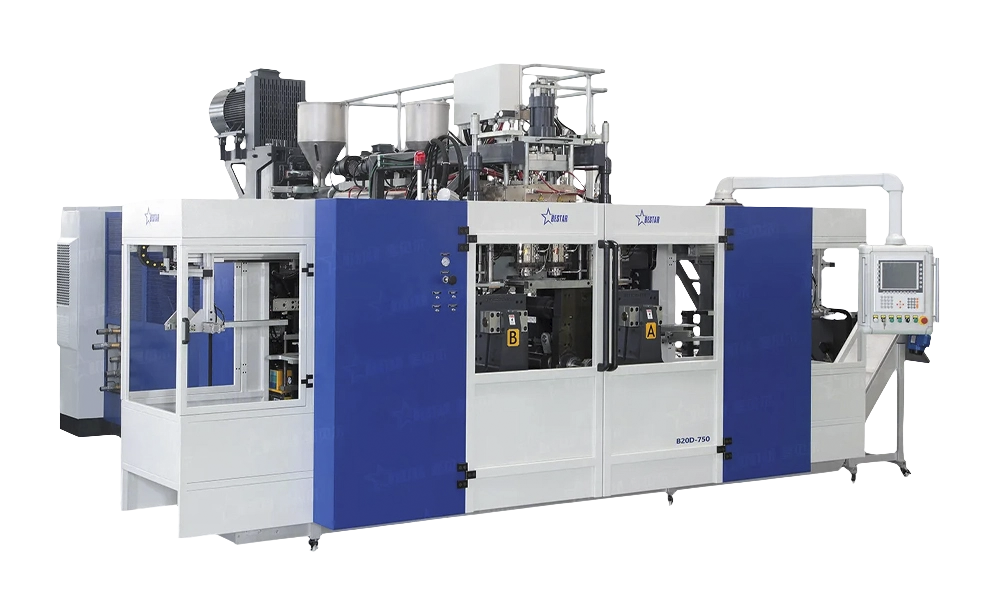
Stretch Blow Molding Machines
- Preforms are mechanically stretched before being blown into the mold.
- Improves bottle strength and clarity.
- Commonly used in PET bottle production for beverages.
Factors to Consider When Choosing a Machine
Selecting the appropriate 2L bottle blow molding machine requires careful evaluation of multiple factors to meet production goals and maintain cost efficiency.
Production Capacity and Speed
- Assess the number of bottles required per hour to choose a machine with adequate cycle time and mold cavity capacity.
- High-speed machines reduce labor costs but may require higher initial investment.
Automation Level
- Fully automated machines handle preform loading, bottle blowing, trimming, and ejection with minimal human intervention.
- Semi-automatic machines require manual handling of some operations but have lower upfront costs.
Material Compatibility
The type of plastic used—commonly PET, HDPE, or PP—determines the machine configuration and heating system requirements.
- PET bottles require stretch blow molding machines.
- HDPE and PP bottles can be produced with extrusion or injection blow molding machines.
Energy Efficiency
Modern machines are designed to reduce electricity and compressed air consumption. Choosing energy-efficient models can significantly reduce operational costs over time.
Maintenance and Support
Ease of maintenance, availability of spare parts, and technical support are crucial for minimizing downtime and ensuring smooth production.
Comparing Machine Specifications
Comparing technical specifications helps identify the most suitable machine for your production requirements.
| Specification | Extrusion | Injection | Stretch |
| Bottle Material | HDPE, PP | HDPE, PP | PET |
| Cycle Time | Medium | Short | Shortest |
| Automation | Semi-automatic | Fully automatic | Fully automatic |
Cost Considerations
Initial investment, maintenance costs, energy consumption, and spare parts availability should all be weighed to select a machine that provides the best total cost of ownership.
Conclusion
Selecting the right 2L bottle blow molding machine requires careful analysis of production volume, material compatibility, automation, energy efficiency, and maintenance requirements. By evaluating these factors, manufacturers can optimize production, reduce costs, and ensure high-quality bottle output.
