


 English


Introduction to PETG Blow Molding
What is PETG?
PETG (Polyethylene Terephthalate Glycol) is a type of thermoplastic polyester, known for its excellent clarity, ...
Content
- 1 Understand Machine Types and Which Fits Your Product
- 2 Material Compatibility and Chemical Resistance
- 3 Bottle Design and Wall Thickness Strategy
- 4 Tooling, Molds and Changeover
- 5 Throughput, Cycle Time and Production Capacity
- 6 Automation, Downstream Integration and Quality Control
- 7 Regulatory Compliance and Safety
- 8 Energy Use, Maintenance and Spare Parts Availability
- 9 Total Cost of Ownership and ROI
- 10 Supplier Selection and After-Sales Support
- 11 Practical Checklist Before Purchase
- 12 Conclusion
Selecting the right blow molding machine for pesticide bottles is more than picking a price tag. Pesticide containers must resist aggressive chemistries, meet regulatory safety standards, and withstand logistics handling while being economical to produce. This article walks you through the technical, operational, and commercial factors to consider when choosing an extrusion, injection or stretch blow molding solution for pesticide packaging. The focus is practical—what engineers, production managers and buyers should evaluate to avoid costly rework, product failures, or compliance issues.
Understand Machine Types and Which Fits Your Product
There are three main blow molding technologies used for bottles: extrusion blow molding (EBM), injection blow molding (IBM), and stretch blow molding (SBM). Each has strengths and limitations.
Extrusion Blow Molding (EBM)
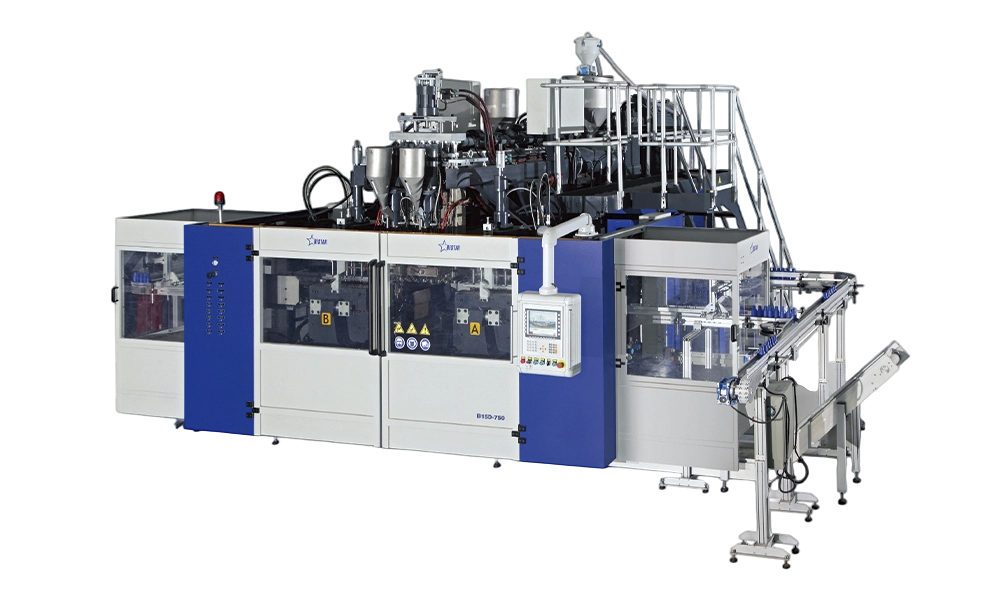
EBM extrudes a hollow parison which is captured by a mold and inflated. EBM is cost-effective for medium-to-large containers and flexible in running different sizes with adjustable parison programming. It’s common for high-density polyethylene (HDPE) pesticide jerrycans, drums and trigger-spray bottle preforms. Consider EBM if you need robust chemical resistance, thicker walls, or continuous, high-volume production.
Injection Blow Molding (IBM)
IBM produces preforms via injection then transfers them to a blow station. IBM yields tight tolerances, excellent finish and consistent neck dimensions—ideal for threaded necks and small to medium bottles requiring precise closures. IBM is often used when cap sealing accuracy and surface finish are critical.
Stretch Blow Molding (SBM)
SBM stretches and orients the polymer to improve mechanical strength and clarity. It’s most common for PET bottles; however, PET has limited chemical resistance for aggressive pesticides unless formulated or lined. Use SBM if you require lightweight, high-clarity bottles and your chemistry is compatible or will be packaged in a lined container.
Material Compatibility and Chemical Resistance
Pesticides often contain solvents, surfactants and other actives that attack some plastics. HDPE is the workhorse for many agrochemical containers due to its excellent chemical resistance, impact strength and processability. LDPE can be used for squeezable bottles, while PP is chosen for higher stiffness and heat resistance. Evaluate the specific pesticide formulation—solvents, pH, and additives—and request compatibility data or immersion tests from resin and bottle suppliers.
Additives and barrier requirements
Consider antioxidant packages, UV stabilizers, and optional internal coatings or liners for products containing aggressive solvents. When permeability is a concern (odor or volatile loss), barrier co-extrusions or laminated structures can be used though they add cost and complicate recycling.
Bottle Design and Wall Thickness Strategy
Design affects both performance and manufacturability. Neck finish tolerances, thread engagement, handles and base geometry must be designed for blow molding. Wall thickness distribution should be optimized—thicker walls at stress points (handles, corners) and thinner in lower-stress areas to save material. Confirm whether your machine supports parison programming (for EBM) to tailor wall profiles and avoid thin or weak zones.
Tooling, Molds and Changeover
Tooling quality directly affects reach: poor molds lead to flash, uneven necks, and leakage. Consider precision-machined molds with interchangeable inserts for different neck finishes. Assess mold lead times and costs—IBM preform molds and EBM mold halves have different price structures. Ask vendors about modular tooling systems to reduce changeover time when producing multiple SKUs.
Throughput, Cycle Time and Production Capacity
Calculate required throughput by SKU and peak demand. Machine cycle time and cavitation (number of cavities) determine hourly output. EBM lines often run single- to multi-cavity molds; IBM and SBM offer multi-cavity preform production. Balance desired throughput with footprint, energy consumption and available operators. Don’t under-size—insufficient capacity forces overtime and missed orders; oversizing ties up capital.
Automation, Downstream Integration and Quality Control
Modern lines integrate trimming, leak testing, vision inspection, labeling and automated palletizing. For pesticides, leak testing and closure torque control are critical. Decide whether you need in-line vacuum or pressure leak testers, high-speed torque testers, and vision systems for label/code inspection. Evaluate integration with filling lines (capping/filling synchronization) and consider Industry 4.0 options for traceability and statistical process control.
Regulatory Compliance and Safety
Pesticide packaging must comply with local and international regulations—UN transport classifications, child-resistant closures where required, and labeling durability. Ensure your molding process and materials meet chemical contact regulations and that the machine supplier can provide documentation for audits. Safety features—interlocks, guarding, and emergency stops—are mandatory given the hazardous product nature.
Energy Use, Maintenance and Spare Parts Availability
Assess energy consumption (heating barrels, compressors) and maintenance regimes. Screw/barrel wear, die lips, and hydraulic components are routine wear items. Choose suppliers with local service, readily available spare parts, and field training. Preventive maintenance contracts reduce unplanned downtime in critical seasons (spraying seasons often have tight windows).
Total Cost of Ownership and ROI
Beyond capital cost, evaluate material yield (scrap rate), energy, labor, tooling amortization, and warranty. Machines with better servo control and parison accuracy reduce scrap and improve first-pass yield. Model ROI for several years—seasonal demand swings may favor renting or phased investments.
Supplier Selection and After-Sales Support
Choose vendors with proven experience in chemical packaging and references in pesticide or agrochemical industries. Verify training, spare-part stocking, remote diagnostics, and on-site commissioning. Ask for sample bottles produced on your resin and for performance data (burst, drop, permeation and closure leakage tests).
| Factor | What to Verify | Why It Matters |
| Machine type | EBM/IBM/SBM suitability | Affects finish, throughput and neck tolerances |
| Material compatibility | HDPE/PP/PET resistance tests | Prevents chemical attack and leakage |
| Tooling cost | Mold lead time and modularity | Impacts SKU flexibility and CAPEX |
| QC features | In-line leak/vision/torque testers | Ensures compliance and reduces recalls |
Practical Checklist Before Purchase
- Run pilot runs with your exact resin and product formulation.
- Confirm closure compatibility (cap torque, thread specs) using production caps.
- Request full energy and air consumption data for operating cost estimates.
- Verify lead times for tooling and critical spares.
- Insist on training, commissioning and a clear warranty/service SLA.
Conclusion
Choosing a pesticide bottle blow molding machine is a multi-dimensional decision: product chemistry, bottle design, required throughput, quality control needs, and long-term serviceability must all align. Prioritize material compatibility tests, precise tooling, and supplier support over the lowest purchase price. When you match technology (EBM, IBM, SBM) to product and production realities, you achieve safer packaging, consistent quality and a faster return on investment—critical in the demanding agrochemical market.
