


 English


Introduction to PETG Blow Molding
What is PETG?
PETG (Polyethylene Terephthalate Glycol) is a type of thermoplastic polyester, known for its excellent clarity, ...
Content
- 1 Basic Working Principles of Single-Layer Machines
- 2 Basic Working Principles of Multi-Layer Machines
- 3 Differences in Barrier Performance
- 4 Machine Complexity and Operational Requirements
- 5 Production Cost and Investment Considerations
- 6 Regulatory and Market Compliance Differences
- 7 Flexibility and Future Scalability
- 8 Comparison Table: Single-Layer vs Multi-Layer Machines
- 9 Choosing the Right Machine for Your Application
- 10 Conclusion
Pesticide bottle blow molding machines are specialized plastic processing systems designed to produce containers that safely store and transport agrochemical products. Because pesticides often contain volatile, corrosive, or toxic substances, the quality and structure of the bottle play a critical role in product safety, shelf life, and regulatory compliance. Among the most important choices manufacturers face is whether to use a single-layer or a multi-layer blow molding machine.
Understanding the key differences between these two machine types helps packaging producers, brand owners, and procurement teams select equipment that matches their technical requirements, cost targets, and market positioning. The differences extend beyond layer count and affect barrier performance, machine complexity, operating cost, and long-term production strategy.
Basic Working Principles of Single-Layer Machines
Single-layer pesticide bottle blow molding machines operate using a straightforward extrusion blow molding process. A single type of molten plastic, typically HDPE, is extruded through one die head to form a parison. This parison is then captured in a mold and expanded with compressed air to create the final bottle shape.
Because only one material stream is involved, the machine structure is relatively simple. Fewer extruders, a single die head, and less complex control systems make single-layer machines easier to install, operate, and maintain. This simplicity directly influences production cost and reliability.
Common Materials Used
Single-layer machines usually process HDPE or modified polyethylene grades formulated for chemical resistance. Additives such as UV stabilizers or color masterbatch can be blended into the resin, but all performance characteristics must be achieved within a single material layer.
Basic Working Principles of Multi-Layer Machines
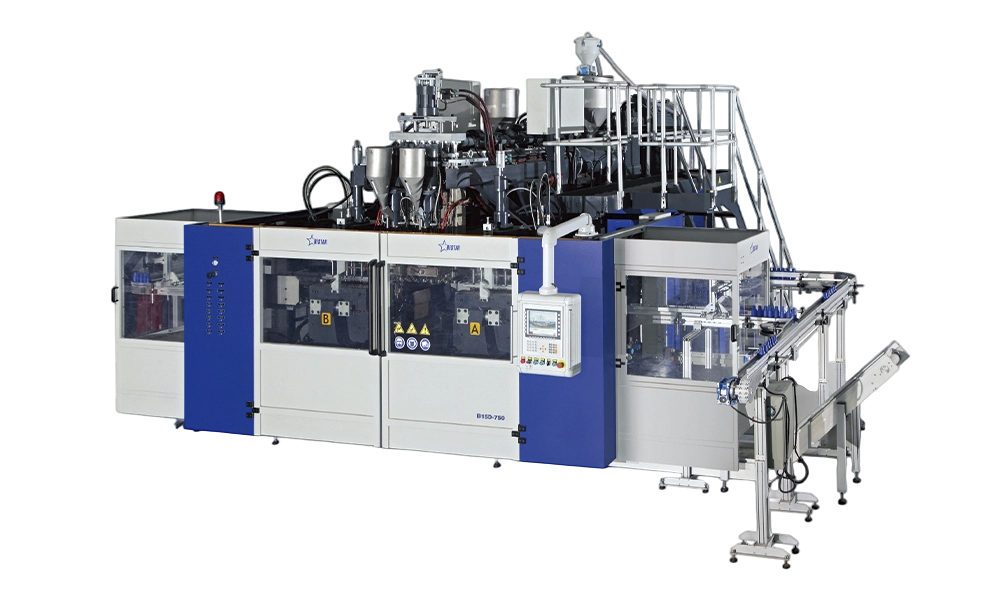
Multi-layer pesticide bottle blow molding machines are designed to extrude two or more material layers simultaneously. Each layer is delivered by a separate extruder, and the materials are combined in a multi-layer die head to form a composite parison. This structure allows different materials to perform specific functions within the same bottle wall.
For pesticide packaging, multi-layer structures often include barrier resins such as EVOH or special functional layers that improve chemical resistance or reduce permeability. These machines are more complex, but they enable advanced packaging performance that cannot be achieved with a single-layer design.
Layer Distribution and Control
Modern multi-layer machines allow precise control over layer thickness ratios. This means manufacturers can optimize material usage by placing high-cost barrier materials only where needed, while using standard HDPE for structural support.
Differences in Barrier Performance
Barrier performance is one of the most significant differences between single-layer and multi-layer pesticide bottle blow molding machines. Many pesticides contain solvents that can permeate plastic walls, leading to product loss, odor emission, or regulatory non-compliance.
Single-layer bottles rely entirely on the inherent resistance of the base resin. While high-grade HDPE offers good chemical resistance, it has limited gas and vapor barrier properties. Multi-layer bottles, by contrast, can incorporate barrier layers that dramatically reduce permeation.
Machine Complexity and Operational Requirements
Single-layer blow molding machines are mechanically and electronically simpler. Operators require less specialized training, and troubleshooting is generally faster. This makes them attractive for small to medium-sized manufacturers or regions with limited technical support.
Multi-layer machines require synchronized control of multiple extruders, precise temperature management, and advanced die head design. While this increases complexity, it also enables higher-end packaging solutions that meet strict international standards.
- Single-layer machines have lower installation and commissioning complexity
- Multi-layer machines demand higher technical expertise and process control
Production Cost and Investment Considerations
Initial investment cost is another major differentiator. Single-layer pesticide bottle blow molding machines are significantly less expensive to purchase and install. They also consume less energy due to fewer extruders and simpler heating systems.
Multi-layer machines involve higher capital expenditure, but they can reduce long-term material costs by minimizing the use of expensive barrier resins. For high-volume production targeting premium or export markets, this trade-off can be economically justified.
Regulatory and Market Compliance Differences
Pesticide packaging is subject to strict regulations in many regions. Multi-layer bottles are often required to meet UN packaging standards, permeation limits, and extended shelf-life requirements. These standards are difficult to achieve consistently with single-layer designs.
Single-layer bottles may still be acceptable for domestic markets or low-risk formulations, but manufacturers targeting international distribution often favor multi-layer solutions to ensure compliance across multiple regulatory frameworks.
Flexibility and Future Scalability
Single-layer machines offer limited flexibility in terms of performance upgrades. Improving barrier properties usually requires switching materials entirely, which may increase cost or processing difficulty.
Multi-layer machines provide greater scalability. Manufacturers can adjust layer structures, introduce recycled layers, or add functional layers without redesigning the entire bottle. This adaptability supports long-term product development and sustainability goals.
Comparison Table: Single-Layer vs Multi-Layer Machines
| Aspect | Single-Layer Machine | Multi-Layer Machine |
| Layer Structure | One material layer | Two or more functional layers |
| Barrier Performance | Moderate | High |
| Investment Cost | Lower | Higher |
Choosing the Right Machine for Your Application
The choice between single-layer and multi-layer pesticide bottle blow molding machines should be based on product formulation, target market, regulatory requirements, and long-term business strategy. Single-layer machines are well suited for cost-sensitive, standard applications with limited barrier demands.
Multi-layer machines are ideal for manufacturers seeking higher performance packaging, better regulatory compliance, and future-proof production capability. While the upfront cost is higher, the technical and commercial benefits often outweigh the initial investment.
Conclusion
The key differences between single-layer and multi-layer pesticide bottle blow molding machines lie in structure, performance, cost, and flexibility. Single-layer machines emphasize simplicity and affordability, while multi-layer machines deliver superior barrier protection and long-term adaptability.
By carefully evaluating production needs and market goals, manufacturers can select the machine type that best supports safe, compliant, and efficient pesticide packaging.
