


 English


Introduction to PETG Blow Molding
What is PETG?
PETG (Polyethylene Terephthalate Glycol) is a type of thermoplastic polyester, known for its excellent clarity, ...
Content
- 1 Daily Inspection and Basic Cleaning Practices
- 2 Proper Lubrication of Mechanical Components
- 3 Extrusion System Maintenance
- 4 Mold and Clamping Unit Care
- 5 Air and Blowing System Maintenance
- 6 Electrical and Control System Checks
- 7 Cooling System Inspection and Cleaning
- 8 Preventive Maintenance Scheduling
- 9 Operator Training and Documentation
- 10 Long-Term Benefits of Proper Maintenance
Lubricant oil bottle blow molding machines operate under continuous cycles, high temperatures, and repetitive mechanical movements. These conditions make regular and targeted maintenance essential to ensure stable production, consistent bottle quality, and long equipment life. Poor maintenance can quickly lead to leaks, deformation, downtime, or even permanent damage to core components.
Because lubricant oil bottles often require high barrier performance, accurate wall thickness, and clean inner surfaces, the machine must remain in optimal condition. Maintenance is not only about preventing failure but also about protecting product quality and production efficiency.
Daily Inspection and Basic Cleaning Practices
Daily inspection is the foundation of effective maintenance. Operators should perform visual and functional checks before and after each production shift. These inspections help identify early signs of wear, leakage, or abnormal operation that could escalate into larger issues.
Key daily maintenance actions include:
- Cleaning oil residue, dust, and plastic debris from machine surfaces
- Checking air lines and hydraulic hoses for leaks or loose connections
- Observing abnormal noises, vibrations, or temperature fluctuations
Keeping the machine clean is especially important in lubricant oil bottle production, as oil contamination can attract dust and degrade moving parts faster than dry environments.
Proper Lubrication of Mechanical Components
Despite producing lubricant oil bottles, the blow molding machine itself relies on its own lubrication system to operate smoothly. Guide rails, toggle mechanisms, clamping units, and moving joints must be lubricated according to the manufacturer’s specifications.
Over-lubrication can be as harmful as insufficient lubrication. Excess grease may attract contaminants, while insufficient lubrication increases friction and accelerates wear. Using the correct lubricant type and applying it at recommended intervals ensures stable machine performance.
Extrusion System Maintenance
The extrusion system is the heart of lubricant oil bottle blow molding machines. It includes the screw, barrel, heaters, and die head, all of which must operate precisely to produce uniform parisons.
Key extrusion maintenance tasks include:
- Regular inspection of screw and barrel wear
- Cleaning die heads to prevent carbon buildup
- Monitoring heater bands and temperature sensors for accuracy
Inconsistent parison thickness often signals extrusion-related issues. Addressing these problems early helps maintain bottle strength and reduces material waste.
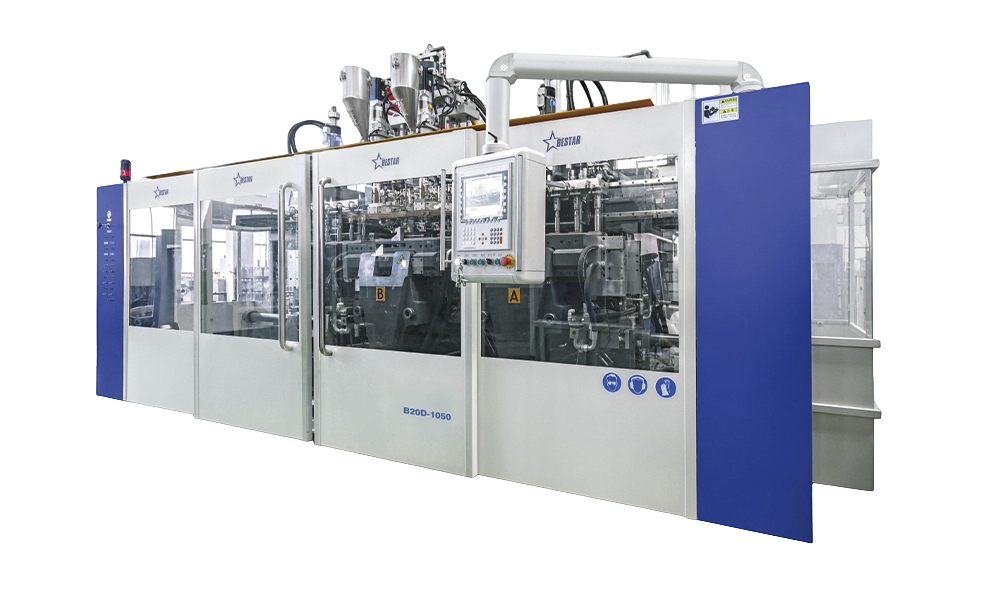
Mold and Clamping Unit Care
Molds used for lubricant oil bottles must deliver consistent dimensions, smooth surfaces, and accurate neck finishes. Regular mold maintenance prevents defects such as flashing, uneven walls, and poor sealing performance.
Clamping units should be checked for alignment and closing force. Uneven clamping can damage molds and cause production defects, increasing scrap rates.
Recommended mold maintenance practices:
- Cleaning mold cavities and vents regularly
- Inspecting cooling channels for blockages
- Applying rust prevention measures during downtime
Air and Blowing System Maintenance
The blowing system shapes the molten parison into the final bottle form. Clean, stable air pressure is critical for producing lubricant oil bottles with uniform thickness and strength.
Moisture, oil, or dust in compressed air can negatively affect bottle quality and internal surfaces. Air dryers, filters, and regulators should be inspected and serviced regularly.
Electrical and Control System Checks
Electrical systems control heating, timing, clamping, and blowing sequences. Even minor electrical faults can disrupt production or cause inconsistent bottle quality.
Routine checks should include inspection of wiring, connectors, sensors, and control panels. Software parameters should be backed up regularly to prevent data loss after system failures.
Cooling System Inspection and Cleaning
Efficient cooling is essential for maintaining production speed and bottle dimensional stability. Cooling systems typically include water chillers, pipelines, and mold cooling channels.
Scale buildup or blockages in cooling lines reduce heat transfer efficiency. Periodic flushing and water quality control help maintain consistent cooling performance.
Preventive Maintenance Scheduling
A structured preventive maintenance schedule reduces unexpected breakdowns and extends machine lifespan. Maintenance tasks should be organized daily, weekly, monthly, and annually based on component wear patterns.
| Maintenance Frequency | Main Tasks | Purpose |
| Daily | Cleaning, visual checks | Early fault detection |
| Weekly | Lubrication, air system inspection | Reduce wear and leaks |
| Monthly | Mold and extrusion inspection | Maintain product quality |
| Annually | Comprehensive system overhaul | Extend equipment lifespan |
Operator Training and Documentation
Well-trained operators play a critical role in maintenance effectiveness. Operators who understand machine behavior can detect abnormal conditions early and respond appropriately.
Maintaining detailed maintenance logs helps identify recurring issues, plan spare parts inventory, and improve long-term reliability of lubricant oil bottle blow molding machines.
Long-Term Benefits of Proper Maintenance
Consistent maintenance improves machine stability, reduces downtime, and ensures reliable bottle quality. For lubricant oil packaging lines, this directly impacts brand reputation and operational cost control.
By following structured maintenance practices, manufacturers can maximize equipment utilization, extend service life, and maintain competitive production efficiency in demanding packaging environments.
