


 English


Introduction to PETG Blow Molding
What is PETG?
PETG (Polyethylene Terephthalate Glycol) is a type of thermoplastic polyester, known for its excellent clarity, ...
Content
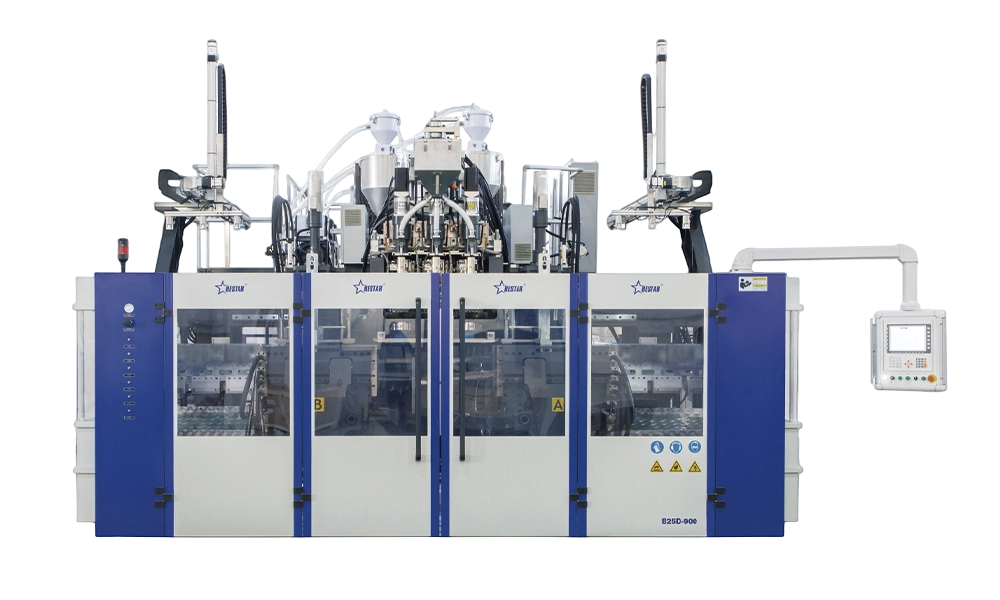
The 2L~10L bottle blow molding machine is an essential piece of equipment in modern plastic packaging production, widely used in manufacturing containers for beverages, detergents, edible oils, and industrial liquids. Its efficiency and output directly impact production costs, product quality, and market competitiveness. To achieve optimal performance, it is necessary to understand the various factors that influence the machine’s efficiency and output. These factors include machine design, raw material properties, process parameters, environmental conditions, and operator proficiency.
1. Machine Design and Configuration
The design of the blow molding machine plays a fundamental role in determining its efficiency. A well-designed machine ensures stable operation, high output, and minimal downtime.
-
Clamping Unit and Mold Design:
The strength and precision of the clamping system affect how consistently the mold closes and seals during production. A robust clamping mechanism prevents leakage and deformation, ensuring uniform bottle wall thickness and reducing material waste. Additionally, molds with efficient cooling channels enhance heat dissipation, shortening the cycle time and improving productivity. -
Extrusion System:
The extrusion system’s screw design, heating zones, and material feed system are critical. A properly designed screw provides uniform plasticizing, ensuring consistent melt quality. Any fluctuation in melt temperature or pressure can cause defects such as uneven thickness or air bubbles, which lower production yield. -
Automation and Control Systems:
Modern 2L~10L blow molding machines are equipped with PLC control systems that automate temperature regulation, cycle timing, and pressure settings. Advanced control systems enhance precision and repeatability, reducing human error and downtime. Machines with energy recovery systems or servo-driven hydraulics also achieve higher energy efficiency and smoother operation.
2. Raw Material Quality and Properties
The type and quality of raw materials used have a direct effect on production efficiency and product performance.
-
Material Type:
Common materials include HDPE, LDPE, and PP. HDPE is preferred for its high strength, impact resistance, and excellent processability. However, each material requires specific temperature and pressure adjustments for optimal forming. Using inappropriate materials or mixing incompatible resins can lead to defects and reduced production efficiency. -
Moisture Content and Purity:
Excess moisture in raw materials can create bubbles or voids in the final product. Therefore, pre-drying and using clean, contamination-free resins are essential. Recycled materials can be used to reduce costs, but they should be carefully blended to maintain consistent quality and processing behavior. -
Additives and Colorants:
The use of additives such as UV stabilizers or colorants affects the melt viscosity and thermal stability. Proper formulation ensures uniform coloring and structural stability, but incorrect dosages may cause uneven flow or degradation, affecting machine throughput.
3. Process Parameters and Operating Conditions
Precise control of process parameters determines both efficiency and bottle quality.
-
Temperature Control:
The temperature of the extrusion barrel, die head, and mold must be carefully managed. Too high a temperature leads to material degradation, while too low a temperature causes poor flow and incomplete forming. A stable temperature profile ensures consistent bottle weight and wall thickness. -
Blowing Pressure and Time:
The blowing pressure must be sufficient to ensure that the molten parison conforms fully to the mold shape. Low pressure results in uneven thickness, while excessive pressure may deform the mold or cause material stress. Similarly, the blowing and cooling time affect the cycle speed—optimized parameters help shorten cycle time without sacrificing quality. -
Cooling Efficiency:
Cooling is one of the most time-consuming stages in blow molding. Efficient mold cooling through well-designed channels and constant water temperature regulation can greatly enhance productivity. Poor cooling leads to longer cycle times and bottle deformation.
4. Mold Quality and Maintenance
Molds are at the core of blow molding production. Their precision, surface condition, and maintenance frequency all influence output efficiency.
-
Precision and Material:
High-precision molds made from hardened steel or aluminum ensure consistent bottle dimensions and long service life. Poor-quality molds can cause leakage, uneven wall thickness, and frequent stoppages for adjustments. -
Maintenance:
Regular cleaning and lubrication prevent scaling and contamination that might block air vents or cooling channels. A well-maintained mold reduces downtime and helps maintain stable production cycles.
5. Environmental and Operating Conditions
External conditions in the production environment also influence the efficiency of a blow molding machine.
-
Ambient Temperature and Humidity:
Extreme temperature or humidity variations can affect cooling water temperature and resin moisture absorption, leading to instability in product dimensions. Maintaining a stable environment ensures consistent performance. -
Compressed Air and Power Supply:
The quality of compressed air directly affects the blowing process. Clean, dry, and stable air pressure is required to ensure uniform expansion. Similarly, stable power supply prevents fluctuations in heating and control systems that may disrupt operation.
6. Operator Skill and Management
Even with advanced automation, human expertise remains crucial in achieving high production efficiency.
-
Technical Proficiency:
Skilled operators can fine-tune parameters based on real-time performance, quickly identify process anomalies, and reduce waste. In contrast, inexperienced operators may cause downtime due to improper adjustments or maintenance errors. -
Preventive Maintenance and Scheduling:
Regular inspection of heaters, hydraulic systems, and air valves helps prevent unexpected breakdowns. A proactive maintenance schedule reduces downtime and extends machine life. -
Production Planning:
Efficient production scheduling and material preparation ensure continuous operation and reduce idle time. Implementing real-time monitoring systems also allows for performance tracking and immediate corrective action.
7. Technological Upgrades and Energy Efficiency
Technological advancements have greatly enhanced the performance of 2L~10L blow molding machines.
-
Servo-Hydraulic and All-Electric Systems:
Replacing traditional hydraulic systems with servo-driven motors increases energy efficiency, precision, and cycle speed. All-electric blow molding machines further reduce noise and maintenance costs. -
Energy Recovery Systems:
Some machines incorporate heat recovery and air recycling systems to reuse waste energy, cutting operational costs and improving environmental sustainability. -
Smart Control and IoT Integration:
Integration with Industry 4.0 technologies allows for real-time data monitoring, predictive maintenance, and remote control. These innovations improve consistency, minimize downtime, and optimize overall equipment effectiveness (OEE).
Conclusion
The efficiency and output of a 2L~10L bottle blow molding machine depend on multiple interacting factors, including machine design, material selection, process control, environmental stability, and operator expertise. To achieve maximum productivity, manufacturers must focus on holistic optimization—choosing high-quality equipment, maintaining proper process parameters, investing in operator training, and leveraging automation technologies. As sustainability and cost-effectiveness become more important in modern manufacturing, improving the efficiency of blow molding operations not only enhances profitability but also contributes to greener and more responsible production practices.
