


 English


Introduction to PETG Blow Molding
What is PETG?
PETG (Polyethylene Terephthalate Glycol) is a type of thermoplastic polyester, known for its excellent clarity, ...
Content
- 1 Understanding the 10~30L Bottle Blow Molding Machine
- 2 Key Technical Specifications to Evaluate
- 3 Common Applications Across Industries
- 4 Choosing the Right Material for Large-Format Containers
- 5 Automation and Integration Capabilities
- 6 Energy Efficiency and Operating Costs
- 7 What to Look for in a Reliable Supplier
- 8 Final Considerations Before Purchasing
Understanding the 10~30L Bottle Blow Molding Machine
The 10~30L bottle blow molding machine is a specialized category of industrial equipment designed to manufacture large-capacity plastic containers ranging from 10 liters to 30 liters in volume. These machines are widely used across industries that require robust, leak-proof, and chemically resistant containers — including agriculture, chemicals, lubricants, food processing, and water packaging. Unlike small-bottle blow molding equipment, machines in this range must handle significantly higher material volumes, require stronger clamping forces, and demand precise parison control to ensure uniform wall thickness across large container surfaces.
There are three primary blow molding technologies used in this segment: extrusion blow molding (EBM), injection blow molding (IBM), and injection stretch blow molding (ISBM). For containers in the 10~30L range, extrusion blow molding is by far the most prevalent method. It allows manufacturers to produce containers with handles, irregular shapes, and multi-layer walls — capabilities that are essential for large-format packaging. The machine extrudes a hollow plastic tube (parison), clamps it in a mold, and inflates it with compressed air until it takes the shape of the mold cavity.
Key Technical Specifications to Evaluate
When selecting a 10~30L blow molding machine, understanding the core technical parameters is critical. These specifications directly affect production efficiency, product quality, and long-term operating costs. Below are the most important metrics buyers should examine:
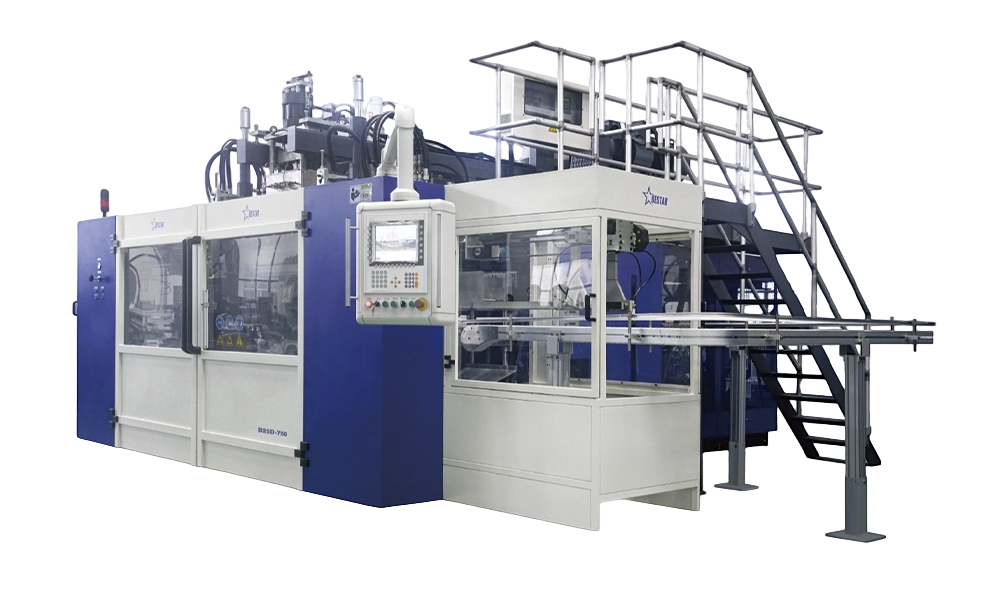
- Clamping Force: Large containers require high clamping force — typically ranging from 100kN to over 300kN — to keep molds sealed under inflation pressure without flash or deformation.
- Screw Diameter and L/D Ratio: A larger screw diameter (70mm–120mm) ensures adequate plasticizing capacity for thick-walled, high-volume containers. The L/D ratio affects melt homogeneity.
- Parison Control System: Continuous or accumulator-head systems are common. Accumulator heads are preferred for larger containers as they store and rapidly release molten plastic, maintaining consistent wall distribution.
- Output Capacity: Production rates vary based on container size and wall thickness. A typical 20L jerry can line may produce 100–300 units per hour depending on cycle time optimization.
- Hydraulic vs. Electric Drive: Hydraulic systems provide the high force needed for large molds, while servo-electric or hybrid systems offer energy savings and cleaner operation.
Common Applications Across Industries
The versatility of 10~30L blow molding machines makes them indispensable in multiple manufacturing sectors. The containers they produce must often meet strict standards for chemical resistance, drop impact, and UV stability — especially when used outdoors or for hazardous material storage.
Chemical and Agricultural Packaging
Jerry cans and intermediate bulk containers (IBCs) used for pesticides, fertilizers, and industrial chemicals are among the most common outputs of this machine category. These containers are typically made from high-density polyethylene (HDPE) due to its excellent resistance to corrosive substances. Regulatory standards such as UN certification for hazardous goods packaging make precision molding non-negotiable in this segment.
Lubricant and Automotive Fluids
Motor oil, hydraulic fluid, and coolant are commonly packaged in 10L, 18L, and 20L containers. Blow molded containers in this category often feature ergonomic handles, tamper-evident closures, and stackable geometries. The machines must deliver consistent neck finish dimensions to support reliable capping and sealing systems downstream.
Water and Beverage Containers
Large water storage bottles — especially the classic 18.9L (5-gallon) format — are produced in massive quantities globally. These require food-grade polycarbonate (PC) or HDPE materials, with crystal-clear clarity and superior hygiene standards. Blow molding machines targeting this application often integrate in-line leak testing and vision inspection systems.
Choosing the Right Material for Large-Format Containers
Material selection has a direct impact on machine configuration, mold design, and final product performance. The following table summarizes the most commonly used resins in 10~30L blow molding applications:
| Material | Key Properties | Typical Applications |
| HDPE | High chemical resistance, durable, recyclable | Jerry cans, chemical drums, agricultural containers |
| PP | Heat-resistant, lightweight, food-safe | Hot-fill containers, food packaging |
| PC | High clarity, impact-resistant, reusable | Water dispensing bottles (18.9L) |
| COEX (Multi-layer) | Barrier properties, solvent resistance | Fuel containers, hazardous chemical storage |
Automation and Integration Capabilities
Modern 10~30L blow molding machines are increasingly integrated into fully automated production lines. Standalone machines have given way to turnkey systems that combine the blow molder with downstream equipment for deflashing, leak testing, printing, labeling, and palletizing. This integration reduces manual labor, improves throughput consistency, and minimizes contamination risks — especially important for food-grade and pharmaceutical applications.
PLC-based control systems with touchscreen HMIs allow operators to store and recall product recipes, monitor real-time process parameters, and receive alerts for deviations. Advanced machines also support SCADA connectivity and Industry 4.0 data logging, enabling manufacturers to track energy consumption, cycle efficiency, and defect rates across shifts and production runs.
Energy Efficiency and Operating Costs
Running large-format blow molding equipment is energy-intensive. Hydraulic machines — while powerful — consume significantly more electricity than servo-driven alternatives. Over recent years, servo-hydraulic hybrid systems have become the standard recommendation for buyers looking to reduce utility costs without sacrificing clamping performance. These systems only draw full power during active clamping and injection phases, resulting in energy savings of 30%–50% compared to traditional full-hydraulic machines.
Additional operating cost factors include mold maintenance, cooling water consumption, compressed air efficiency, and resin yield. Machines with precise wall thickness control (via servo parison programmers) reduce material waste significantly — an important consideration when running expensive engineering resins or multi-layer coextrusion setups. Over a production lifespan of 10+ years, these savings can far outweigh the higher upfront cost of a more efficient machine.
What to Look for in a Reliable Supplier
The quality of the machine is only part of the equation. Choosing a supplier with strong after-sales support, spare parts availability, and technical expertise is equally critical — especially for large-format machines where downtime translates directly into significant production losses.
- Factory Audits: Visit the supplier's facility to assess manufacturing quality, assembly standards, and testing procedures before purchasing.
- Machine Trials: Request a factory acceptance test (FAT) using your target resin and mold to verify actual output rates and container quality before shipment.
- Spare Parts Commitment: Confirm that the supplier guarantees availability of critical wear components (screws, barrels, seals, valves) for at least 10 years.
- Global Service Network: For international buyers, a supplier with regional service centers or certified local partners ensures faster response times during breakdowns.
- Certifications: Look for CE marking, ISO 9001 quality management certification, and compliance with relevant safety standards in your target market.
Final Considerations Before Purchasing
Investing in a 10~30L bottle blow molding machine is a long-term capital decision that requires careful alignment between machine capabilities and production goals. Before finalizing any purchase, buyers should conduct a thorough analysis of their container portfolio — including target volume range, material requirements, annual output targets, and compliance standards. It is also worth considering future scalability: a machine that can accommodate mold changeovers for different container sizes offers greater flexibility as product lines evolve.
Working closely with both the machine supplier and mold maker from the early design stage ensures compatibility and shortens the time to stable production. When all these factors are carefully evaluated, a 10~30L blow molding machine becomes not just a piece of equipment, but a strategic asset that drives consistent quality, cost efficiency, and competitive advantage in large-container packaging markets.
